New Year, New Home: How To Make It Happen in 2025

This is the time when a lot of people take a moment to reflect and set their goals for this year. And as you picture what you want your 2025 to look like, one thing that may pop into your mind is the vision of you in a new home. But how do you get there? And where do you start?

Here’s some advice that can help you get the ball rolling.

Focus on Your Why

To lay the foundation, you need to focus on your why. While the dollars and cents are important, so is the driving force behind your desire to move. Maybe you need more space for a growing family, want to sell so you can downsize, or are finally ready to buy your first home. Whatever your reason, it’s important to keep it front and center.

Your why is what helps you stay focused. Share your motivation with your agent and they’ll use their expertise to help support that goal, no matter what the market looks like. With a great agent by your side, you’ll have someone to guide you, problem-solve, and keep you moving forward until you can check that goal off your to-do list.

Get Clear on What You Need

Then it’s time to figure out what your next home needs to have. How many bedrooms do you need? If you don’t have a designated home office, is that a deal-breaker? What about a big fenced-in backyard? Knowing your must-haves and nice-to-haves makes the search a lot smoother.

Since affordability is still tight, it’s important to have a clear idea of your essential items upfront. Maybe you can flex a bit on location, if it’s got everything else you’re looking for. Go over those essential items with your agent and they’ll help you focus on the homes that check the boxes that matter most while staying within your price range.

Know Your Numbers

Before you jump in, take a look at your finances. How much have you saved? What monthly payment feels comfortable? Getting clear on your budget early will help you know what’s possible.

The best way to do this is by partnering with trusted real estate professionals, like a local agent and a lender. They’ll help you:

  • Plan for your down payment and look into down payment assistance programs
  • Understand the equity you have in your current home and how you can use it to fuel your next move if you’re selling
  • Get pre-approved for a mortgage so you know what you can borrow

Lean on a Pro To Guide You

It can be hard to know where to start, but you don’t have to do it alone. A real estate agent knows what you need to do to get ready to buy or sell, how to navigate the process, and can answer your questions every step of the way. As Bankrate puts it:

“. . . now more than ever, it’s smart to lean on the guidance of an experienced local real estate agent. If you want to enter the housing market in 2025, whether as a buyer or a seller, let a pro lead the way for you.”

Remember, buying or selling is a big milestone and a great goal for this year. With the right expert on your team, you’ll feel confident and ready to take on the market.

Bottom Line

If buying or selling a home is part of your goals for 2025, now’s the time to get started. Focus on your why, know what you need, and connect with trusted pros to make it happen. Let’s team up and make this the year you accomplish your real estate resolutions.

 

Struggling To Sell Your House? Read This.

When you sell your house, ideally, you want it to go something like this: your house sells for top dollar, you get it sold quickly, and it all goes down without a hitch.

But what many people don’t realize is that even in today’s market where there are more buyers than homes for sale, there are still things that can cause delays or even keep a house from selling. According to Zillow, in 2024, as many as 1 in 3 sellers took their home off the market before it ultimately sold.

And while the reasons those houses didn’t sell are going to vary, there are some general themes that come through. If you’re having trouble getting your house sold, here are the top three hurdles that could be getting in the way, and how an expert agent can help you solve these issues.

1. Priced Too High

It’s no surprise that price plays a major role when you sell. And in today’s market, overpricing a home in a high-mortgage rate environment is the biggest thing keeping homes on the market longer than the norm. As. U.S. News Real Estate says:

“Talk to any real estate expert, and the first thing they’ll tell you is that a house is selling slowly because the price is too high.”

While it’s tempting to push the price higher to get more for your home, overpricing can really turn away potential buyers. It can also make your house sit on the market for far too long. And the longer it sits, the more skeptical buyers will be that there’s something wrong, even if there isn’t.

Not to mention, buyers today have so many tools and resources to view homes in your area and compare prices. So, if your house is priced too high, you’ll risk driving away potential offers.

To find out if this is happening with your listing, talk to your agent about what they’re hearing at open houses and showings. If the feedback is consistent, it may be time to re-evaluate your asking price. 

2. Not Freshened Up Before Listing

You only get one chance to make a great first impression on a buyer. That’s why sprucing up your house can be the difference between it selling or sitting.

First, take into account your home’s curb appeal. There may be easy ways you can clean up the landscaping to make it tidy, inviting, and really make an impact. As an article from Realtor.com notes:

” . . . for better or worse, buyers do tend to judge a book by its cover. You want to make sure potential buyers’ first impression of your home is a good one—and inspires them to stop by the open house or schedule a tour—so they can see more.”

But don’t stop at the front door. Small touches like removing personal items, reducing clutter, and cleaning the floors give buyers more freedom to picture themselves in the home. And inexpensive upgrades like a fresh coat of paint or updated listing photos to match the current season can go a long way with that wow factor.

When in doubt, lean on your real estate agent for expert advice and whether you need a new game plan to close the deal.

3. Limited Access

Another big mistake you can make as a seller is limiting the days and times that buyers can view your house. Because at the end of the day, if buyers can’t take a look around, your chances of selling decline — drastically.

And here’s something else to consider. No matter what type of market you’re dealing with, buyers from outside the area are often highly motivated, but they don’t have as much flexibility or time as those who are local. So, give your house the best visibility by making it available as much as possible.

Bottom Line

You deserve to check selling your house off your list of goals this year. So, if your house isn’t getting enough attention or your listing is getting stale, don’t be afraid to ask your trusted real estate agent how you can revamp your approach.

What Will It Take for Prices To Come Down?

You may be wondering if home prices are going to crash. And believe it or not, some people might even be hoping this happens so they can finally purchase a more affordable home. But experts agree that’s not what’s in the cards – and here’s why.

There are more people who want to buy a home than there are homes available to purchase. That’s what drives prices up.

Let’s break that down and explore why, nationally, home prices aren’t going to be coming down anytime soon.

Prices Depend on Supply and Demand

The housing market works like any other market – when demand is high and supply is low, prices rise.

According to the latest estimates, the U.S. is facing a housing shortfall of several million homes. That means there are far more people looking to buy (demand) than there are homes for sale (supply). That mismatch is the key reason why prices won’t fall at the national level. As David Childers, President of Keeping Current Matters (KCM), puts it:

“The main driving force on pricing is the limited amount of inventory in most markets across the country. That issue is not going to be solved overnight or in the next twelve months.”

How Did We Get Here?

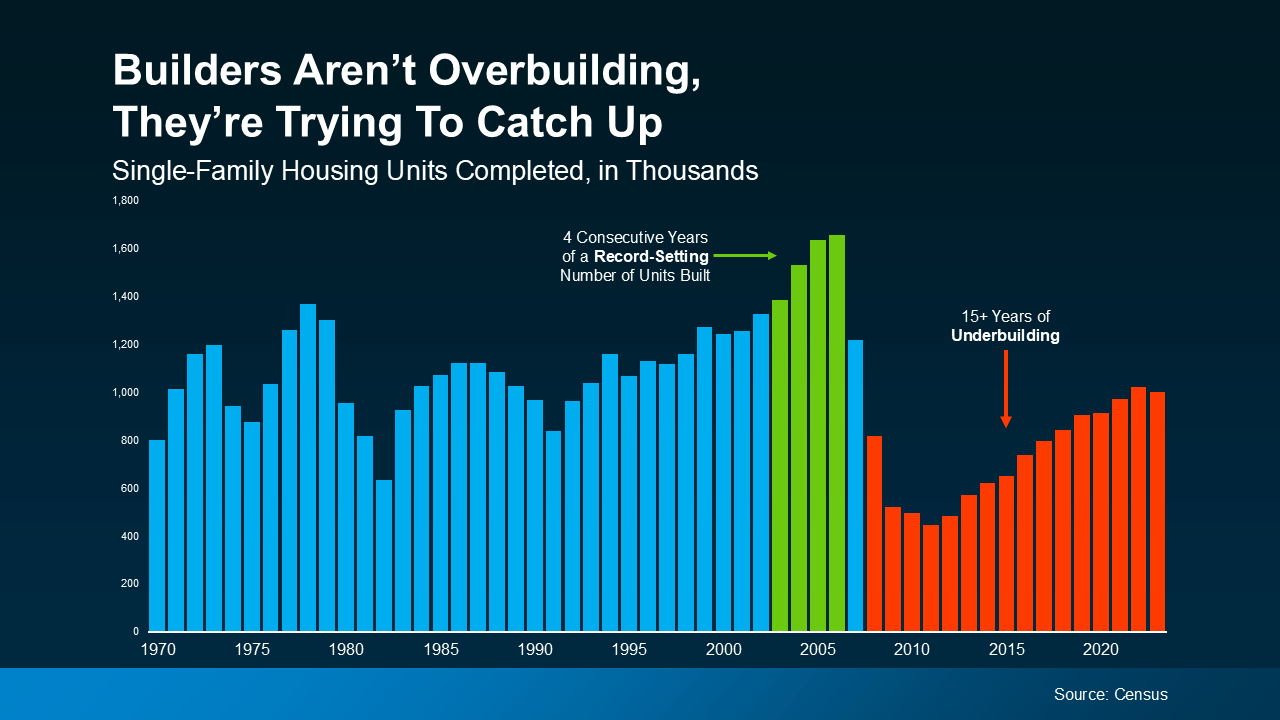
For over 15 years, homebuilders haven’t been building enough homes to keep up with buyer demand. After the 2008 housing crisis, homebuilding slowed significantly, and it’s only recently started to recover (see graph below):

a graph of a number of yearsEven with new construction on the rise over the past few years, builders are playing catch-up. And according to AmericanProgress.org, they’re still not even keeping up with today’s demand, let alone making up for years of underbuilding.

And as long as there’s a housing shortage, home prices will remain steady or increase in most areas.

What About Next Year?

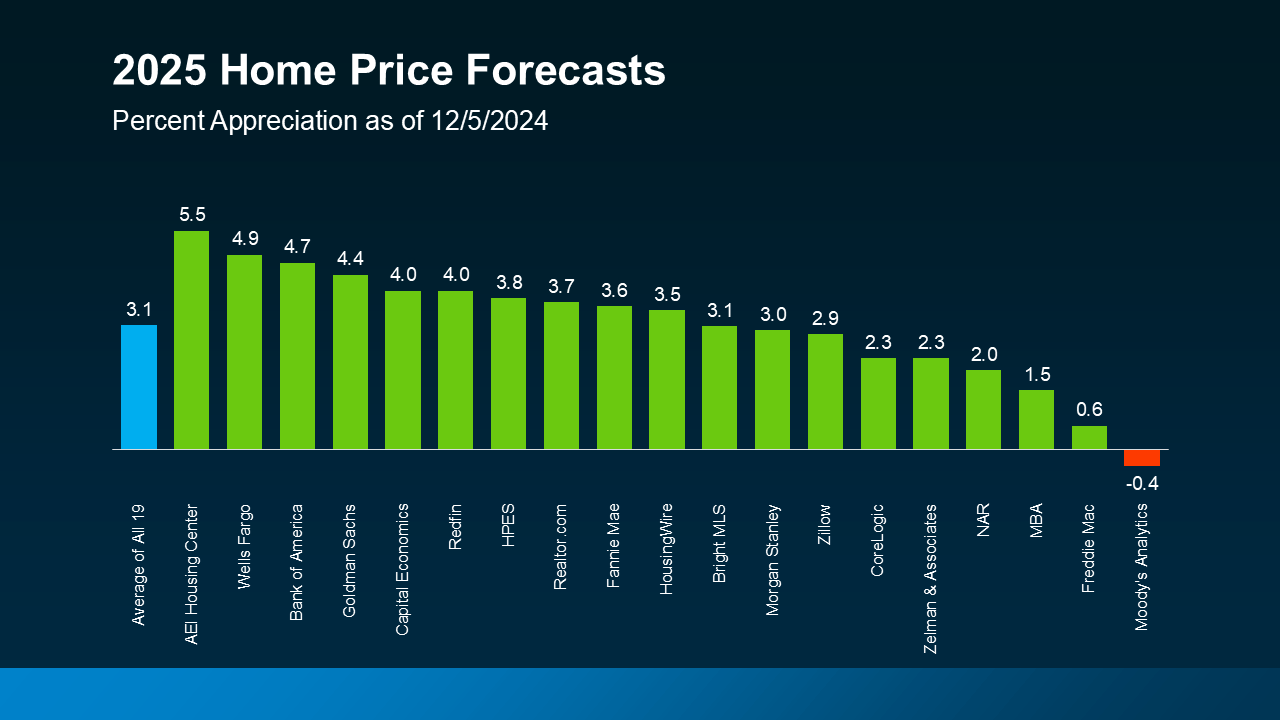
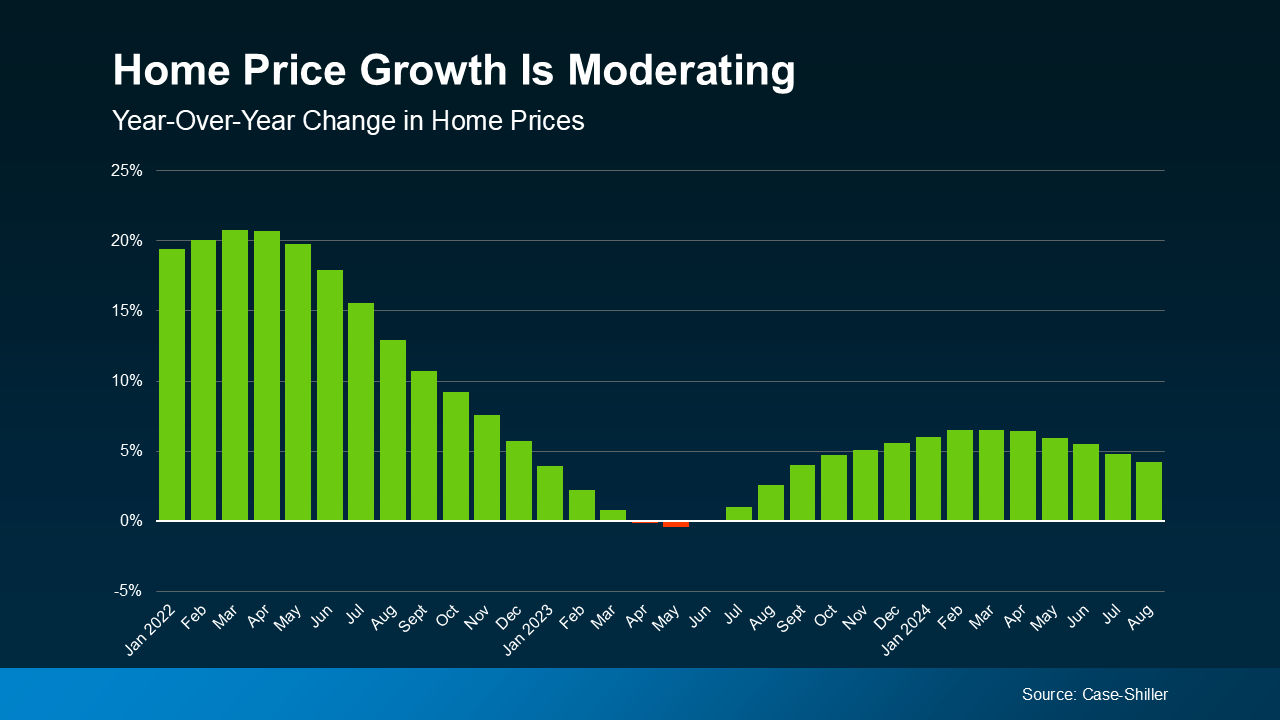
The majority of experts agree prices will keep rising next year, but at a much slower, healthier pace (see graph below):

a graph of green barsBut it’s important to note home prices vary by market. What happens nationally might not reflect exactly what’s happening in your area. If your local market has more inventory available, prices could grow more slowly or even decline slightly. But in areas where inventory remains tight, prices will keep climbing – and that’s what’s happening throughout most of the country. That’s why it’s crucial to work with a local real estate expert who understands your market and can explain what’s going on where you live.

Bottom Line

If you’re wondering what it’ll take for prices to come down, it all goes back to supply and demand. With inventory still limited in most markets, prices are likely to remain steady or rise.

To see what’s happening with home prices where we live, let’s connect. That way you’ll have help understanding our market and making a plan that works for you.

Don’t Miss Out on the Growing Number of Down Payment Assistance Programs

With rising home prices and volatile mortgage rates, it’s important you know about every resource that could help make buying a home possible. And one thing you’ll want to be aware of is just how much the number of down payment assistance (DPA) programs has grown lately.

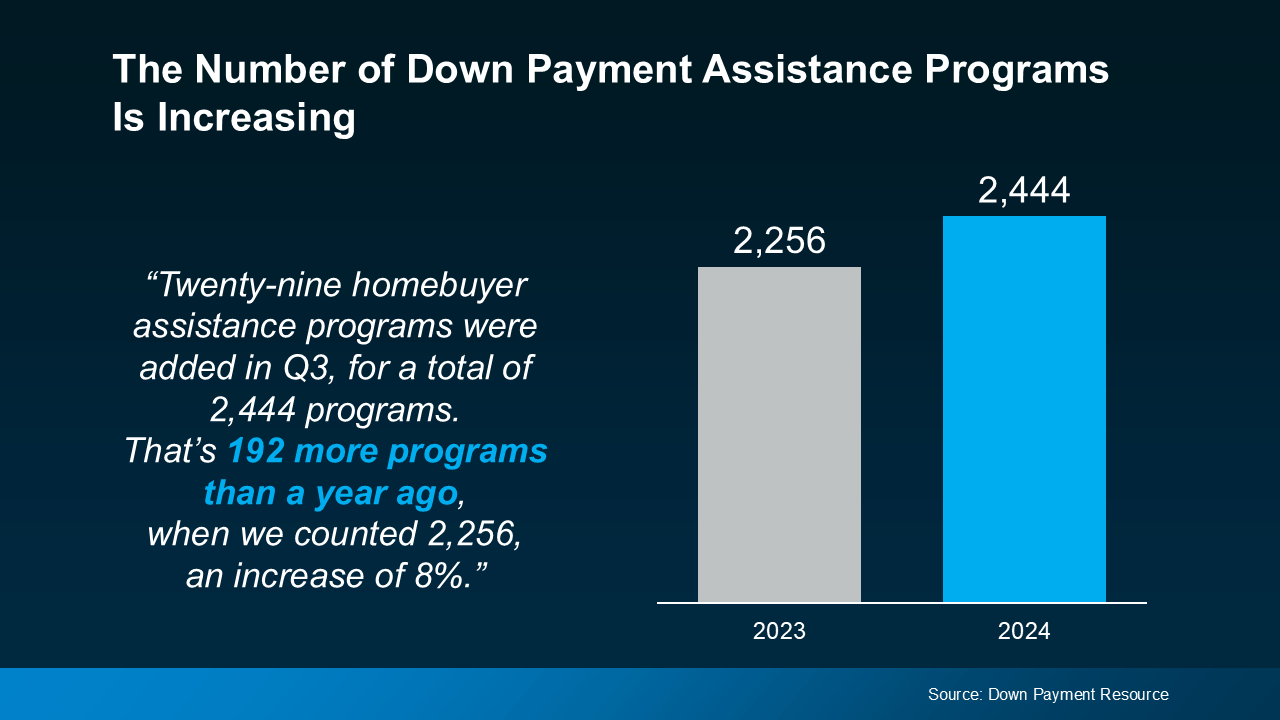
Take a look at the graph below to see how many new programs have been added in the last year, according to data from Down Payment Resource:

Don’t Miss Out on the Growing Number of Down Payment Assistance Programs | North Scottsdale Real Estate & Luxury Homes | Team PicarelloMore Programs, More Opportunities for You
So, what does this increase mean for you? With more programs available, there’s a higher likelihood that one of them could help you reach your homeownership goals.

And these programs aren’t small-scale help either – the benefits can go a long way toward covering a chunk of your costs. As Rob Chrane, Founder and CEO of Down Payment Resource, shares:

“We are pleased to see a growing number of these programs, and think they are becoming a targeted way to help first-time and first-generation homebuyers struggling to save for a down payment get into a home they can afford. Our data shows the average DPA benefit is roughly $17,000. That can be a nice jump-start for saving for a down payment and other costs of homeownership.”

Imagine being able to qualify for $17,000 toward your down payment—that’s a big boost, especially if you’re looking to buy your first home. With that level of help, buying a home may be more within reach than you think.

But it’s worth calling out that the growth in DPA options isn’t just focused on first-time and first-generation buyers. Many of the new programs are also aimed at supporting affordable housing initiatives, which include manufactured and multi-family homes. This means that more people, and a wider variety of home types, can qualify for down payment assistance, making it easier for you to find an option that fits your needs.

Talk to a Real Estate Expert About What’s Available for You

With so many DPA programs out there, you need to make sure you’re finding the right one for you. That’s why it’s key to lean on your real estate and lending professionals for guidance. The Mortgage Reports says:

“The best way to find down payment assistance programs for which you qualify is to speak with your loan officer or broker. They should know about local grants and loan programs that can help you out.”

Your loan officer or real estate agent will know what’s available in your area and can point you toward programs that align with your goals.

Bottom Line

With more down payment assistance programs than ever before, now’s a great time to explore how these options can help on your homebuying journey. Let’s work together to make sure you’ve got a team of expert advisors in place to see which DPA programs could be a fit for you.

More Homes, Slower Price Growth – What It Means for You as a Buyer

There are more homes on the market right now than there have been in years – and that could be a game changer for you if you’re ready to buy. Let’s look at two reasons why.

You Have More Options To Choose From

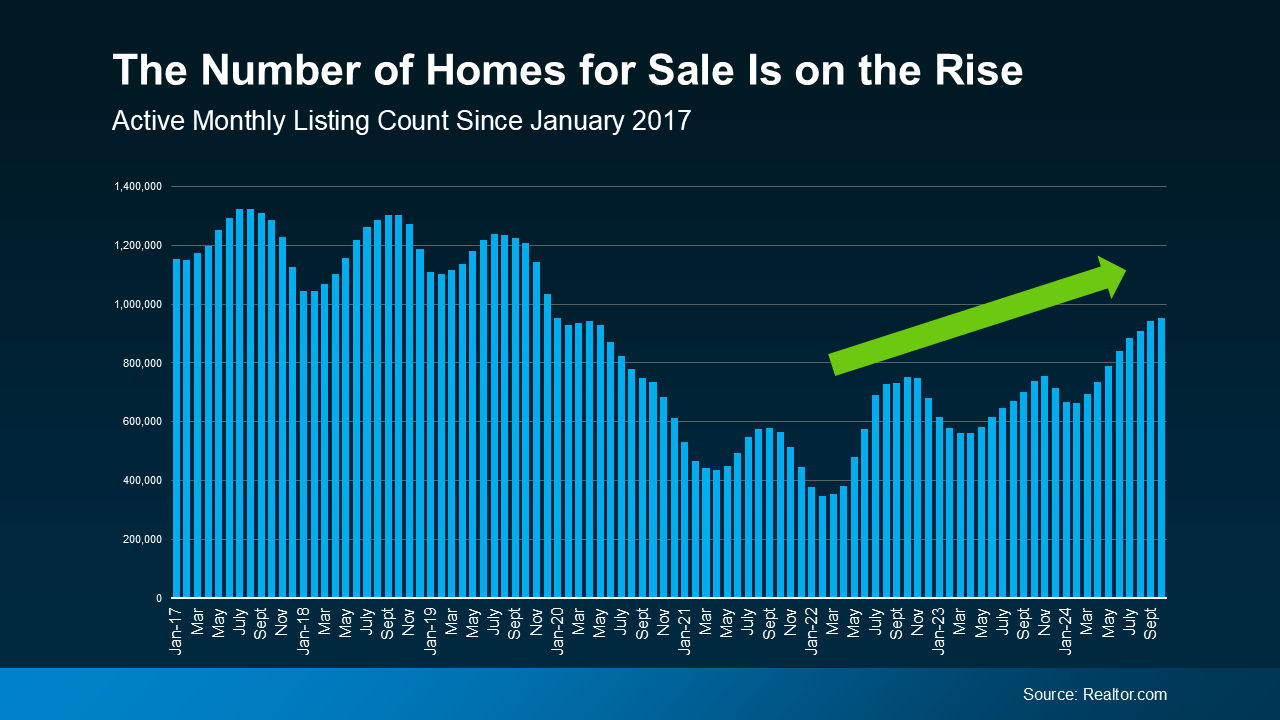
An article from Realtor.com helps explain just how much the number of homes for sale has gone up this year:

“There were 29.2% more homes actively for sale on a typical day in October compared with the same time in 2023, marking the twelfth consecutive month of annual inventory growth and the highest count since December 2019.”

And while the number of homes on the market still isn’t quite back to where it was in the years leading up to the pandemic, this is definitely an improvement (see graph below):

a graph of a number of homesWith more homes available for sale now, you have more options to choose from. As Hannah Jones, Senior Economic Research Analyst at Realtor.com, explains:

“Though still lower than pre-pandemic, burgeoning home supply means buyers have more options . . .”

That means you have a better chance of finding a house that meets your needs. It also means the buying process doesn’t have to feel quite as rushed, because more options on the market means you’ll likely face less competition from other buyers.

Home Price Growth Is Slowing

When there aren’t many homes for sale, buyers have to compete more fiercely for the ones that are available. That’s what happened a few years ago, and it’s what drove prices up so quickly.

But now, the increasing number of homes on the market is causing home price growth to slow down (see graph below):

a graph of green and blue linesIn certain markets, the number of available homes has not only bounced back to normal, but has even surpassed pre-pandemic levels. In those areas, home price growth has slowed or stalled completely. As Lance Lambert, Co-Founder of ResiClub, explains:

“Generally speaking, housing markets where active inventory has returned to pre-pandemic 2019 levels have seen home price growth soften or even decline outright from their 2022 peak.”

Slower or stalled price growth could give you a better chance of finding something within your budget. As Dr. Anju Vajja, Deputy Director at the Federal Housing Finance Agency (FHFA), says:

“For the third consecutive month U.S. house prices showed little movement . . . relatively flat house prices may improve housing affordability.”

But remember, inventory levels and home prices are going to vary by market.

So, having a real estate agent who knows the local area can be a big advantage. They can help you understand the trends in your community, which can make a real difference in finding a home that fits your needs and budget.

Bottom Line

More housing options – and the slower home price growth they bring – can help you find and buy a home that works for your lifestyle and budget. So don’t hesitate to reach out if you want to talk about the growing number of choices you have right now.

Renting vs. Buying: The Net Worth Gap You Need To See

Trying to decide between renting or buying a home? One key factor that could help you choose is just how much homeownership can grow your net worth.

Every three years, the Federal Reserve Board shares a report called the Survey of Consumer Finances (SCF). It shows how much wealth homeowners and renters have – and the difference is significant.

On average, a homeowner’s net worth is nearly 40 times higher than a renter’s. Check out the graph below to see the difference for yourself:

Why Homeowner Wealth Is So High
In the previous version of that report, the average homeowner’s net worth was about $255,000, while the average renter’s was just $6,300. That’s still a big gap. But in the most recent update, the spread got even bigger as homeowner wealth grew even more (see graph below):

a graph with green line and orange lineAs the SCF report says:

“. . . the 2019-2022 growth in median net worth was the largest three-year increase over the history of the modern SCF, more than double the next-largest one on record.”
One big reason why homeowner wealth shot up is home equity.

Equity is the difference between your home’s value and what you owe on your mortgage. You gain equity by paying down your mortgage and when your home’s value goes up.

Over the past few years, home prices have gone up a lot. That’s because there weren’t enough available homes for all the people who wanted one. This supply-demand imbalance pushed home prices up – and that translated into faster equity gains and even more net worth for homeowners.

If you’re still torn between whether to rent or buy, here’s what you should know. While inventory has grown this year, in most places, there’s still not enough to go around. That’s why expert forecasts show prices are expected to go up again next year nationally. It’ll just be at a more moderate pace.

While that’s not the sky-high appreciation we saw during the pandemic, it still means potential equity gains for you if you buy now. As Ksenia Potapov, Economist at First American, explains:

“Despite the risk of volatility in the housing market, homeownership remains an important driver of wealth accumulation and the largest source of total wealth among most households.”
But prices and inventory are going to vary by area. So, lean on a local real estate agent. They’ll be able to give you the local trends and speak to the other financial and lifestyle benefits that come with owning a home. That crucial information will help you decide the best move for you right now. As Bankrate explains:

“Deciding between renting and buying a home isn’t just about cost — the decision also involves long-term financial strategies and personal circumstances. If you’re on the fence about which is right for you, it may be helpful to speak with a local real estate agent who knows your market well. An experienced agent can help you weigh your options and make a more informed decision.”
Bottom Line
If you’re not sure if you should rent or buy, keep in mind that if you can make the numbers work, owning a home can really grow your wealth over time.

And if homeownership feels out of reach, let’s connect so we can explore programs that may make buying possible.

Why Home Sales Bounce Back After Presidential Elections

With the 2024 Presidential election fast approaching, you might be wondering what impact, if any, it’s having on the housing market. Let’s break it down.

Election Years Bring a Temporary Slowdown

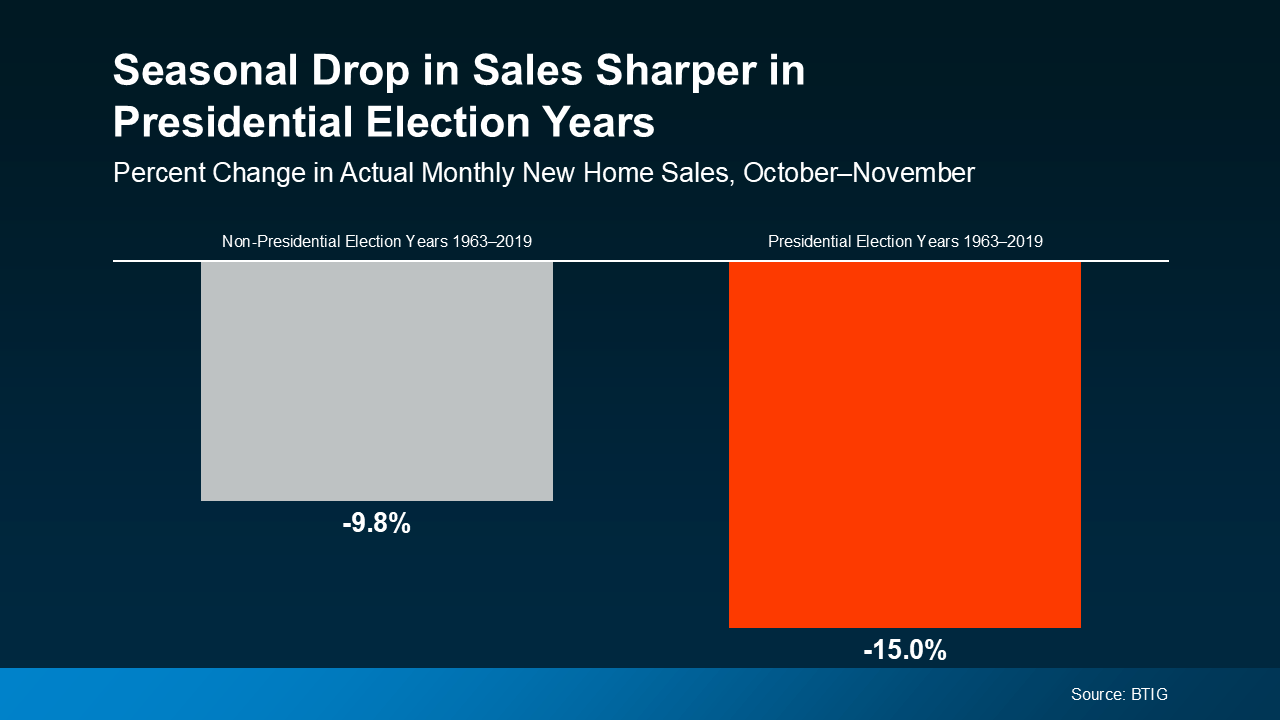
In any given year, home sales slow down slightly in the fall. It’s a typical, seasonal trend. However, according to data from BTIG, in election years there’s usually a slightly larger dip in home sales in the month leading up to Election Day (see graph below):

a graph of a person with an orange squareWhy? Uncertainty. Many consumers hold off on making major decisions or purchases while they wait to see how the election will play out. It’s a pattern that’s shown up time and time again, and it’s particularly apparent for buyers and sellers in the housing market.

This year is no different. A recent survey from Redfin found that 23% of potential first-time homebuyers said they’re waiting until after the election to buy. That’s nearly a quarter of first-time buyers hitting the pause button, likely due to the same feelings of uncertainty.

Home Sales Bounce Back After the Election

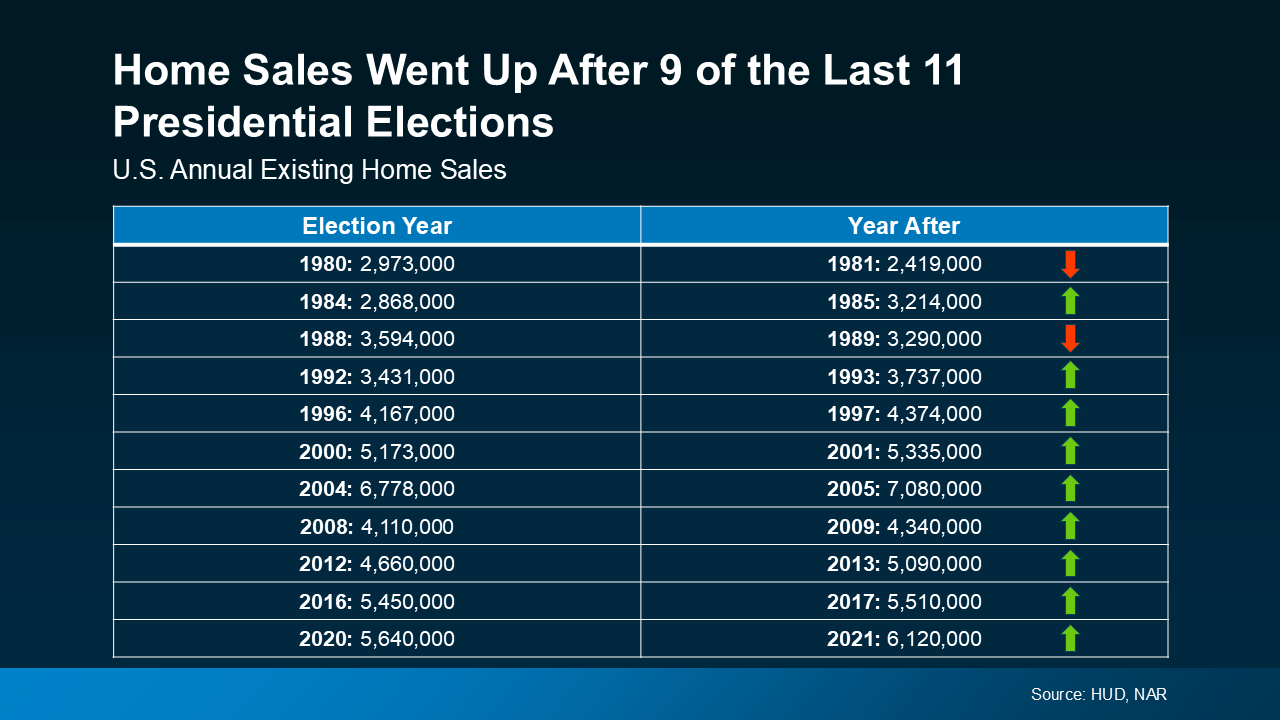
The good news is these delayed sales aren’t lost forever—they’re just postponed. History shows sales tend to rebound after the election is over. In fact, home sales have actually increased 82% of the time in the year after the election (see chart below):

a blue and white chart with numbersThat’s because once the election dust settles, buyers and sellers have a sense of what’s ahead and generally feel more confident moving forward with their decisions. And that leads to a boost in home sales.

What To Expect in 2025

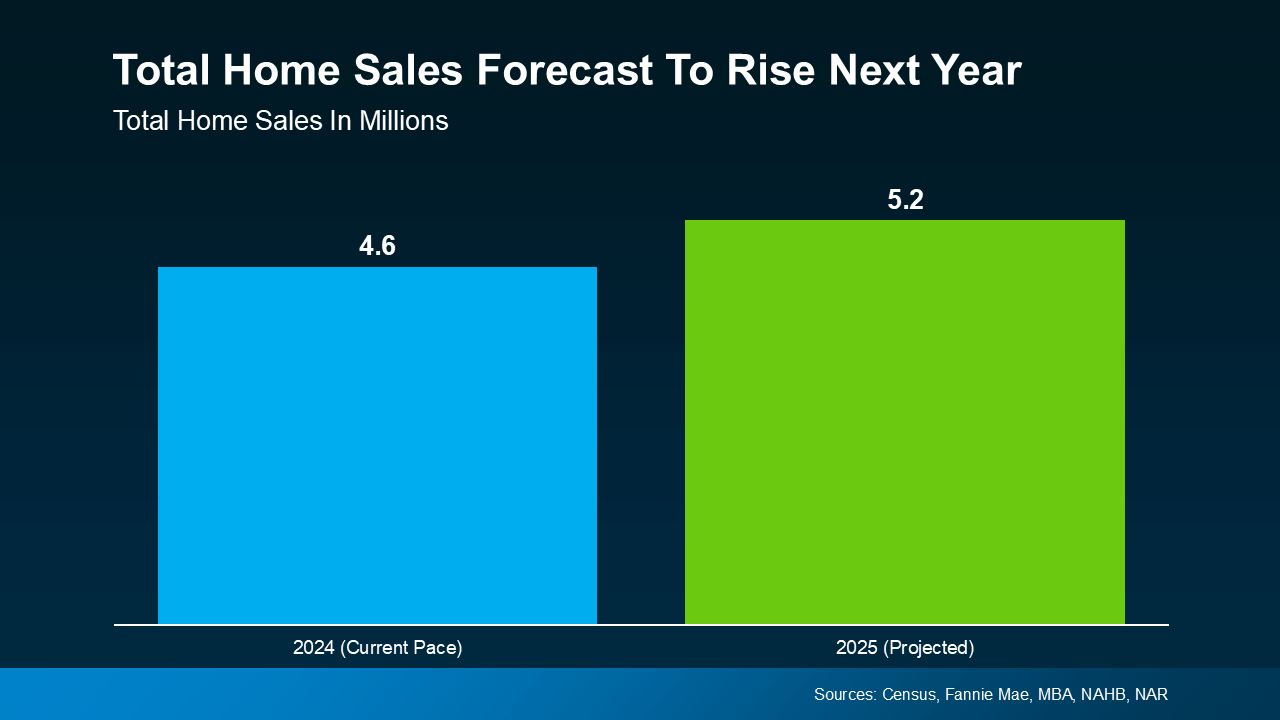
If history is any indicator, that means more homes will sell next year. And based on the latest forecasts, that’s exactly what you should expect. As the graph below shows, the housing market is on pace to sell a total of 4.6 million homes this year, and projections are for 5.2 million total sales next year (see graph below):

a graph showing the sales of a companyAnd that aligns with the typical pattern of post-election rebounds.

So, while it might feel like the market is slowing down right now, it’s more of a temporary dip rather than a long-term trend. As has been the case before, once the election uncertainty passes, buyers and sellers will return to the market.

Bottom Line

It’s important to remember that while election years often bring a short-term slowdown in the housing market, the pause is usually temporary. Those sales are not lost. Data shows home sales typically increase the year after a Presidential election, and current forecasts indicate 2025 will be no different. If you’re waiting for a clearer picture before making a move, just know that the market is expected to pick up speed in the months ahead.

The Benefits of Using Your Equity To Make a Bigger Down Payment

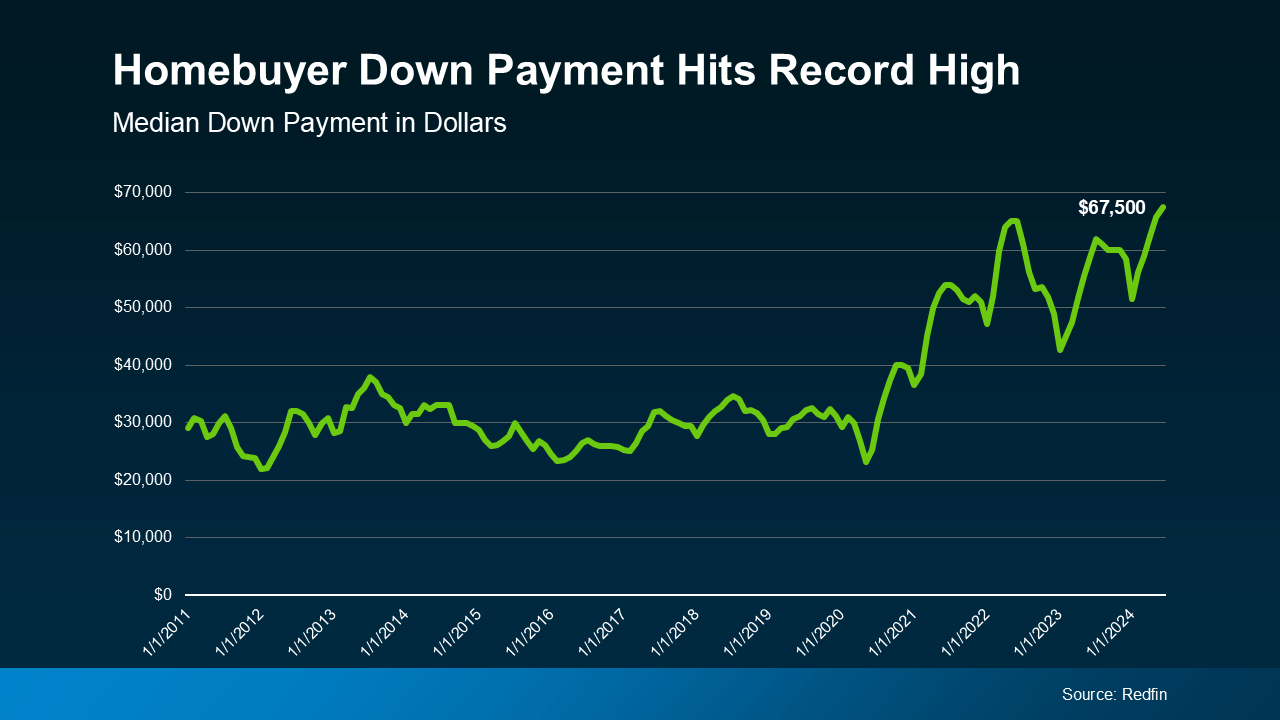
Did you know? Homeowners are often able to put more money down when they buy their next home. That’s because, once they sell, they can use the equity they have in their current house toward their next down payment. And it’s why as home equity reaches a new height, the median down payment has too.

According to the latest data from Redfin, the typical down payment for U.S. homebuyers is $67,500—that’s nearly 15% more than last year, and the highest on record (see graph below):

a graph showing a green lineHere’s why equity makes this possible. Over the past five years, home prices have increased significantly, which has led to a big boost in equity for current homeowners like you. When you sell your house and move, you can take the equity that gives you and apply it toward a larger down payment on your new home. That’s a major opportunity, especially if you’ve had concerns about affordability.

Now, it’s important to remember you don’t have to make a big down payment to buy your next home—there are loan programs that let you put as little as 3%, or even 0% down. But there’s a reason so many current homeowners are opting to put more money down. That’s because it comes with some serious perks.

Why a Bigger Down Payment Can Be a Game Changer

1. You’ll Borrow Less and Save More in the Long Run

When you use your equity to make a bigger down payment on your next home, you won’t have to borrow as much. And the less you borrow, the less you’ll pay in interest over the life of your loan. That’s money saved in your pocket for years to come.

2. You Could Get a Lower Mortgage Rate

Providing a larger down payment shows your lender you’re more financially stable and not a large credit risk. The more confident your lender is in your credit score and your ability to pay your loan, the lower the mortgage rate they’ll likely be willing to give you. And that amplifies your savings.

3. Your Monthly Payments Could Be Lower

A bigger down payment doesn’t just help you reduce how much you have to borrow—it also means your monthly mortgage payment may be smaller. That can make your next home more affordable and give you a bit more breathing room in your budget.

4. You Can Skip Private Mortgage Insurance (PMI)

If you can put down 20% or more, you can avoid Private Mortgage Insurance (PMI), which is an added cost many buyers have to pay if their down payment isn’t as large. Freddie Mac explains it like this:

“For homeowners who put less than 20% down, Private Mortgage Insurance or PMI is an added insurance policy for homeowners that protects the lender if you are unable to pay your mortgage. It is not the same thing as homeowner’s insurance. It’s a monthly fee, rolled into your mortgage payment, that’s required if you make a down payment less than 20%.”

Avoiding PMI means you’ll have one less expense to worry about each month, which is a nice bonus.

Bottom Line

Down payments are at a record high, largely because recent equity gains are putting homeowners in a position to put more money down.

If you’re thinking about selling your current house and moving, let’s work together to figure out how much home equity you have right now, and how it can boost your buying power in today’s market.

Home Values Rise Even as Median Prices Fall

Recent headlines have been buzzing about the median asking price of homes dropping compared to last year, and that’s sparked plenty of confusion. And as a buyer or seller, it’s easy to assume that means prices are coming down. But here’s the catch: those numbers don’t tell the full story.

Nationally, home values are actually rising, even if the median price is down a bit. Let’s break down what’s really happening so you can make sense of the market without getting caught up in the fear the headlines create.

Homes on the Market Right Now Are Smaller

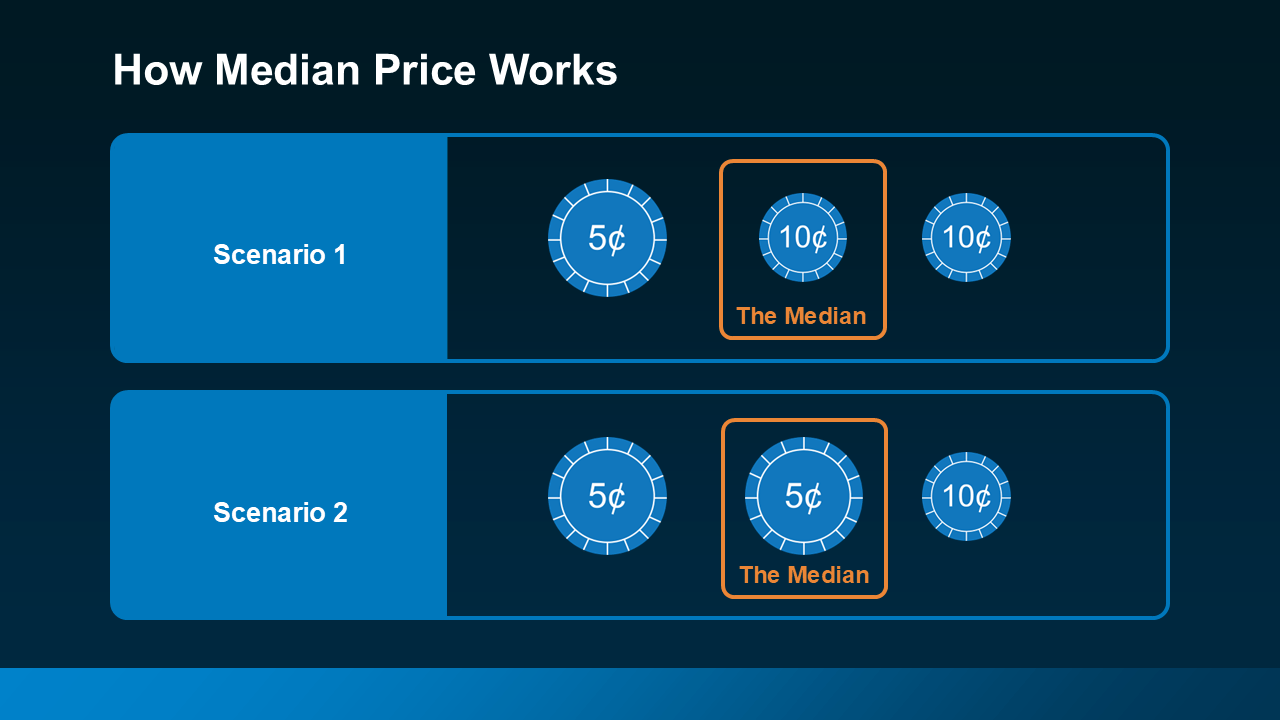
The biggest reason for the dip in median price is the size of homes being sold. The median price reflects the middle point of all the homes for sale at any given time. And that’ll be affected by the mix of homes on the market.

To show you how this works, here’s a simple explanation of a median (see visual below). Let’s say you have three coins in your pocket, and you decide to line them up according to their value from low to high. If you have one nickel and two dimes, the median (the middle one) is 10 cents. If you have two nickels and one dime, the median is now five cents.

No Caption ReceivedIn both cases, a nickel is still worth five cents and a dime is still worth 10 cents. The value of each coin didn’t change. The same is true for housing.

Right now, there’s a greater number of smaller, less expensive homes on the market, and that’s bringing the overall median price down. But that doesn’t mean home values are declining.

As Danielle Hale, Chief Economist at Realtor.com, explains:

“The share of inventory of smaller and more affordable homes has grown, which helps hold down the median price even as per-square-foot prices grow further.”

And here’s the data to prove it.

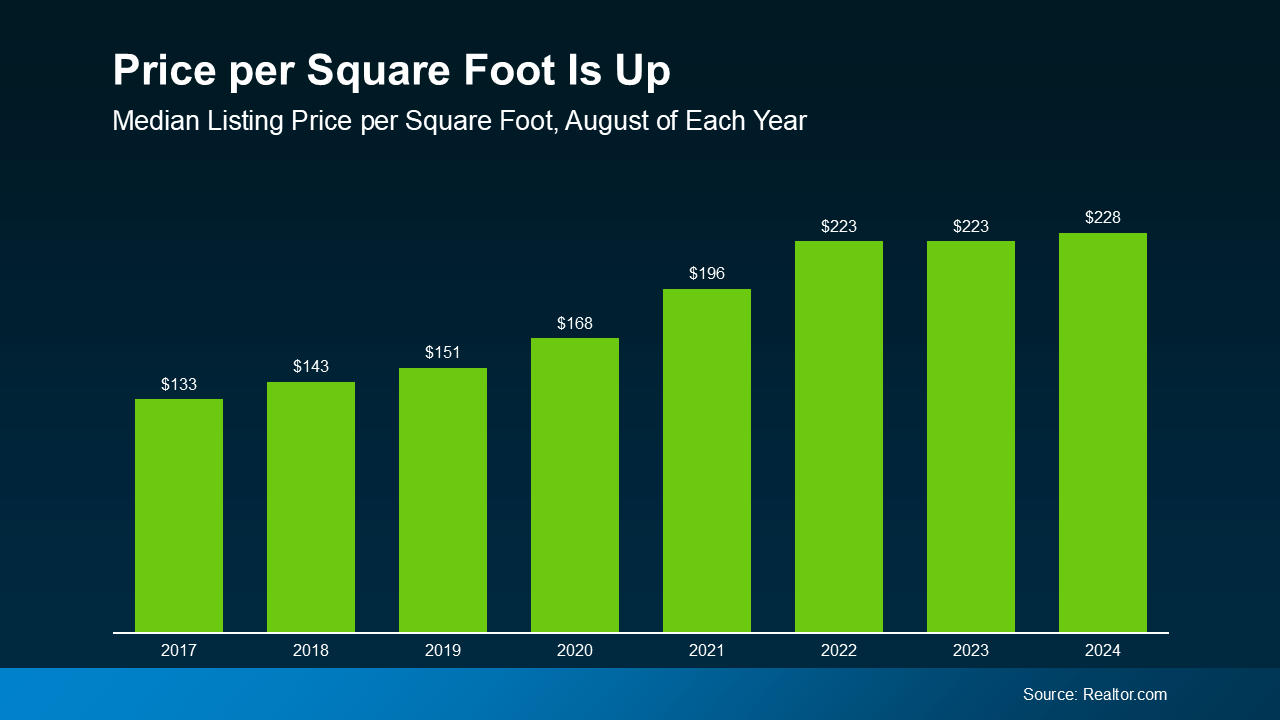
Price Per Square Foot Is Still Rising

One of the best ways to measure home values is by looking at the price per square foot. That’s because it shows how much you’re paying for the space inside the home.

The median asking price doesn’t take into account the size of different homes, so it may not always reflect the true value. And the latest national price per square foot data shows home values are still increasing, even though the median asking price has dropped (see graph below).

No Caption ReceivedAs Ralph McLaughlin, Senior Economist at Realtor.com, explains:

“When a change in the mix of inventory toward smaller homes is accounted for, the typical home listed this year has increased in asking price compared with last year.”

This means that while smaller homes are affecting the median price, the average home’s value is still rising. According to the Federal Housing Finance Agency (FHFA):

“Nationally, the U.S. housing market has experienced positive annual appreciation each quarter since the start of 2012.”

So, while headlines may make it sound like prices are crashing, you don’t have to worry. With a closer look and more reliable data, you can see that prices are still climbing nationally.

But it’s important to remember that home prices can vary by region. While national trends provide a big-picture view, local markets may be experiencing different conditions. A trusted agent is the best resource to explain what’s happening in your area.

Bottom Line

The decrease in median price is not the same as a decrease in home values. The median asking price is down mostly due to the mix of smaller, less expensive homes on the market.

The important thing to focus on is the price per square foot, which is a better indicator of overall market value—and those prices are still going up. If you have questions about what home prices are doing in our area, feel free to reach out.

Don’t Fall for These Real Estate Agent Myths

When it’s time to buy or sell a home, one of the most important decisions you’ll make is who you’ll work with as your agent. That choice will have an impact on your entire experience and how smoothly it goes.

As you figure out who you’ll partner with, it’s important to know what to expect and what to look for. Unfortunately, there may be some myths holding you back from making the best decision possible. So, let’s take some time to address those, and make sure you have the information you need to find the right agent for you.

Myth #1: All Real Estate Agents Are the Same

You might think all agents are the same – so it doesn’t matter who you work with. But, in reality, agents have varying levels of experience, specialties, and market knowledge, which can have a big impact on your results. For example: you’ll get much better service and advice from someone who is a true expert in their field. As Business Insider explains:

“If you were planning to get your hair done for a special event, you’d want to visit a stylist who specifically has experience doing that type of work — you wouldn’t make an appointment with someone who primarily does kids’ hair. The same concept applies to finding a real estate agent. If you have a smaller budget, you probably don’t want to work with an agent who exclusively sells multimillion-dollar properties.”

Take some time to talk with each agent you’re considering. Ask about their experience level and what they specialize in. This will help you find the one that’s the best fit for your search.

Myth #2: You Can Save Money by Not Using an Agent

As a seller, you may think you can save money by not working with a pro. However, the expertise, negotiation skills, and market knowledge an agent provides generally saves you money and helps you avoid making costly mistakes. Without that guidance, you could find yourself doing something like overpricing your house. And that’s a misstep that’ll cost you when it sits on the market for far too long. That’s why U.S. News Real Estate says:

“When it comes to buying or selling your home, hiring a professional to guide you through the process can save you money and headaches. It pays to have someone on your side who’s well-versed in the nuances of the market and can help ensure you get the best possible deal.”

Myth #3: Agents Will Push You To Spend More

You may also be worried an agent will push you to buy a more expensive house in order to increase their commission. But that’s not how that should go. A good agent will respect your budget and work hard to find a home that truly fits your financial situation and needs. With their market know-how, they’ll point you toward the best option for you, rather than try to pad their own pockets on your dime. As NerdWallet explains:

“Among other things, a good buyer’s agent will find homes for sale. A buyer’s agent will help you understand the type of home you can afford in the current market, find listed homes that match your needs and price range, and then help you narrow the options to the properties worth considering.”

Myth #4: Market Conditions Are the Same Everywhere, So Why Do I Need a Pro?

Maybe you believe housing market conditions are the same no matter where you are. But that couldn’t be further from the truth. Real estate markets are highly localized, and conditions can vary widely from one area to another. This is why you can’t pick just anyone you find online. You should choose an agent who’s an expert on your specific local market. As a recent article from Bankrate says:

“Real estate is very localized, and you want someone who’s extremely knowledgeable about the market in your specific area.”

You’ll know you’ve found the right person when they can explain the national trends and how your area stacks up too. That way you’re guaranteed to get the full picture when you ask: “how’s the market?”

Bottom Line

Don’t let myths keep you from the expert guidance you deserve. With market knowledge and top resources, a trusted local real estate agent isn’t just helpful, they’re invaluable.

In what could be one of the biggest financial decisions of your life, having the right pro by your side is a game changer. Let’s connect and make sure you get the best outcome possible.