Hello world!
Welcome to WordPress. This is your first post. Edit or delete it, then start writing!

Welcome to WordPress. This is your first post. Edit or delete it, then start writing!

That spare room on the main floor. The finished basement with a kitchenette and its own entrance. The bonus room you’ve been using for storage.
To you, it’s extra space. But to a growing pool of buyers, it’s the reason they’d pick your house. Here’s why. Multi-generational homebuying is on the rise.
The number of multi-generational households is climbing. That’s when 3 or more generations live under one roof. And data shows those households grew from 3.2 million to almost 4 million between 2014 and 2024, according to Realtor.com.
And each year, more people are shopping for a larger home that fits their combined needs.
While the appetite for this type of house is rising across the board, data from USAFacts shows multi-generational living is more common in some states than others. The darker the state in the map below, the more common it is in that area (see map below):
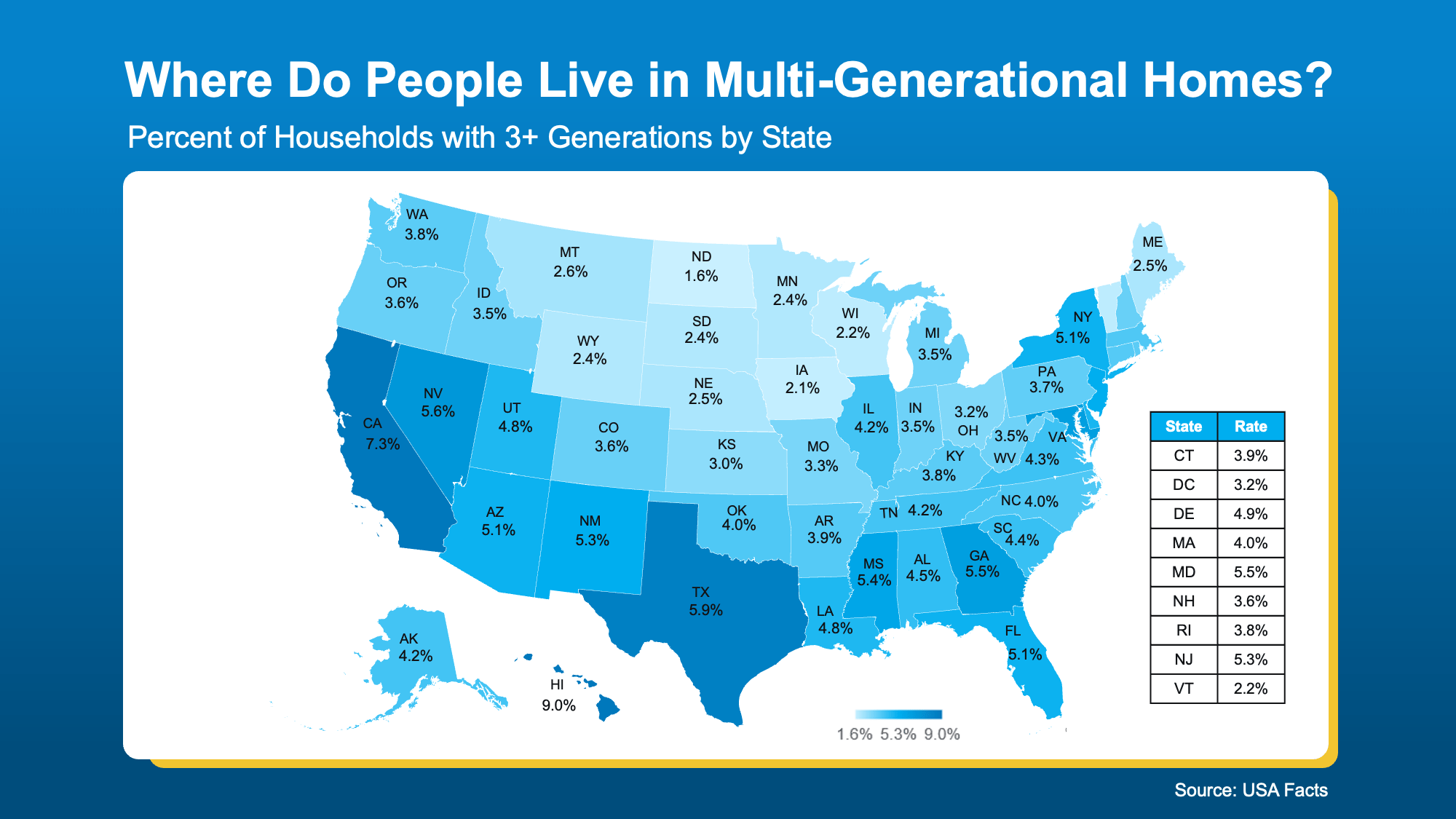
Where does your state fall? Depending on where you are, the pool of buyers looking for a house like yours could be even bigger than you’d think. But the overall bottom line is this.
There’s a real market out there for larger homes with room for multiple generations under one roof, especially since affordability is still so tight. And if you own a house like that, it’s in demand.
And that extra room carries real value with the right buyer. According to Realtor.com, in 2025 the median asking price for a multi-generational house was $709,000 – roughly 65% higher than the $429,900 median for a standard house.
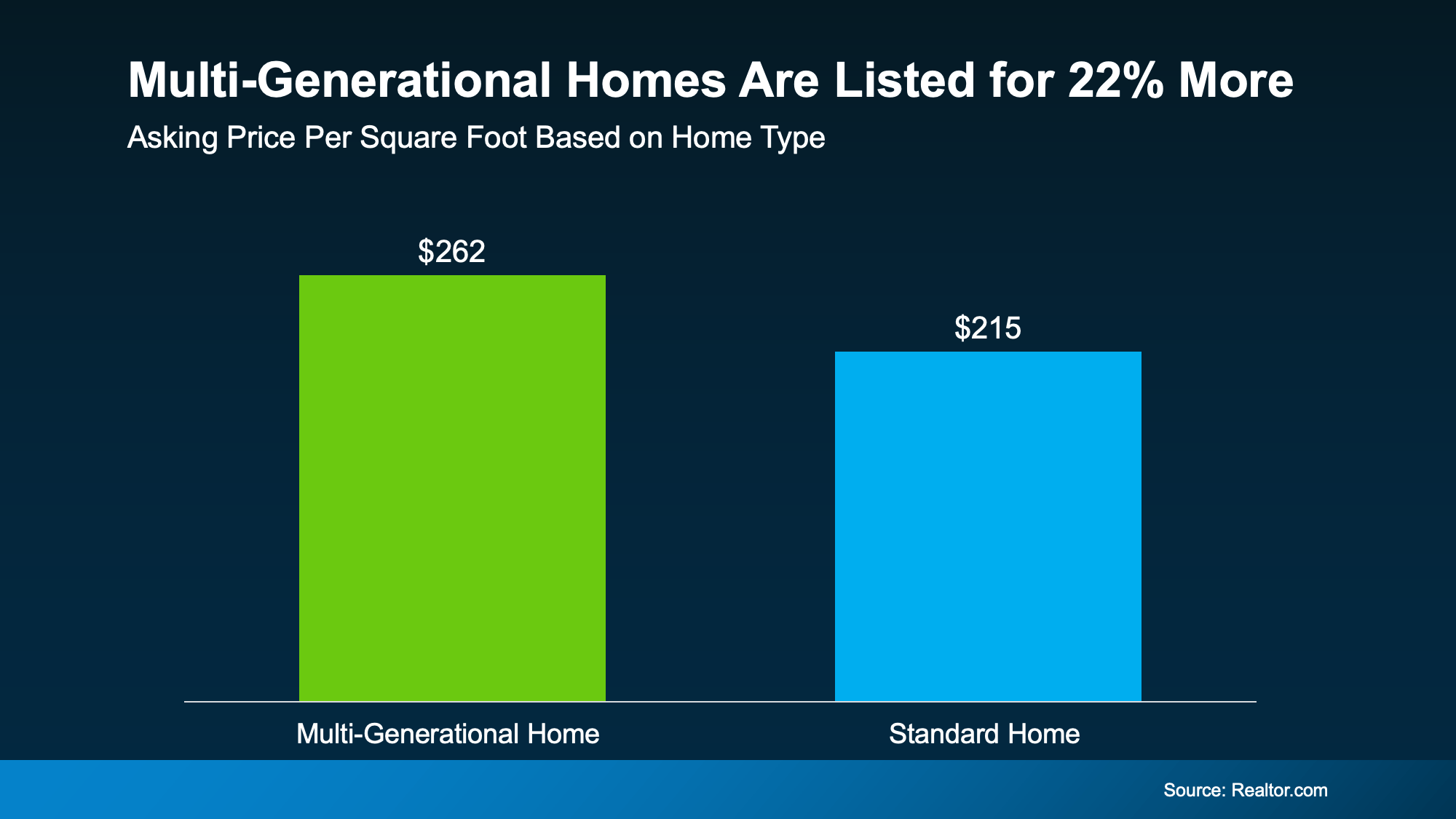
Some of that is simply size. But compare multi-generational homes to regular homes with the same amount of square footage, and they still come out on top – $262 per square foot versus $215.
That’s a 22% premium you could command for special features like in-law suites, second kitchens, and separate entries (see graph below):
When you sell, this could help you walk away with more money in your pocket, especially when your agent highlights your home’s multi-generational-friendly features in your listing.
And even with slightly higher price tags, buyers aren’t flinching. Multi-generational houses drew 13.5% more online views than standard ones, and they still sold just as fast – in about 59 days – per the same Realtor.com report.
Hannah Jones, Senior Economic Research Analyst at Realtor.com, explains:
“The strong demand and steep premiums we are seeing in inventory-constrained markets point to a real mismatch between what buyers are looking for and what is actually available. For sellers in these markets, this type of home can be a significant asset.”
Basically, when buyers want something that’s very specific, the house that checks the box tends to stand out.
Your multi-generational-friendly, or simply larger-than-average, house might meet criteria a lot of buyers can’t find in a standard one. That’s what gets attention. And offers. So, let’s chat about what it could get you in our market right now.
Every spring, Scottsdale becomes the creative heartbeat of the greater Phoenix area, and one of the most anticipated seasonal events is the Celebration of Fine Art. This long running showcase is more than just an art festival. It is an immersive experience that draws collectors, homeowners, and visitors from across Arizona and beyond. For anyone exploring the Scottsdale lifestyle, the event offers a unique window into what makes this region such a desirable place to live.

Held annually in North Scottsdale, the Celebration of Fine Art runs through the peak of the Arizona winter and spring season, typically extending into late March. The show features more than 100 juried artists from around the country working in an open studio environment. Visitors can watch paintings come to life, see sculptors shape raw materials into finished pieces, and speak directly with the creators about their work. The atmosphere is both inspiring and welcoming, making it a favorite tradition for locals and seasonal residents alike.
What makes this event especially special is its connection to place. Scottsdale has long been known for its strong arts culture, upscale communities, and vibrant outdoor lifestyle. Events like the Celebration of Fine Art highlight the city’s blend of luxury living and creative energy. For those considering a move to the area, it is a perfect example of how the arts are woven into daily life in the Scottsdale real estate market.
The greater Phoenix region continues to attract buyers looking for a mix of modern amenities, scenic desert surroundings, and strong long term value. Communities throughout Scottsdale, Paradise Valley, and North Phoenix offer everything from gated luxury estates to low maintenance second homes near golf courses, hiking trails, and top dining destinations. As buyers search for homes for sale in Scottsdale AZ, lifestyle experiences like this art show become part of the appeal.
The Celebration of Fine Art takes place in a spacious tented venue designed to encourage visitors to linger. Unlike traditional galleries, the show allows guests to engage with artists in real time. That personal connection turns a casual visit into a meaningful experience. Many attendees discover pieces that become centerpieces in new homes, vacation properties, or interior design projects throughout the Phoenix metro area.
Real estate trends in Arizona have increasingly been driven by lifestyle focused buyers. Many people relocating from other states are drawn to the region not only for sunshine and affordability, but also for cultural richness. Scottsdale events, art festivals, and seasonal attractions help new residents feel connected quickly. Whether someone is purchasing a primary residence or investing in a second home, the local lifestyle plays a major role in deciding where to buy.
In addition to Scottsdale, surrounding markets such as Fountain Hills, Cave Creek, and Arcadia also benefit from the region’s vibrant arts community. These areas offer diverse housing options while remaining close to cultural destinations. Buyers exploring the Phoenix housing market often discover that weekend events like the Celebration of Fine Art are just one of many reasons this region feels so livable.
For homeowners, the event also offers inspiration. Art and design have a natural relationship with the home environment. Many visitors attend not only to admire the work but to find pieces that reflect the desert palette and architectural style of Arizona living. With so many homes in Scottsdale featuring open concept design, natural light, and indoor outdoor flow, fine art becomes an essential part of the aesthetic.
The Celebration of Fine Art is also a reminder of how active the community remains during the spring selling season. March is one of the busiest months for real estate in the greater Phoenix area, as buyers take advantage of ideal weather and strong inventory movement. Open houses, community tours, and local events all overlap, giving prospective buyers an authentic look at neighborhood life.
If you are exploring the Scottsdale lifestyle or researching the best places to live in Arizona, attending events like this can be a great first step. It offers an experience beyond online listings and helps visitors understand the culture behind the communities. Many buyers find themselves falling in love with the region while strolling through exhibitions just like this one.
For those beginning their search for Scottsdale homes for sale, having a trusted resource matters. Local expertise can help buyers connect lifestyle goals with the right neighborhood fit, whether that means proximity to arts venues, walkable Old Town living, or quiet desert foothill communities. One helpful starting point for learning more about the Arizona market is ArizonaWebHomes.com, which highlights communities and real estate opportunities throughout Scottsdale and the greater Phoenix metro area.
The Celebration of Fine Art is ultimately more than an event. It is a seasonal experience that reflects the creative spirit of Scottsdale and the elevated lifestyle that continues to draw people to Arizona. Whether you are a longtime resident, a visitor escaping winter, or someone considering a move to the Phoenix area, it is an unforgettable way to connect with the culture, community, and beauty that define this part of the Southwest.
As spring approaches and the desert comes alive, Scottsdale once again proves why it remains one of the most sought after real estate markets in the country, offering not only exceptional homes but also a lifestyle filled with art, energy, and inspiration.
Planning to sell this spring? While you may be tempted to hold off until the first blooms or the spring showers hit, that’s actually waiting too long to get started by today’s standards.
Buyers have more options than they did a few years ago. So, it’s worth it to tackle repairs now and make sure your house is set up to stand out. Because you don’t want to be caught scrambling right before the spring rush. Or, running out of time to do the work your house really needs.
The key is focusing on updates that actually matter. And that’s exactly where return-on-investment (ROI) data comes in handy.
Every year, Zonda looks at which home improvements deliver the most bang for the buck when you go to sell the home. And the results can be a little surprising.
The green in the chart below shows the updates where sellers have the biggest potential to add value based on that research:
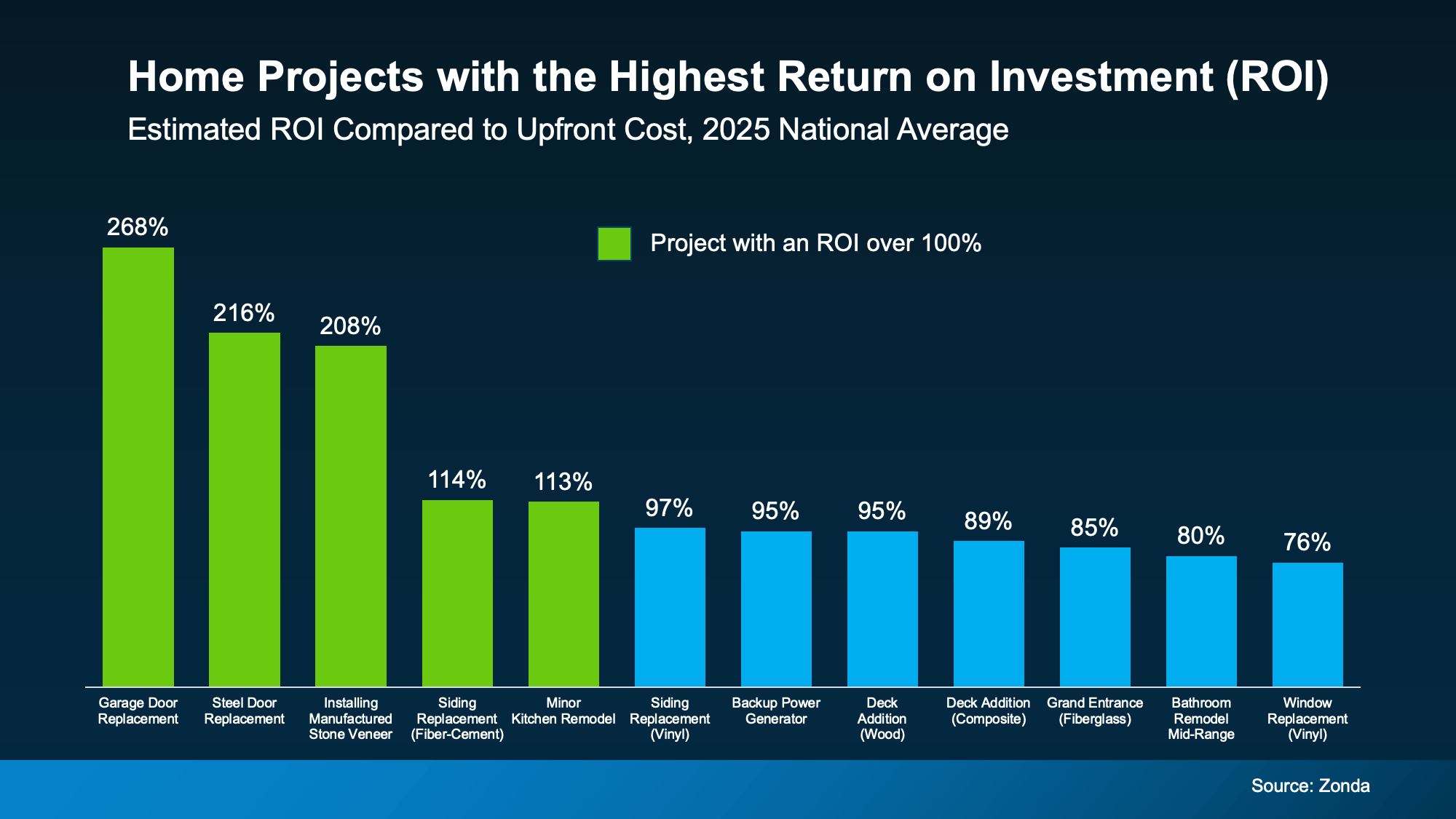 While there’s a wide range of projects represented in this data, the cool part is, some of the top winners aren’t big to-do’s. They’re just swapping out doors.
This goes to show little projects can have a big impact. So, you don’t have to spend a fortune. And you don’t need to tackle everything on this list. But in today’s market, doing nothing can work against you.
Now that buyers have more homes to choose from, a lot of them are going to opt for what’s move-in ready.
The best advice? Focus on what your house needs, whether it’s listed here or not – like the repairs you’ve been putting off. A front door or shutters in need of a little TLC. Piles of leaves in the yard. Scuffed up paint where your kids play inside. Those details matter too.
Mallory Slesser, Interior designer and Home Stager, explains it to the National Association of Realtors (NAR) this way:
“If you’re looking for affordable updates that pack a punch, dollar for dollar, I would say painting; changing out light fixtures; changing out hardware; maybe new draperies or window treatments. Those are all cost-effective ways to make a big statement. It really changes the space.”
These seemingly small things help buyers focus on the home itself – not the work they think they’ll have to do after moving in. And that’s paying off for other sellers. Buyers are often willing to spend more on homes that feel well cared for, updated, and move-in ready.
Here’s the important thing to remember. National data like this is a guideline. Buyer preferences are going to vary by location, price point, and even neighborhood. That means a project that boosts value in one area might be unnecessary (or even overkill) in yours.
That’s why the first step should always be to talk with a local real estate professional before you start.
An experienced agent can help you answer questions like:
That guidance helps you avoid over-improving and under-preparing.
If you’re looking to sell this spring, you still have time to make updates that help your home stand out – without taking on a full renovation.
If you’re not sure where to start, let’s talk through what makes sense for your house. A quick conversation can help you prioritize the updates that’ll pack the biggest punch.
What’s one upgrade you’ve been thinking about – and wondering if it’s worth it?

There’s a lot of conversation about home prices, mortgage rates, and affordability right now – and those things are important. But if you’re thinking about buying a home, it’s worth remembering something the headlines rarely talk about: people don’t buy homes just for financial reasons. They buy them for their lives.
Because while homeownership can absolutely be a smart long-term financial move, it also comes with some emotional benefits spreadsheets just can’t capture. Maybe that’s why a 2025 survey from Fannie Mae notes:
“Consumers were twice as likely to mention lifestyle benefits (67%)—like security, customization, and outdoor space—than financial benefits (34%) when explaining why their homes have become more important in recent years.”
Here are a few reminders of what owning a home gives you that renting never will.
Buying a home is a big deal. First home, fifth home – it doesn’t matter. It’s a moment you’ll remember. And when you finally get those keys and walk through the door, that feeling of “I did this” hits different. It’s not just a purchase. It’s an accomplishment.
Life is busy. Having a place that’s truly yours where you can shut the door, take a breath, and settle into your own routine is something renters rarely talk about until they finally experience it. Home becomes the place you go to recharge, not just the place your mail is delivered.
Need a quiet corner for work calls? A backyard big enough for the dog that thinks it’s a person? A shorter drive to see the people who are most important to you? When you own, you get to choose a space that fits your life now and where it’s heading – and it just feels right.
Want to paint the kitchen navy? Go for it. Thinking about a wall of floating shelves or a bold wallpaper moment? Do it. Need space for a home gym or a reading nook? Make it happen. Homeownership gives you the freedom to shape your space instead of asking for permission to change it.
Buying a home isn’t only about dollars and data points – it’s about building a life you love.
So, if you’re thinking about a move in 2026, keep the emotional side in the conversation too. And when you’re ready to explore your options, let’s connect so you have a pro on your side to guide you through the process with clarity and confidence.

You may not want to put your homebuying plans into hibernation mode this winter. While a lot of people assume spring is the ideal time to buy a house, new data shows January may actually be the best time of year for budget-conscious buyers.
Kind of surprising, right? Here’s why January deserves a serious look.
Lending Tree says January is the least expensive month to buy a home. And there’s something to that. January has historically offered one of the lowest price-per-square-foot points of the entire year. But the spring? That’s when demand (and prices) usually peak. And that’s not speculation – it’s a well-known trend based on years of market data.
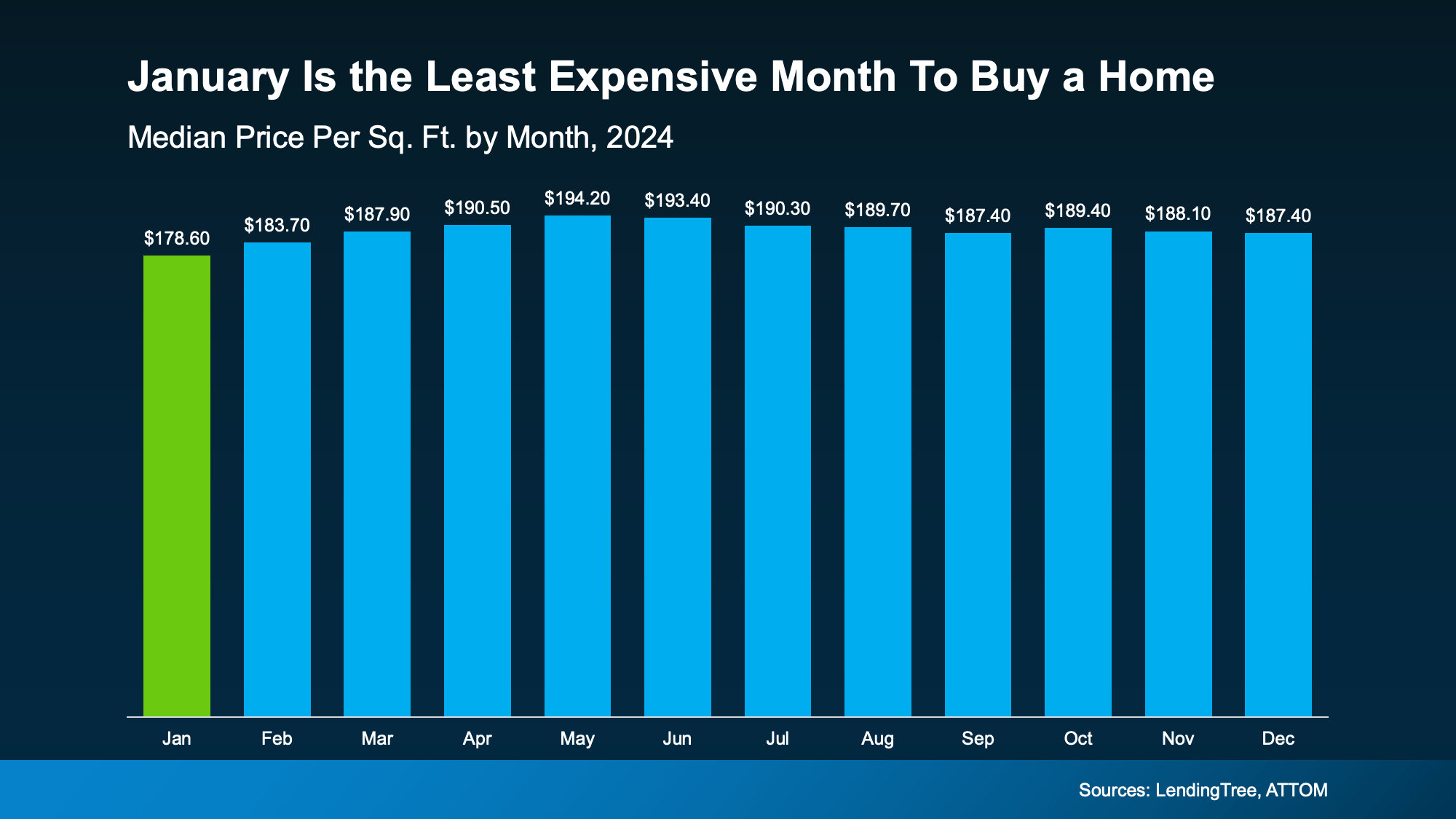 So, how much less are we talking? Here’s a look at the numbers. According to the last full year of data, for the typical 1,500 square foot house, buyers who closed on their home in January paid around $23,000 less compared to those who bought in May. And that general trend typically holds true each year (see chart below):
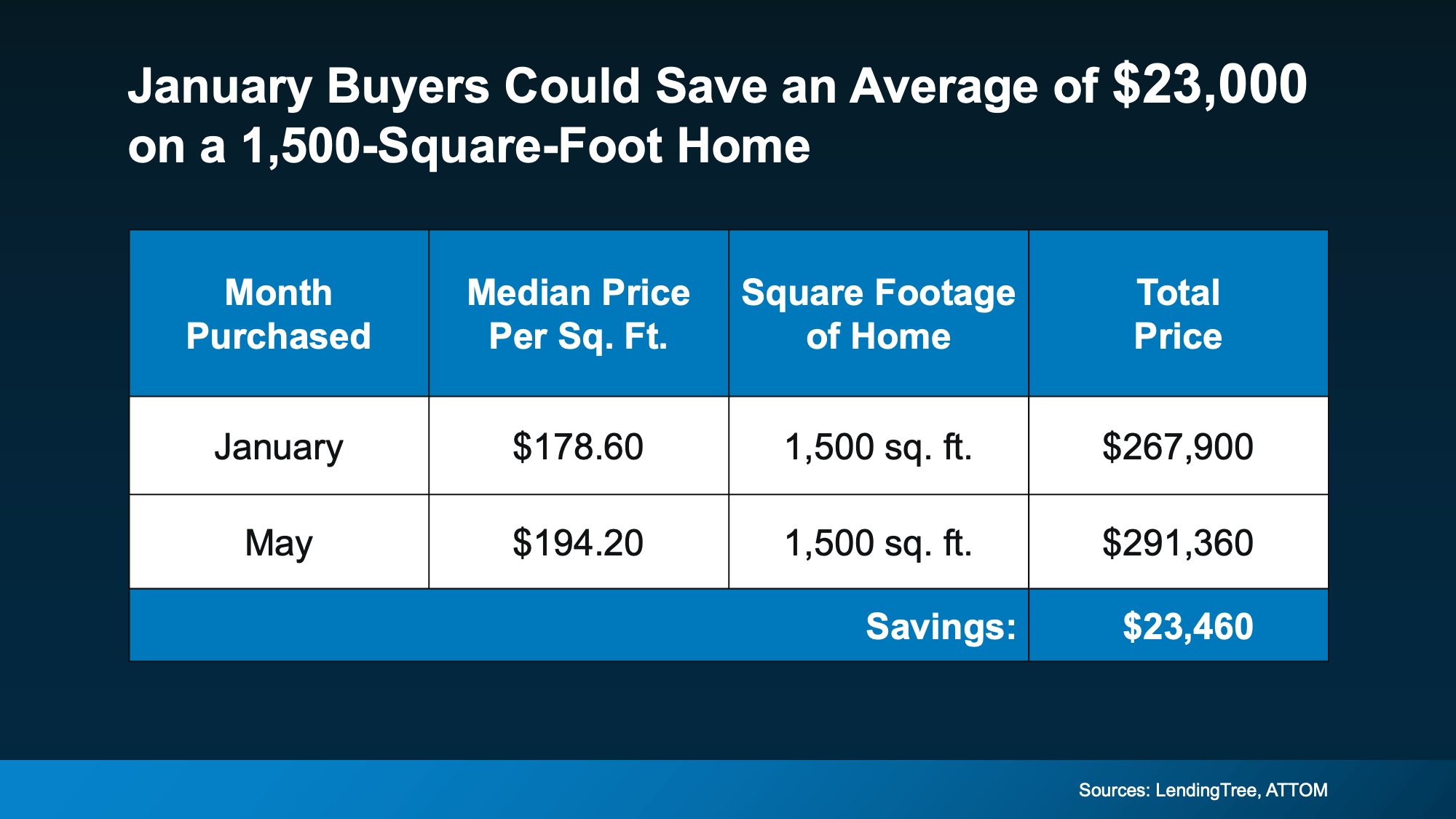 Now, your number is going to depend on the price, size, and type of the home you’re buying. But the trend is clear. For today’s buyers, it’s meaningful savings, especially when affordability is still tight for so many households.
And why do buyers typically save in the winter? It’s simple. Winter is one of the slowest times in the housing market each year. Both buyers and sellers tend to pull back, thinking it’s better to wait until spring. And that means:
With fewer buyers in the market, you can take your time browsing.
But winter doesn’t just thin out the pool of buyers, it also reveals which sellers truly need to sell. Because fewer people are house hunting during the colder months, sellers who really need to move tend to be more open to negotiating. As Realtor.com explains:
“Less competition means fewer bidding wars and more power to negotiate the extras that add up: closing cost credits, home warranties, even repair concessions. . . these concessions can end up knocking thousands of dollars off the price of a home.”
This can include everything from price cuts to covering closing costs, adjusting timelines, and more. It doesn’t mean you’ll automatically get discounts on every home. But it does mean you’re more likely to be taken seriously and given room to negotiate.
Here’s the real takeaway. When you remove the pressure and frenzy that comes with the busy spring season, it becomes much easier to get the home you want at a price that fits your budget.
But if you wait until spring, more buyers will be in the market. So, waiting could actually mean you spend more and you’d have to deal with more stress.
Now, only you can decide the right timing for your life, but don’t assume you should wait for warmer weather before you move.
Buying in January gives you: less competition, potentially lower prices, and more motivated sellers. And those are three perks you’re not going to see if you wait until spring.
If you’ve been thinking about taking the next step, this season might give you more opportunity than you think.
Curious what buying in January could look like for you? Let’s take a closer look at your numbers and the homes that are available in our area.

A lot of people are asking the same thing right now: “Is it even a good time to sell?” And the truth may come as a bit of a surprise…
For many homeowners, the answer is a strong yes.
Why? Because of one major factor working in your favor: your equity. Odds are, if you’ve lived in your home for a while, you know you have significant equity. But how much are we really talking about? The number might just change everything about your next move.
Here’s how it works. When you own a home, you build up something called equity.
Each time you make a mortgage payment, you’re chipping away at your loan balance. And that helps your ownership stake in your home grow. At the same time, home values typically rise – which drives up the overall value of your home.
When you put those two things together, you’re building wealth automatically, month after month, year after year.
And that combo can add up to real dollars that can make a real difference in your move. That’s especially true if you’ve lived in your house for a while, which many homeowners have. According to Realtor.com:
“Nearly half (45.2%) of today’s homeowners have lived in their home for more than 15 years, and 1 in 4 for over 25 years.”
If that’s you, just imagine what 15-25 years of payments + steady appreciation have done to your bottom line. It’s time you see how your equity stacks up over time.
This chart uses research coming out of Realtor.com to show an estimate of how much equity homeowners have built up depending on when they bought. For each time frame, it takes the median-priced home and uses it as the baseline example. The numbers are shocking, too. According to the study, if you bought the average-priced home in…
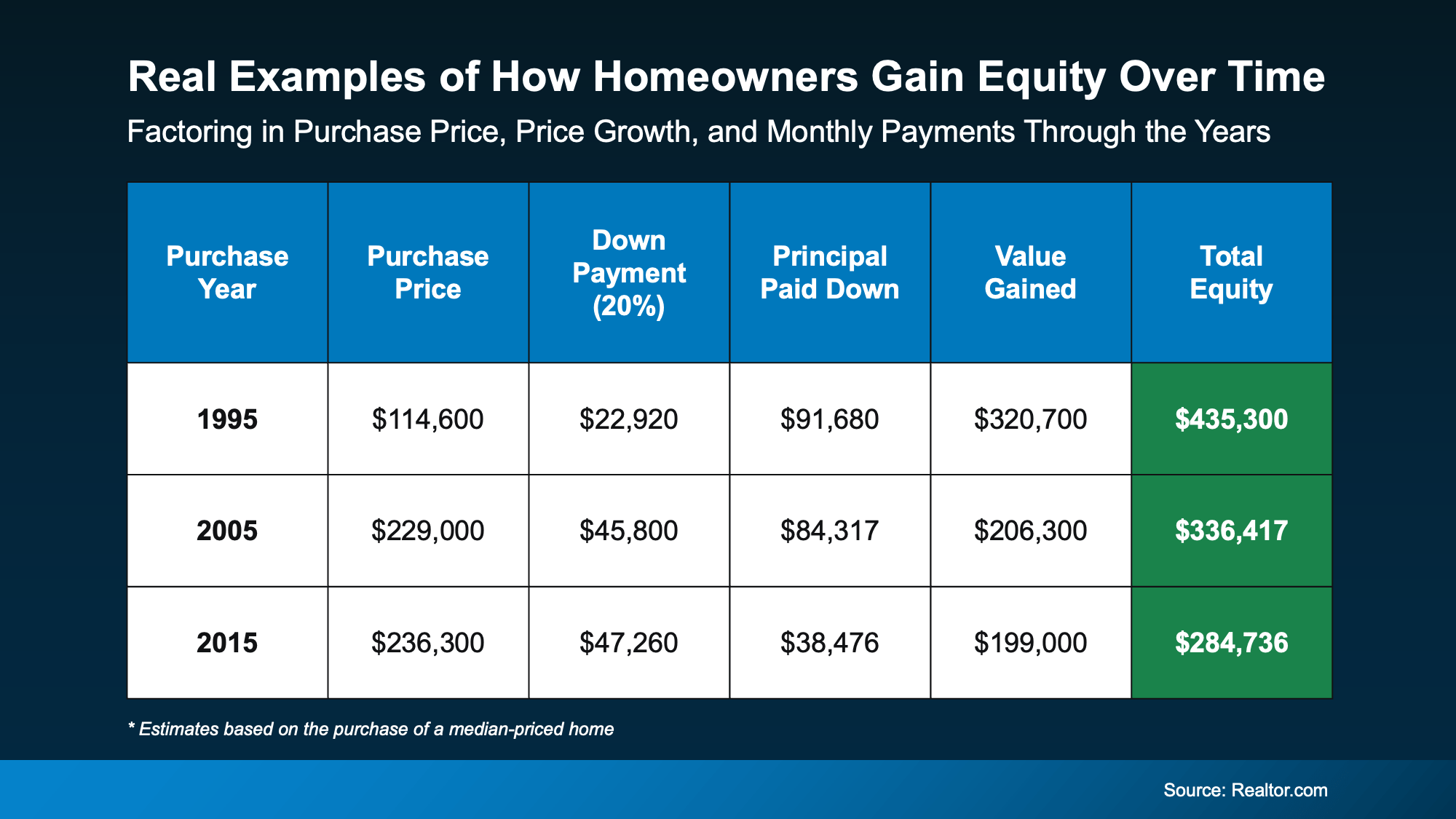 Of course, your actual number is going to vary based on the purchase price, any work you’ve done to the house, the size of your original down payment, and more. The point is…
A lot of homeowners are sitting on hundreds of thousands of dollars in equity without even realizing it.
Here’s where this becomes really important. That equity can offset nearly every concern you have about moving right now.
If you haven’t had someone help you understand the value of your home this year, now’s the perfect time to take another look. It doesn’t mean you have to sell. But it does mean you’ll at least know what you could be working with – and how far that number can take you.
If you want a custom professional equity assessment, let’s connect.

Whether it’s at a family gathering, your company party, or catching up with friends over the holidays, the housing market always finds its way into the conversation.
Here are the top three questions on a lot of people’s minds this season, and straightforward answers to help you feel more confident about the market.
Yes, more than you could a year or two ago.
The number of homes for sale has been rising over the past few years. According to data from Realtor.com, there have been more than one million homes on the market for six straight months, something that hasn’t happened since 2019 (see graph below):
 That means two things:
Many homeowners who held off are realizing the shelves aren’t bare anymore. So, if you hit pause on your home search last year because nothing fit your needs, it may be worth another look. With more homes on the market now, you’re not competing for the same handful of listings like you were a couple of years ago.
And because there’s a bit more to choose from, homes aren’t disappearing the minute they hit the market. That gives buyers more space to breathe, more options to compare, and a little more time to make a confident decision.
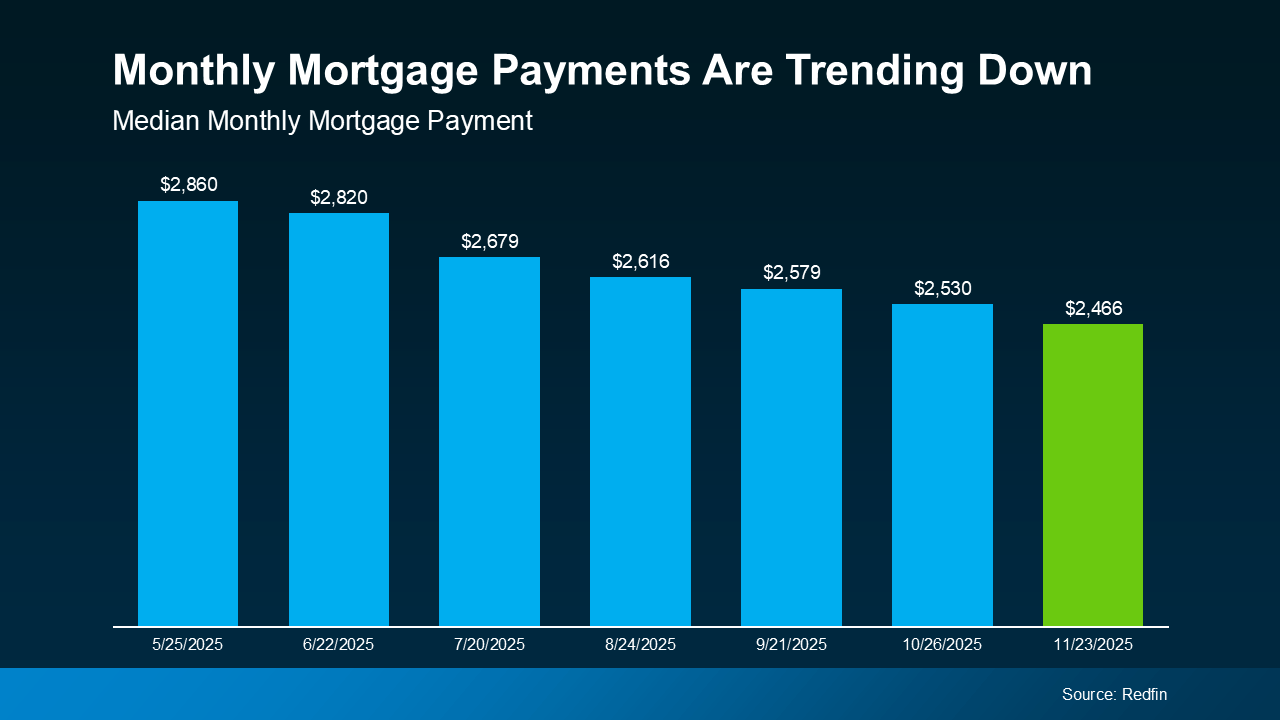
Affordability is starting to improve. Finally.
It’s been a tough few years for buyers. But this year brought some much-needed good news:
That adds up to a monthly mortgage payment that’s hundreds of dollars lower than it would have been just a few months ago (see graph below):
 Buying still isn’t easy, but the numbers are starting to improve. For a lot of people, that means buying a home is becoming a more realistic goal again.
A lot of people worry that the housing market is about to crash, but the data doesn’t point in that direction. Yes, the number of homes for sale has been rising, but it’s still nowhere near the level needed for prices to fall significantly on a national scale. On top of that, homeowners today have a lot of equity and are in a much stronger financial position than they were back in 2008.
Of course, every local market is a little different. Some areas are still seeing prices climb, while others that saw huge spikes a few years ago are leveling off or seeing small corrections. But overall, the national picture is clear: experts surveyed by Fannie Mae project home prices will keep rising, just at a slower, more normal pace (see graph below):
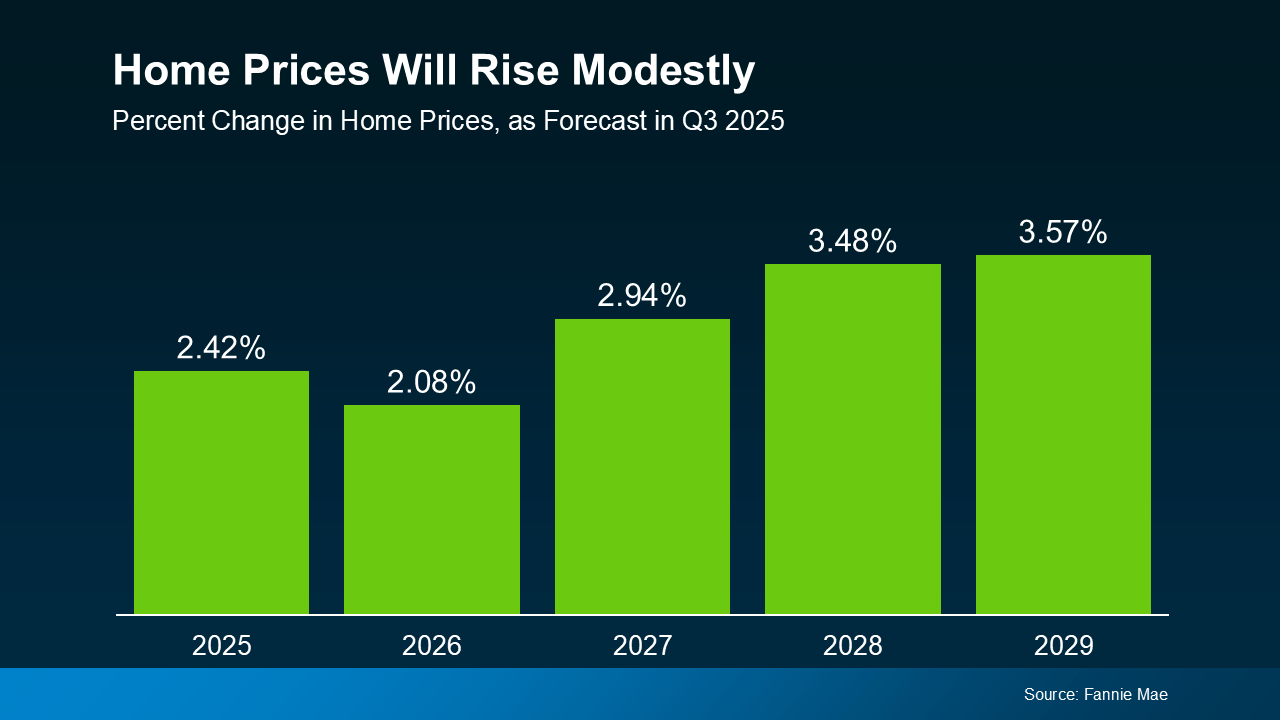 That’s why waiting for a major price drop to get a deal isn’t a very strategic plan. History shows the same thing over and over: people who spend time in the market tend to build the most long-term wealth, not the people who try to time the market perfectly.
Talk about the housing market can feel loud and confusing, especially when you’re hearing so many different takes. If you want to understand what these trends mean for your goals, let’s connect and walk through it together.

Homebuyers are weighing their options right now, and they certainly have a lot on their minds. With everything going on in the job market, the economy, and more – there’s a lot to think about these days. And maybe that’s making you wonder if it really makes sense to buy a home right now.
But here’s what many recent buyers would tell you: even with all that, making a move is worth it.
And this is why they’re thankful they went ahead and took the plunge already. Life doesn’t wait for better market conditions. So, your decision shouldn’t be about trying to time the market perfectly. It should be about moving when the time is right for you and what you need – and it’s different for everyone.
According to the latest report from the National Association of Realtors (NAR), what’s really driving today’s moves is the desire for something better or something different. It’s a personal motivator or a change in what they need out of the home that pushed buyers to act this year (see chart below):
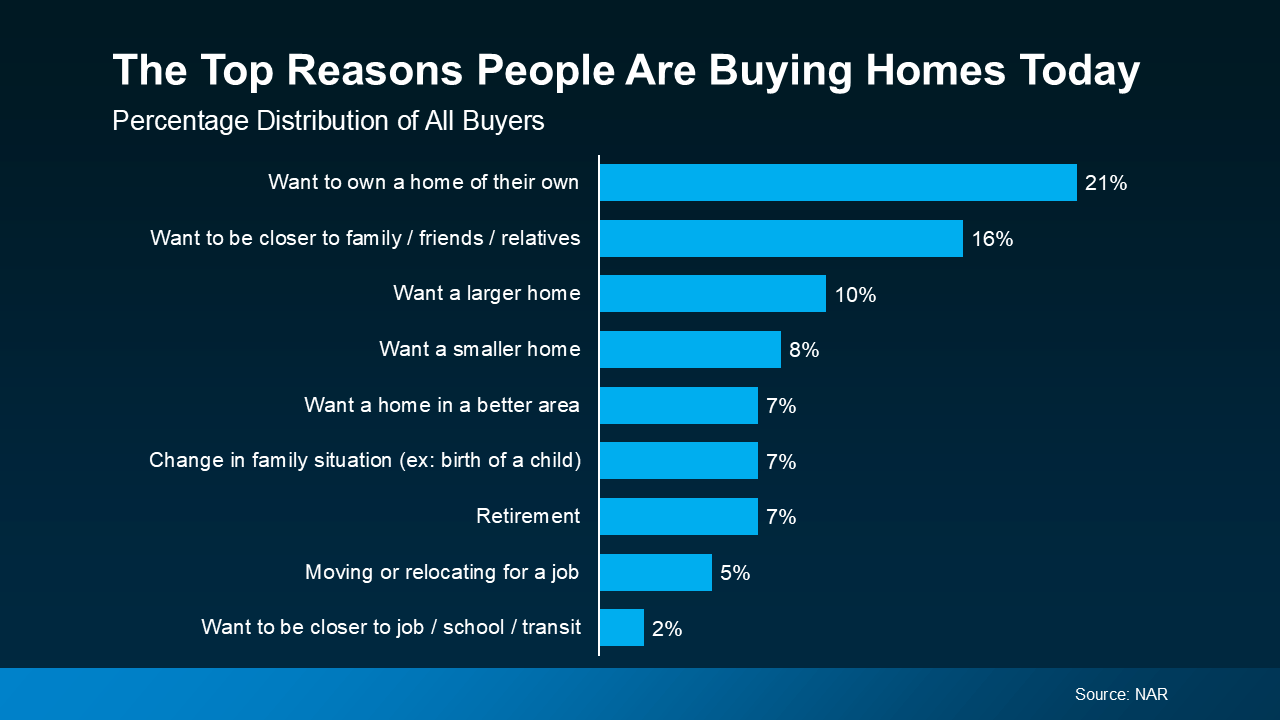 For some, that meant trading an apartment for their very first house – a home they can finally make their own, where they can paint the walls, plant the garden, and build a future.
For others, it meant getting closer to the people who matter most. Living near family or friends isn’t just convenient, it changes your everyday life. Sunday dinners, quick visits, extra help when you need it – that kind of connection is priceless.
And for many buyers, it’s the peace of finding a home that finally fits. It’s finally having space to grow: a bigger kitchen for family dinners, or bedrooms where kids can decorate their own walls and carve out their own corners of the world.
Or, it’s about simplifying. Downsizing to something smaller, easier to maintain, and closer to what matters most can make everyday life feel lighter and less stressful.
No matter the reason, these buyers all share something in common: they stopped waiting for perfect timing and focused on creating the life they wanted now. And if you asked them, odds are they’d say that decision is paying off every day.
That’s what makes a move meaningful. Not the market conditions, but the freedom and happiness that come from living in a home that truly fits. So, while headlines may keep everyone guessing, the people who’ve already made their move are sleeping better, living fuller, and enjoying homes that finally feel right.
Because once your home finally matches your life, everything else starts to fall into place. And that’s exactly how you deserve to feel.
The people who bought a home this year didn’t wait for perfect market conditions to line up. They acted on what they needed in their life. And they’re thankful they did.
If you’re feeling the pull toward something better, let’s talk through your goals. Your next home could bring you more space, more connection, and more happiness than you think.
After several years of high mortgage rates and hesitation from buyers, momentum is quietly building beneath the surface of the housing market. Sellers are reappearing. Buyers are re-engaging. And for the first time in what feels like forever, there’s movement happening again.
No, it’s not a surge. But it is a shift – and it’s one that could set the stage for a stronger year in 2026.
So, what’s driving the comeback? Here are three big trends that are slowly breathing life back into the housing market right now.
Mortgage rates are always going to have their ups and downs – that’s just how rates work. Especially with the general economic uncertainty right now, some volatility is to be expected. But, if you zoom out, it’s the larger trend that really matters most.
And overall, rates have been trending down for most of this year (see graph below):
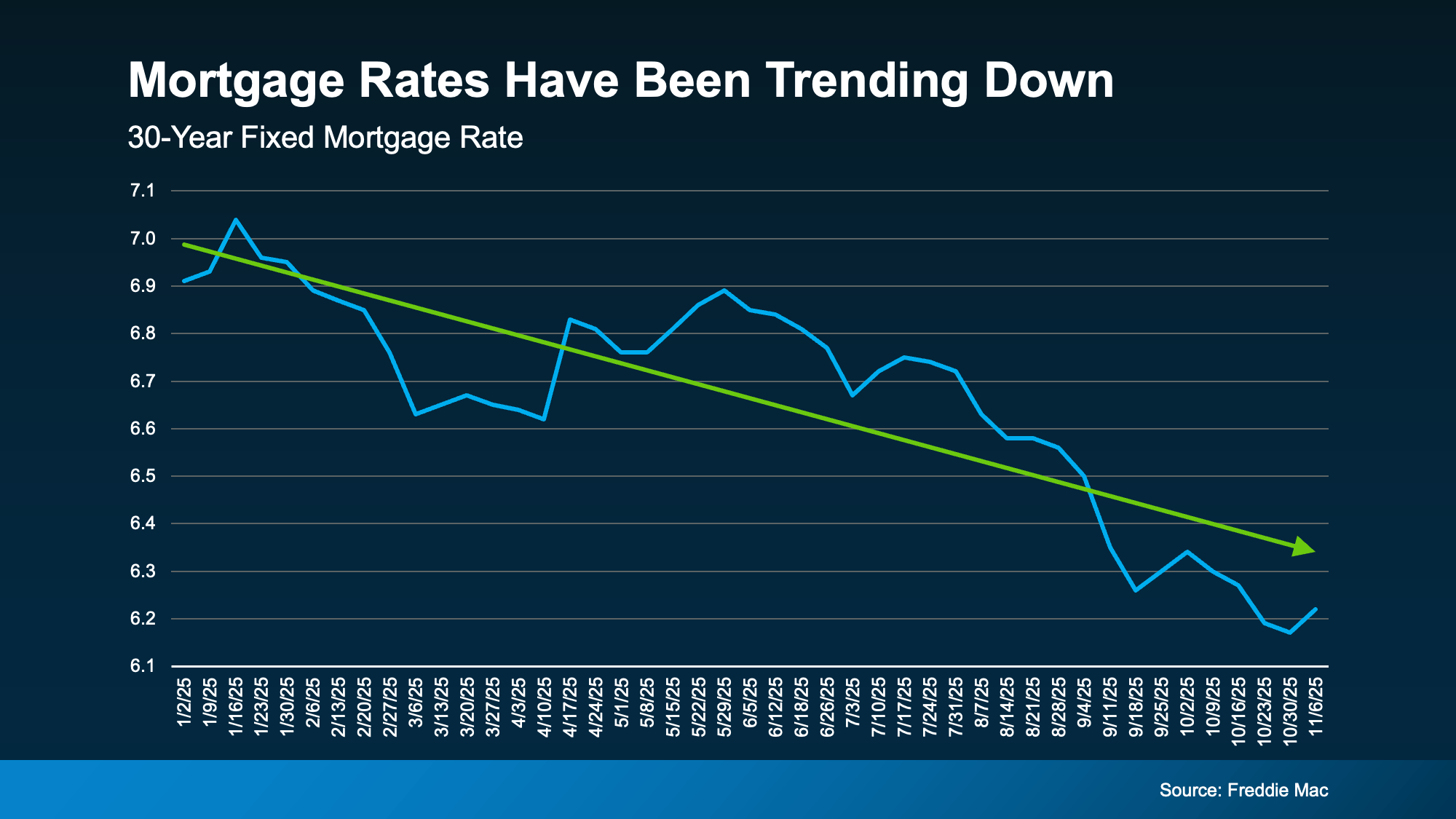 And in just the last few months, we’ve seen the best rates of 2025. According to Sam Khater, Chief Economist at Freddie Mac:
“On a median-priced home, this could allow a homebuyer to save thousands annually compared to earlier this year, showing that affordability is slowly improving.”
Here’s why that matters for you. This shift changes what you can actually afford. It means lower borrowing costs and more buying power. Take this as an example.
Data from Redfin shows a buyer with a $3,000 monthly budget can now afford roughly $25,000 more home than they could one year ago. That’s a big deal. And it’s just one of the reasons why activity is picking up.
For a while, many homeowners stayed put because they didn’t want to give up their low mortgage rate. That “lock-in effect” kept inventory tight. And while plenty of homeowners are still staying where they are today, the number of rate-locked homeowners is starting to ease as rates come down. Life changes are becoming a bigger part of what’s driving more people to move, and that’s opening up more inventory.
Data from Realtor.com shows just how much the number of homes for sale has grown. And the really interesting part is that the market is approaching levels that haven’t been seen for the past six years (see the blue on the graph below):
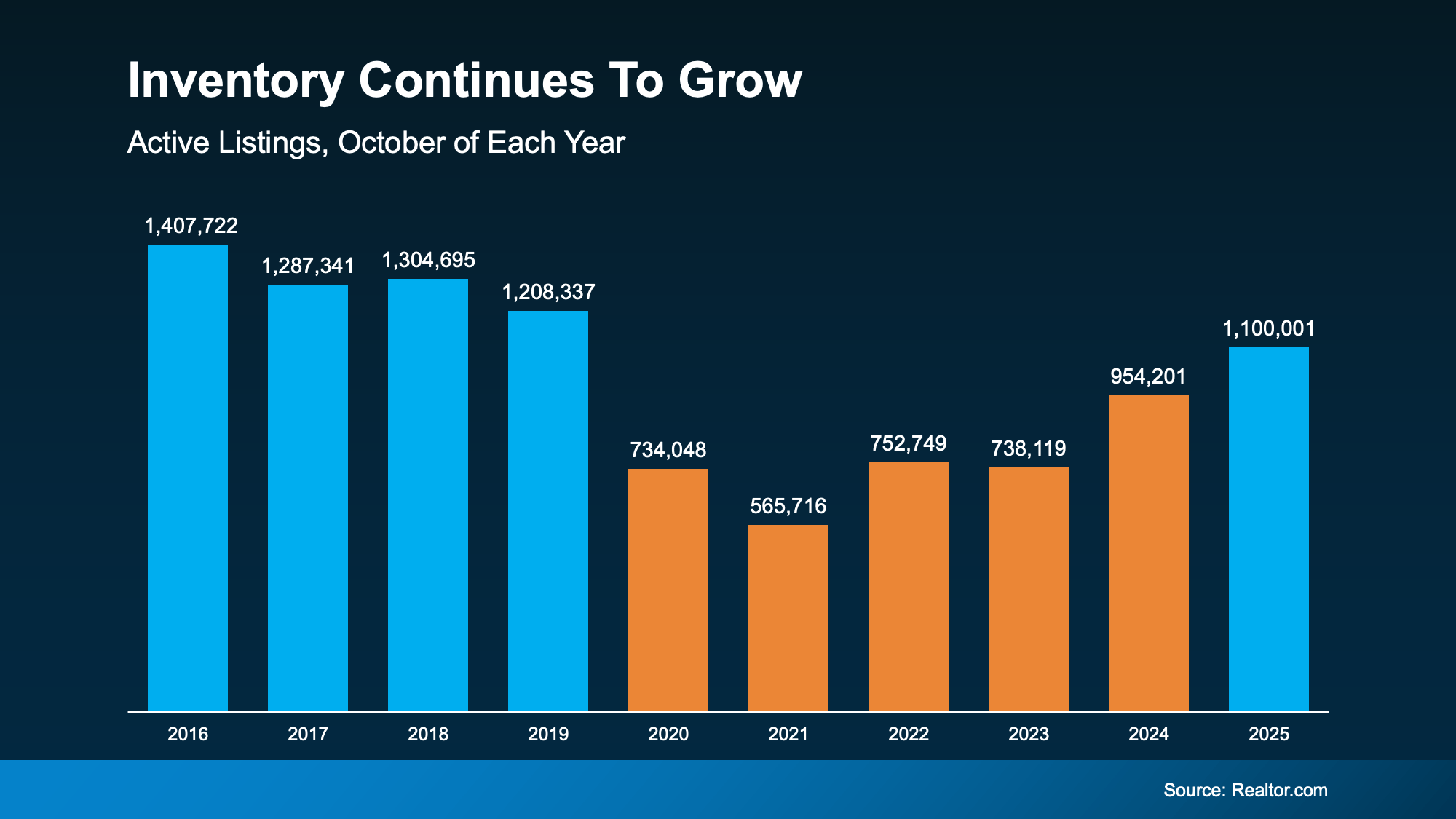 That return to more normal inventory levels is a really good thing. It gives buyers more options than they’ve had in years. And it’s helping to bring the market closer to balance.
And it’s not just sellers making moves. With more options and slightly better affordability, buyers are getting back in the game, too. The Mortgage Bankers Association (MBA) reports purchase applications are up compared to last year, a clear signal that demand is building again (see graph below):
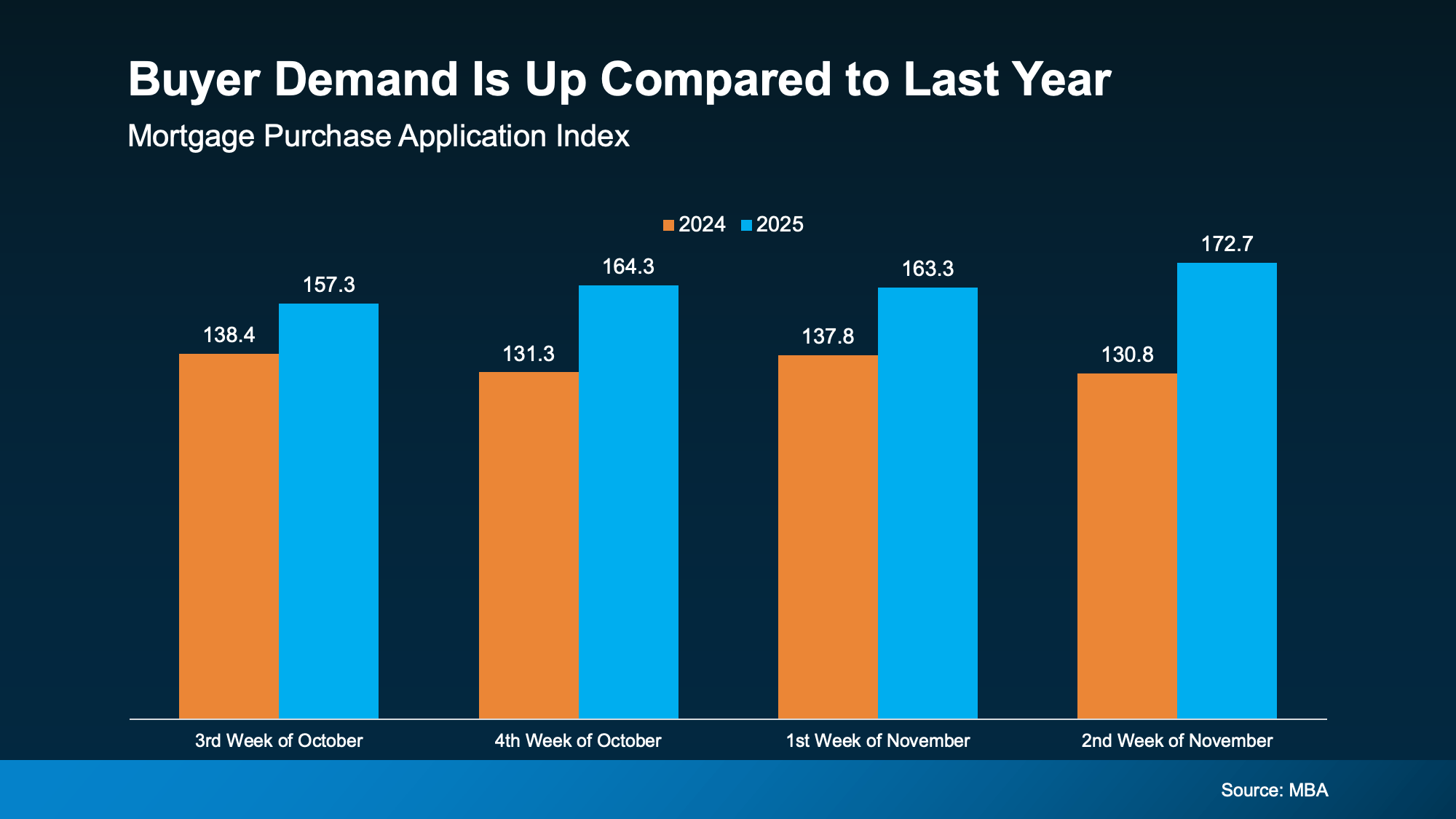 And experts think this momentum will continue. Economists from Fannie Mae, the Mortgage Bankers Association (MBA), and the National Association of Realtors (NAR) all forecast moderate sales growth going into 2026.
Now, this recovery won’t happen overnight. It’s not a flood of activity. But it is the start of steady improvement going into 2026. And that’s something a lot of people have been waiting for.
After several slower-than-normal years, the market is finally starting to turn a corner. Declining mortgage rates, more listings, and growing buyer activity all point to a market gaining real traction.
Let’s connect to talk about what’s happening in our local market and how you can make the most of it in 2026.