February 2021 Market Update

Note: February 2021 data below are the most recent released by the National Association of Realtors.

Existing-home sales declined in February, following two prior months of gains, according to the National Association of Realtors®. Month-over-month, only one major region saw an increase in February, but all four U.S. regions recorded year-over-year gains.

Total existing-home sales (transactions that include single-family homes, townhomes, condominiums and co-ops) decreased 6.6% from January to a seasonally-adjusted annual rate of 6.22 million in February. Sales in total climbed year-over-year, up 9.1% from a year ago (5.70 million in February 2020).

National Association of Realtors February 2021 Data

"Despite the drop in home sales for February – which I would attribute to historically-low inventory – the market is still outperforming pre-pandemic levels," said Lawrence Yun, NAR’s chief economist.
 
He cautioned of a possible slowdown in growth in the coming months as higher prices and rising mortgage rates will cut into home affordability.
 
"I still expect this year’s sales to be ahead of last year's, and with more COVID-19 vaccinations being distributed and available to larger shares of the population, the nation is on the cusp of returning to a sense of normalcy," Yun said. "Many Americans have been saving money and there's a strong possibility that once the country fully reopens, those reserves will be unleashed on the economy."

The median existing-home price for all housing types in February was $313,000, up 15.8% from February 2020 ($270,400), as prices rose in every region. February's national price jump marks 108 straight months of year-over-year gains.

"Home affordability is weakening," Yun said. "Various stimulus packages are expected and they will indeed help, but an increase in inventory is the best way to address surging home costs."

Total housing inventory at the end of February amounted to 1.03 million units, equal to January’s inventory and down 29.5% from one year ago (1.46 million). Unsold inventory sits at a 2.0-month supply at the current sales pace, slightly up from January’s 1.9-month supply and down from the 3.1-month amount recorded in February 2020. NAR first began tracking the single-family home supply in 1982.

Properties typically remained on the market for 20 days in February, down from both 21 days in January and from 36 days in February 2020. Seventy-four percent of the homes sold in February 2021 were on the market for less than a month.

First-time buyers were responsible for 31% of sales in February, down from 33% in January and from 32% in February 2020. NAR's 2020 Profile of Home Buyers and Sellers revealed that the annual share of first-time buyers was 31%.

Individual investors or second-home buyers, who account for many cash sales, purchased 17% of homes in February, up from 15% in January and equal to the percentage from February 2020. All-cash sales accounted for 22% of transactions in February, up from both 19% in January and from 20% in February 2020.

"This year, we've seen fair housing protections extended, recognized Realtors®' remarkable volunteerism, and are collaborating with policymakers to increase revitalization endeavors in numerous neighborhoods," said NAR President Charlie Oppler, a Realtor® from Franklin Lakes, N.J., and the CEO of Prominent Properties Sotheby’s International Realty. "We have made an incredible amount of notable progress thus far in 2021, and NAR is committed and encouraged to continue those efforts."
 
According to Freddie Mac, the average commitment rate for a 30-year, conventional, fixed-rate mortgage was 2.81 in February, up from 2.74% in January. The average commitment rate across all of 2020 was 3.11%.


There’s No Reason To Panic Over Today’s Lending Standards


Today, some are afraid the real estate market is starting to look a lot like it did in 2006, just prior to the housing crash. One of the factors they’re pointing to is the availability of mortgage money. Recent articles about the availability of low down payment loans and down payment assistance programs are causing fear that we’re returning to the bad habits seen 15 years ago. Let’s alleviate these concerns.

Several times a year, the Mortgage Bankers Association releases an index titled The Mortgage Credit Availability Index (MCAI). According to their website:

“The MCAI provides the only standardized quantitative index that is solely focused on mortgage credit. The MCAI is…a summary measure which indicates the availability of mortgage credit at a point in time.”

Basically, the index determines how easy it is to get a mortgage. The higher the index, the more available mortgage credit becomes. Here’s a graph of the MCAI dating back to 2004, when the data first became available:There’s No Reason To Panic Over Today's Lending Standards | MyKCMAs we can see, the index stood at about 400 in 2004. Mortgage credit became more available as the housing market heated up, and then the index passed 850 in 2006. When the real estate market crashed, so did the MCAI (to below 100) as mortgage money became almost impossible to secure. Thankfully, lending standards have eased somewhat since. The index, however, is still below 150, which is about one-sixth of what it was in 2006.

Why did the index rage out of control during the housing bubble?

The main reason was the availability of loans with extremely weak lending standards. To keep up with demand in 2006, many mortgage lenders offered loans that put little emphasis on the eligibility of the borrower. Lenders were approving loans without always going through a verification process to confirm if the borrower would likely be able to repay the loan.

Some of these loans offered attractive, low interest rates that increased over time. The loans were popular because they could be obtained quickly and without the borrower having to provide documentation up front. However, as the rates increased, borrowers struggled to pay their mortgages.

Today, lending standards are much tighter. As Investopedia explains, the risky loans given at that time are extremely rare today, primarily because lending standards have drastically improved:

“In the aftermath of the crisis, the U.S. government issued new regulations to improve standard lending practices across the credit market, which included tightening the requirements for granting loans.”

An example of the relaxed lending standards leading up to the housing crash is the FICO® credit score associated with a loan. What’s a FICO® score? The website myFICO explains:

“A credit score tells lenders about your creditworthiness (how likely you are to pay back a loan based on your credit history). It is calculated using the information in your credit reports. FICO® Scores are the standard for credit scores—used by 90% of top lenders.”

During the housing boom, many mortgages were written for borrowers with a FICO score under 620. Experian reveals that, in today’s market, lenders are more cautious about lower credit scores:

“Statistically speaking, 28% of consumers with credit scores in the Fair range are likely to become seriously delinquent in the future…Some lenders dislike those odds and choose not to work with individuals whose FICO® Scores fall within this range.”

There are definitely still loan programs that allow a 620 score. However, lending institutions overall are much more attentive about measuring risk when approving loans. According to Ellie Mae’s latest Origination Insight Report, the average FICO® score on all loans originated in February was 753.

The graph below shows the billions of dollars in mortgage money given annually to borrowers with a credit score under 620.There’s No Reason To Panic Over Today's Lending Standards | MyKCMIn 2006, mortgage entities originated $376 billion dollars in loans for purchasers with a score under 620. Last year, that number was only $74 billion.

Bottom Line

In 2006, lending standards were much more relaxed with little evaluation done to measure a borrower’s potential to repay their loan. Today, standards are tighter, and the risk is reduced for both lenders and borrowers. These are two very different housing markets, so there’s no need to panic over today’s lending standards.

How Smart Is It To Buy A Home Today?

How Smart Is It To Buy A Home Today?

As reported by Anthony Penna- Vice President of Sales/Marketing  Lawyer’s Title of Arizona

Whether you’re buying your first home or selling your current house, if your needs are changing and you think you need to move, the decision can be complicated. You may have to take personal or professional considerations into account, and only you can judge what impact those factors should have on your desire to move.

However, there’s one category that provides a simple answer. When deciding to buy now or wait until next year, the financial aspect of the purchase is easy to evaluate. You just need to ask yourself two questions:

Do I think home values will be higher a year from now?
Do I think mortgage rates will be higher a year from now?
From a purely financial standpoint, if the answer is ‘yes’ to either question, you should strongly consider buying now. If the answer to both questions is ‘yes,’ you should definitely buy now.

Nobody can guarantee what home values or mortgage rates will be by the end of this year. The experts, however, seem certain the answer to both questions above is a resounding ‘yes.’ Mortgage rates are expected to rise and home values are expected to appreciate rather nicely.

What does this mean to you?

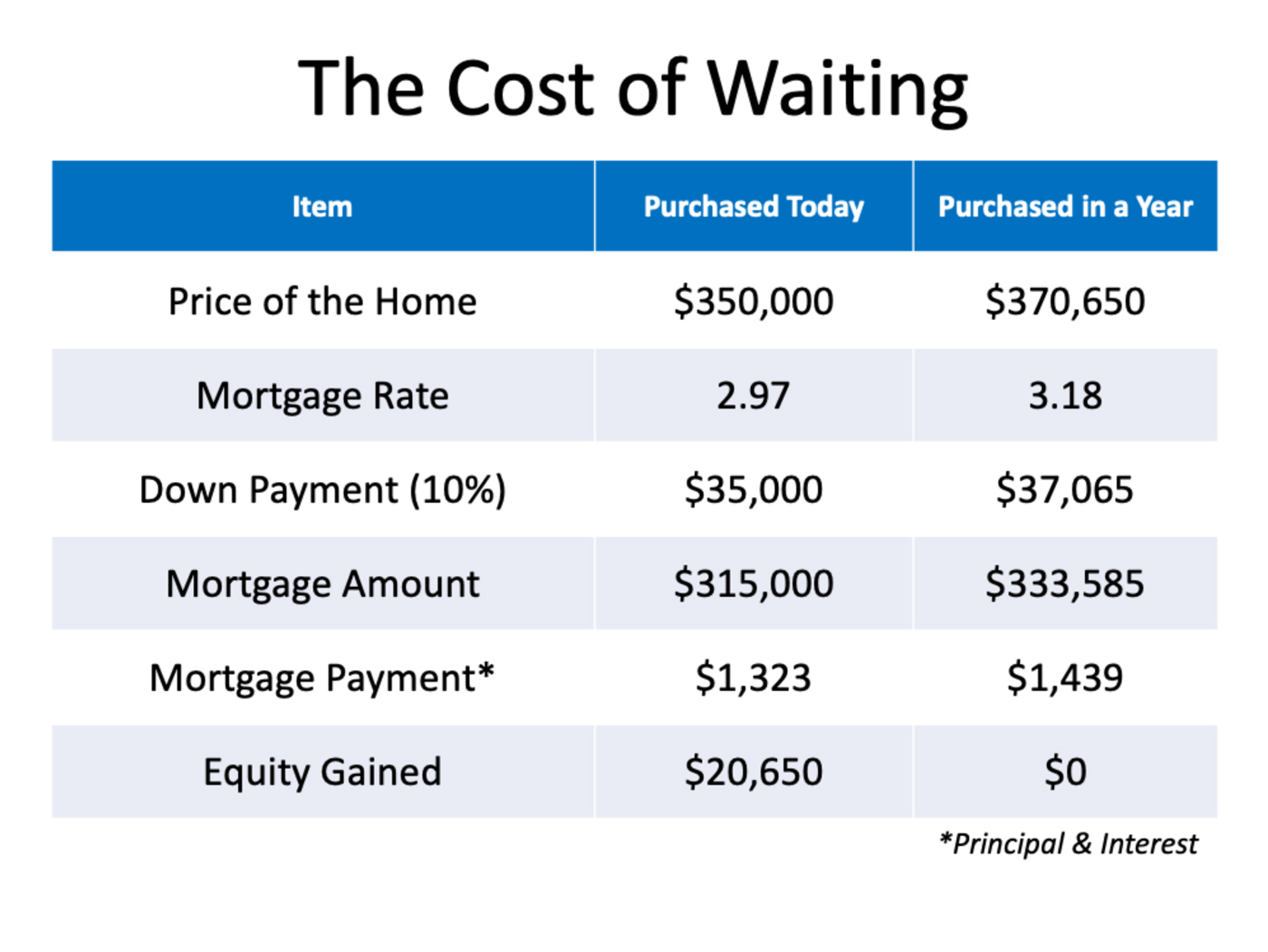
Let’s look at how waiting would impact your financial situation. Here are the assumptions made for this example:

The experts are right – mortgage rates will be 3.18% at the end of the year
The experts are right – home values will appreciate by 5.9%
You want to buy a home valued at $350,000 today
You decide on a 10% down payment

How Smart Is It To Buy A Home Today? | North Scottsdale Real Estate & Luxury Homes | Team Picarello
Here’s the financial impact of waiting:

You pay an extra $20,650 for the house
You need an additional $2,065 for a down payment
You pay an extra $116/month in your mortgage payment ($1,392 additional per year)
You don’t gain the $20,650 increase in wealth through equity build-up

Bottom Line

There are many things to consider when buying a home. However, from a purely financial aspect, if you find a home that meets your needs, buying now makes much more sense than buying next year.

January Market Report

Note: January 2021 data below are the most recent released by the National Association of Realtors.

Existing-home sales rose in January, marking two consecutive months of growth, according to the National Association of Realtors®. From a month-over-month perspective, buying activity varied in the major regions. Year-over-year, all four areas recorded double-digit gains in January.

Total existing-home sales (transactions that include single-family homes, townhomes, condominiums and co-ops) increased 0.6% from December to a seasonally-adjusted annual rate of 6.69 million in January. Sales in total climbed year-over-year, up 23.7% from a year ago (5.41 million in January 2020).

National Association of Realtors January 2021 Data

"Home sales continue to ascend in the first month of the year, as buyers quickly snatched up virtually every new listing coming on the market," said Lawrence Yun, NAR's chief economist. "Sales easily could have been even 20% higher if there had been more inventory and more choices."

The median existing-home price for all housing types in January was $303,900, up 14.1% from January 2020 ($266,300), as prices increased in every region. January's national price jump marks 107 straight months of year-over-year gains.

"Home sales are continuing to play a part in propping up the economy," Yun said. "With additional stimulus likely to pass and several vaccines now available, the housing outlook looks solid for this year."

Yun says he expects more jobs to return, which will spur homebuying in the coming months. He predicts existing-home sales will reach at least 6.5 million in 2021, even as he says mortgage rates are likely to inch higher due to the rising budget deficit and higher inflation.

Total housing inventory at the end of January amounted to 1.04 million units, down 1.9% from December and down 25.7% from one year ago (1.40 million). Unsold inventory sits at a 1.9-month supply at the current sales pace, equal to December's supply and down from the 3.1-month amount recorded in January 2020. NAR first began tracking the single-family home supply in 1982.

Properties typically remained on the market for 21 days in January, seasonally even with December and down from 43 days in January 2020. Seventy-one percent of the homes sold in January 2021 were on the market for less than a month.

First-time buyers were responsible for 33% of sales in January, up from 31% in December 2020 and from 32% in January 2020. NAR's 2020 Profile of Home Buyers and Sellers revealed that the annual share of first-time buyers was 31%.

Individual investors or second-home buyers, who account for many cash sales, purchased 15% of homes in January, up modestly from 14% in December 2020, but down from 17% in January 2020. All-cash sales accounted for 19% of transactions in January, unchanged from December but down from 21% in January 2020.

"This year, more than ever, we are prepared and eager to help families and neighbors secure housing," said NAR President Charlie Oppler, a Realtor® from Franklin Lakes, N.J., and the CEO of Prominent Properties Sotheby's International Realty. "NAR is working to close the racial homeownership gap, secure equal access to housing for all Americans and address housing affordability issues plaguing communities across the country."
 
According to Freddie Mac, the average commitment rate for a 30-year, conventional, fixed-rate mortgage was 2.74% in January, up from 2.68% in December. The average commitment rate across all of 2020 was 3.11%.


These 7 Kitchen Trends Are Here to Stay

As reported by Architectural Digest 

Unusual materials, double islands and more—here are the 2021 trends designers love

Cara Gibbs  FEBRUARY 18, 2021 10:21 AM


Comfort and connection in the kitchen have never been more essential. Four design firms weigh in on the future of all things luxury in the next wave of kitchen features. What’s to come? Seven key trends that designers would do well to buy into today.


The Return of Wood 

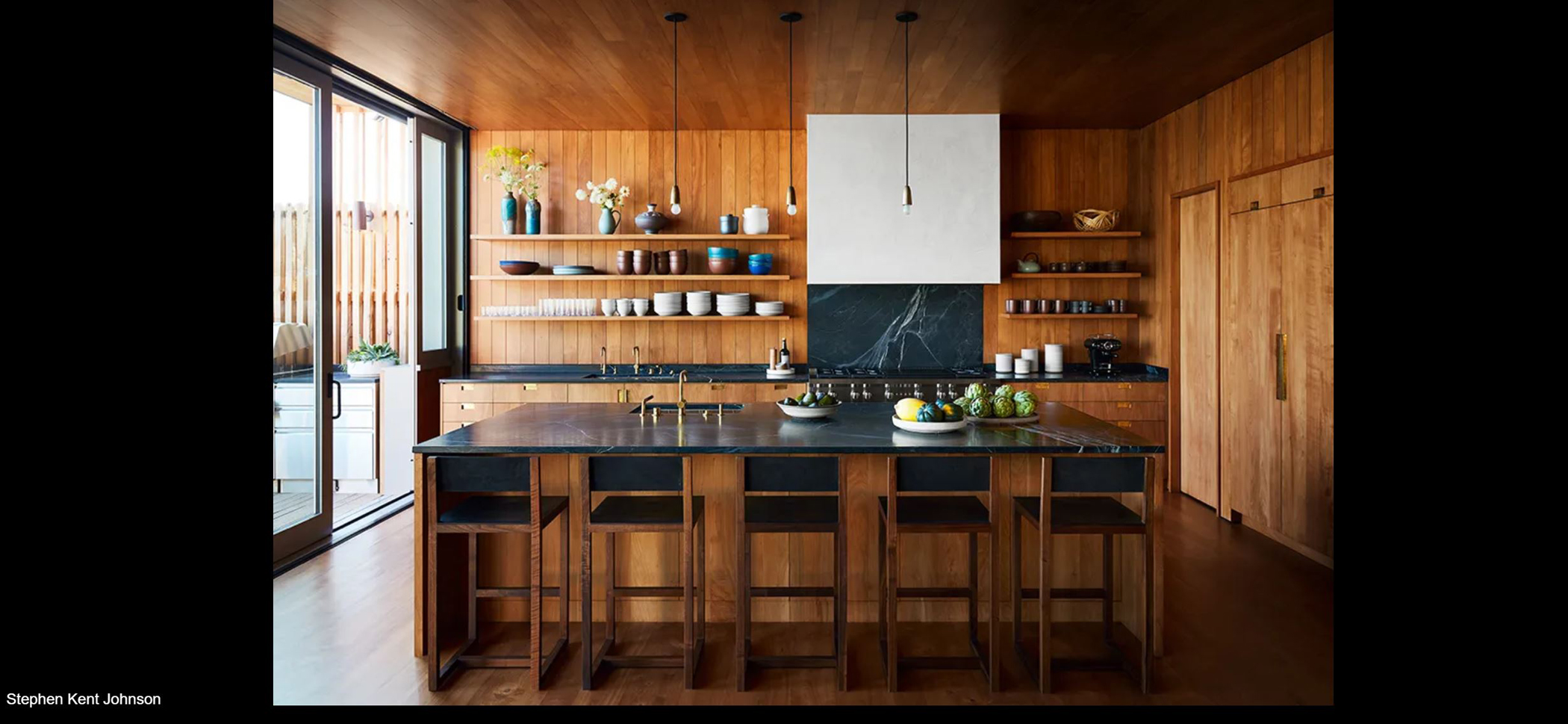
“My clients are showing a lot more interest in wood cabinets and finishes,” shares Los Angeles–based designer Peti Lau, “specifically, really beautiful natural ash wood, which renders a rustic contemporary vibe.” Down-to-earth by nature but used in a more modern way, wood offers layers of luxury to the kitchen. “People are yearning for a sense of calm and for soothing palettes,” says Lau. Echoing that stance is Los Angeles design duo Cayley Lambur and Lucia Bartholomew of Electric Bowery: “Lots of texture and warmth is important in the kitchen. We are seeing less white and more richness in the overall palette. Whether that comes from a deeper, richer color to the wood, steering away from purely neutral palettes allows for a more personal approach to the kitchen.”

Little Details

“Kitchens are becoming as detailed as possible,” Los Angeles–based AD100 designer Brigette Romanek of Romanek Design Studio declares. “And that’s a good thing. Clients are making their kitchens personal, not necessarily in keeping with the famous triangle [layout between stove, sink, and refrigerator] but rather what works best for them.” The art of details often opens up the conversation to custom work. Lau adds, “I find that there are more customizable options for designers and clients to select different finishes for the appliances. There are more customizable façades and covers to choose from, and that’s what clients request most—functionality and customization for their daily routines. Details like coffee and juice bars are common.”

Double Islands

Houston-based designer Nina Magon of Contour Interior Design sheds light on the double island craze. “This trend adds storage to your kitchen, and it provides more space to prepare food and entertain guests,” she says. With sleek sight lines and abundant counter space, double islands are the ultimate indulgence. “Double islands make a huge difference in kitchens and are the perfect gathering points,” adds Lau. “Having space for them—that’s the true luxury item.”

The End of Upper Cabinets

Thanks to the emergence of double islands, it appears that upper cabinetry may fall into the category of ornamental rather than necessary. “By increasing the functionality and usability, it eliminates the need for upper cabinets, creating an open-concept kitchen,” says Magon. The Electric Bowery team confirms: “Kitchens are designed to be an extension of the living space, so it’s important that the design feel less purely utilitarian.” Their approach? “Incorporate open shelves as areas of display to house beautiful dishes and glassware, but be conscious not to overcrowd them.”

Smarter Kitchens

“Appliances are getting smarter,” notes Romanek. Tech advances are no longer confined to media rooms and sound systems but are proving to make some serious breakthroughs in the kitchen. “The integrated smart-technology systems and options catering to the lifestyle of end users have been game-changing, and seemingly grow more advanced by the day,” muses Lau. “Now you can have technology integrated into most functions and appliances, from smart faucets to ovens being controlled by your smartphone to simple touch-closing cabinets. Smart kitchens are really where the luxury kitchen design ethos is heading,” says Magon. Pointing out that the majority of clients are spending increased time in their homes, Magon notes that they “want their kitchens to ease their day-to-day tasks.… Subsequently, technology is leading to more eco-friendly kitchen environments complete with air purifiers for clean air.”

Concealment

“Most people have rediscovered the joys of cooking on a more regular basis, and kitchen appliances that were once left to collect dust in drawers and deep cabinets are being utilized [more],” point out Lambur and Bartholomew. “Accommodating for a more permanent home for these appliances and gadgets that does not clutter your kitchen is highly desirable.” The solution? Concealed design. Magon touts the benefits of disguised storage: “There are so many options now that remove the cluttered look from counters, such as pop-up plugs, rotating panels that contain storage behind them, and push-to-open cabinets with invisible hardware allowing your materials to take center stage.”

Rethinking Materials 

“I’m seeing a big return of old materials used in new ways,” reflects Romanek. “Brass hoods, copper panels, wood cabinets, onyx instead of marble, unique lighting, sinks in different finishes—so much good stuff!” Paralleling Romanek’s sentiments, Magon shares, “Material selections are the most important part of designing a luxury kitchen. The future is more mixed materials such as concrete mixed with glossy natural stone, creating the ultimate impact.”

Thoughts about 2021

In a year that brought decimation to nearly every other part of the economy, who could have guessed the housing market would see an unprecedented boom in 2020? Despite global shutdowns and mass unemployment, prospective homebuyers found themselves in heated bidding wars, as market demand increased as much as 40% at one point.
Will this year bring more of the same or will the housing boom peter out? While there is still much uncertainty about the post-pandemic future, here are some trends experts say you can likely expect to see in 2021.

Mortgage rates will remain low.
The historically low mortgage rates we’ve were treated to in 2020 are likely to continue into 2021, and perhaps even longer. Vaccines are starting to roll out in the US, but it will be some time before they are made widely available, and experts say the economic recovery will be slow at first. 30-year interest rates will hover closer to their current average of 2.67% at the beginning of 2021.
But as the vaccine is more widely distributed by the second half of the year, rates may start to creep up slightly to the 3% range, as increased economic activity typically leads to increased borrowing costs. This would still put mortgage rates at opportunistic lows, so don’t expect homebuyers to be deterred.
There will be a boom in new home construction.
With demand expected to stay strong into the coming year and an existed home supply that can’t keep up, experts predict we will see unprecedented levels of new constructions in 2021. Low interest rates also benefit builders wanting to borrow for new construction projects, and since commercial projects have mostly been put on hold in 2020, there is a readily available supply of labor and materials for those who wish to build their dream home.

New homes will cater to different demands.
Homeowner preferences are changing with the new culture the pandemic has created. With millions having been confined to their homes for long periods throughout 2020, there is an emerging trend that people are craving more space. Expect increased demand for larger and more energy-efficient (and money-saving) homes. But forget about those previously popular open floor plans. Privacy is the new norm in 2021. Quality air filtration systems will also be a frequently requested feature.

2020 was a great year for housing, and 2021 is looking no different. The housing market is predicted to stay strong, bolstered by new trends, low interest rates, and a slowly recovering economy.

February Monthly Market Update

Note: December 2020 data below are the most recent released by the National Association of Realtors.

Existing-home sales rose in December, with home sales in 2020 reaching their highest level since 2006, according to the National Association of Realtors®. Activity in the major regions was mixed on a month-over-month basis, but each of the four areas recorded double-digit year-over-year growth in December.

Total existing-home sales (transactions that include single-family homes, townhomes, condominiums and co-ops) increased 0.7% from November to a seasonally-adjusted annual rate of 6.76 million in December. Sales in total rose year-over-year, up 22.2% from a year ago (5.53 million in December 2019).


National Association of Realtors December 2020 Data

"Home sales rose in December, and for 2020 as a whole, we saw sales perform at their highest levels since 2006, despite the pandemic," said Lawrence Yun, NAR's chief economist. "What's even better is that this momentum is likely to carry into the new year, with more buyers expected to enter the market."
 
"Although mortgage rates are projected to increase, they will continue to hover near record lows at around 3%," Yun said. "Moreover, expect economic conditions to improve with additional stimulus forthcoming and vaccine distribution already underway."

The median existing-home price for all housing types in December was $309,800, up 12.9% from December 2019 ($274,500), as prices increased in every region. December's national price increase marks 106 straight months of year-over-year gains.

Total housing inventory at the end of December totaled 1.07 million units, down 16.4% from November and down 23% from one year ago (1.39 million). Unsold inventory sits at an all-time low 1.9-month supply at the current sales pace, down from 2.3 months in November and down from the 3.0-month figure recorded in December 2019. NAR first began tracking the single-family home supply in 1982.

Properties typically remained on the market for 21 days in December, seasonally even with November and down from 41 days in December 2019. Seventy percent of the homes sold in December 2020 were on the market for less than a month.

"To their credit, homebuilders and construction companies have increased efforts to build, with housing starts hitting an annual rate of near 1.7 million in December, with more focus on single-family homes," Yun said. "However, it will take vigorous new home construction in 2021 and in 2022 to adequately furnish the market to properly meet the demand."

First-time buyers were responsible for 31% of sales in December, unchanged from the same time in 2019, but down from 32% in November 2020. NAR's 2020 Profile of Home Buyers and Sellers revealed that the annual share of first-time buyers was 31%.

Individual investors or second-home buyers, who account for many cash sales, purchased 14% of homes in December, identical to the share recorded in November 2020 and a small decline from 17% in December 2019. All-cash sales accounted for 19% of transactions in December, down from 20% in both November and December 2019.

"NAR will work with the incoming Biden administration in pursuit of policies promoting housing affordability and accessibility," said NAR President Charlie Oppler, a Realtor® from Franklin Lakes, N.J., and the CEO of Prominent Properties Sotheby's International Realty. "We were pleased with the homebuyer tax credit President Biden proposed as a candidate and we look forward to continuing our work with Congress and the White House. We will aim to find common ground, especially related to ways of boosting home supply and working toward solutions that will protect and support homeownership and America's broader real estate industry."
 
According to Freddie Mac, the average commitment rate for a 30-year, conventional, fixed-rate mortgage decreased to 2.68% in December, down from 2.77% in November. The average commitment rate across all of 2020 was 3.11%.


January Monthly Market Update

Note: November 2020 data below are the most recent released by the National Association of Realtors.

Existing-home sales fell in November, snapping a five-month streak of month-over-month gains, according to the National Association of Realtors®. All major regions either took a step back or held steady in terms of their respective month-over-month status, but each of the four areas experienced significant year-over-year growth.

Total existing-home sales (transactions that include single-family homes, townhomes, condominiums and co-ops) decreased 2.5% from October to a seasonally-adjusted annual rate of 6.69 million in November. However, sales in total rose year-over-year, up 25.8% from a year ago (5.32 million in November 2019).


National Association of Realtors November 2020 Data

"Home sales in November took a marginal step back, but sales for all of 2020 are already on pace to surpass last year's levels," said Lawrence Yun, NAR's chief economist. "Given the COVID-19 pandemic, it's amazing that the housing sector is outperforming expectations."
 
"Circumstances are far from being back to the pre-pandemic normal," he said. "However, the latest stimulus package and with the vaccine distribution underway, and a very strong demand for homeownership still prevalent, robust growth is forthcoming for 2021."

The median existing-home price for all housing types in November was $310,800, up 14.6% from November 2019 ($271,300), as prices increased in every region. November's national price increase marks 105 straight months of year-over-year gains.

Total housing inventory at the end of November totaled 1.28 million units, down 9.9% from October and down 22% from one year ago (1.64 million). Unsold inventory sits at an all-time low 2.3-month supply at the current sales pace, down from 2.5 months in October and down from the 3.7-month figure recorded in November 2019.

Properties typically remained on the market for 21 days in November, seasonally even with October and down from 38 days in November 2019. Seventy-three percent of homes sold in November 2020 were on the market for less than a month.

"The positive momentum that home sellers are seeing will carry on well into the new year," Yun predicted, citing low mortgage rates and remote-work flexibilities.

"Housing affordability, which had greatly benefitted from falling mortgage rates, are now being challenged due to record-high home prices," Yun said. "That could place strain on some potential consumers, particularly first-time buyers."

First-time buyers were responsible for 32% of sales in November, equal to the percentage seen in both October 2020 and November 2019. NAR's 2020 Profile of Home Buyers and Sellers revealed that the annual share of first-time buyers was 31%.

Individual investors or second-home buyers, who account for many cash sales, purchased 14% of homes in November, identical to the share recorded in October 2020 and a small decline from 16% in November 2019. All-cash sales accounted for 20% of transactions in November, up from 19% in October but unchanged from November 2019.

"While we still face economic and health challenges ahead, I have zero doubt that the nation will continue to recover from this pandemic," said NAR President Charlie Oppler, a Realtor® from Franklin Lakes, N.J., and broker/owner of Prominent Properties Sotheby's International Realty. "Whether it's through volunteering or philanthropy, or helping a given buyer secure that dream home, Realtors® have stepped up in a major way and we will continue with those efforts in 2021 and beyond."
 
According to Freddie Mac, the average commitment rate for a 30-year, conventional, fixed-rate mortgage decreased to 2.77% in November, down from 2.83% in October. The average commitment rate across all of 2019 was 3.94%.

TeamPicarello Review By Tina Tamboer


Hear what Karen’s peers are saying about the experience of working with TeamPicarello.

December Monthly Market Update

Note: November 2020 data below are the most recent released by the National Association of Realtors.

Existing-home sales fell in November, snapping a five-month streak of month-over-month gains, according to the National Association of Realtors®. All major regions either took a step back or held steady in terms of their respective month-over-month status, but each of the four areas experienced significant year-over-year growth.

Total existing-home sales (transactions that include single-family homes, townhomes, condominiums and co-ops) decreased 2.5% from October to a seasonally-adjusted annual rate of 6.69 million in November. However, sales in total rose year-over-year, up 25.8% from a year ago (5.32 million in November 2019).


National Association of Realtors November 2020 Data

"Home sales in November took a marginal step back, but sales for all of 2020 are already on pace to surpass last year's levels," said Lawrence Yun, NAR's chief economist. "Given the COVID-19 pandemic, it's amazing that the housing sector is outperforming expectations."
 
"Circumstances are far from being back to the pre-pandemic normal," he said. "However, the latest stimulus package and with the vaccine distribution underway, and a very strong demand for homeownership still prevalent, robust growth is forthcoming for 2021."

The median existing-home price for all housing types in November was $310,800, up 14.6% from November 2019 ($271,300), as prices increased in every region. November's national price increase marks 105 straight months of year-over-year gains.

Total housing inventory at the end of November totaled 1.28 million units, down 9.9% from October and down 22% from one year ago (1.64 million). Unsold inventory sits at an all-time low 2.3-month supply at the current sales pace, down from 2.5 months in October and down from the 3.7-month figure recorded in November 2019.

Properties typically remained on the market for 21 days in November, seasonally even with October and down from 38 days in November 2019. Seventy-three percent of homes sold in November 2020 were on the market for less than a month.

"The positive momentum that home sellers are seeing will carry on well into the new year," Yun predicted, citing low mortgage rates and remote-work flexibilities.

"Housing affordability, which had greatly benefitted from falling mortgage rates, are now being challenged due to record-high home prices," Yun said. "That could place strain on some potential consumers, particularly first-time buyers."

First-time buyers were responsible for 32% of sales in November, equal to the percentage seen in both October 2020 and November 2019. NAR's 2020 Profile of Home Buyers and Sellers revealed that the annual share of first-time buyers was 31%.

Individual investors or second-home buyers, who account for many cash sales, purchased 14% of homes in November, identical to the share recorded in October 2020 and a small decline from 16% in November 2019. All-cash sales accounted for 20% of transactions in November, up from 19% in October but unchanged from November 2019.

"While we still face economic and health challenges ahead, I have zero doubt that the nation will continue to recover from this pandemic," said NAR President Charlie Oppler, a Realtor® from Franklin Lakes, N.J., and broker/owner of Prominent Properties Sotheby's International Realty. "Whether it's through volunteering or philanthropy, or helping a given buyer secure that dream home, Realtors® have stepped up in a major way and we will continue with those efforts in 2021 and beyond."
 
According to Freddie Mac, the average commitment rate for a 30-year, conventional, fixed-rate mortgage decreased to 2.77% in November, down from 2.83% in October. The average commitment rate across all of 2019 was 3.94%.