An Expert Advisor Will Give You the Best Advice in Today’s Market

Having an experienced guide coaching you through the process of buying or selling a home is important in a normal market – but today’s market is far from normal. As a result, an expert real estate advisor isn’t just good to have by your side, they’re essential.

Today’s housing market is full of extremes. Experts project mortgage rates will continue to rise this year, and that’s driving significant demand for homes as buyers want to make their purchases before rates climb even higher. At the same time, an absence of sellers is leading to record-low housing inventory. This imbalance in supply and demand is creating bidding wars and driving home price appreciation as well as considerable gains in home equity.

These market conditions can feel overwhelming, but you don’t have to go at it alone. Having a trusted expert to coach you through the process of buying or selling a home gives you clarity and confidence through each step.

Here are just a few of the ways a real estate expert is invaluable:

Contracts – Agents help with the disclosures and contracts necessary in today’s heavily regulated environment.

Experience – In an unprecedented market, experience is crucial. Real estate professionals know the entire sales process, including how it’s changed over the past two years.

Negotiations – Your real estate advisor acts as a buffer in negotiations with all parties throughout the entire transaction and advocates for your best interests.

Education – Knowledge is power in today’s market, and your advisor will simply and effectively explain market conditions and translate what they mean for you.

Pricing – Finally, a real estate professional understands today’s real estate values when setting the price of your home or helping you make an offer to purchase one.

A real estate agent is a crucial guide through this unprecedented market, but not all agents are created equal. A true expert can carefully walk you through the whole real estate process, look out for your unique needs, and advise you on the best ways to achieve success. Finding an expert real estate advisor – not just any agent – should be your top priority when you’re ready to buy or sell a home.

What’s the key to choosing the right expert?

It starts with trust. You’ll want to know you can trust the advice they’re giving you, so you need to make sure you’re connected with a true professional. No one can provide perfect advice because it’s impossible to know exactly what’s going to happen at every turn – especially in today’s unique market. But a true professional can give you the best possible advice based on the information and situation at hand. They’ll help you make the necessary adjustments along the way, advocate for you throughout the process, and coach you on the essential knowledge you need to make confident decisions. That’s exactly what you want and deserve.

Bottom Line

It’s critical to have an expert on your side who’s well versed in navigating today’s rapidly changing market. If you’re planning to buy or sell a home this year, let’s connect so you have a real estate professional on your side to give you the best advice and guide you along the way.


January 2022 Market Update

Note: January 2022 data below are the most recent released by the National Association of Realtors.

Total existing-home sales) completed transactions that include single-family homes, townhomes, condominiums and co-ops) climbed 6.7% from December to a seasonally adjusted annual rate of 6.50 million in January. Year-over-year, sales fell 2.3% (6.65 million in January 2021).

National Association of Realtors January 2022 Data

"Buyers were likely anticipating further rate increases and locking-in at the low rates, and investors added to overall demand with all-cash offers," said Lawrence Yun, NAR's chief economist. "Consequently, housing prices continue to move solidly higher."

Total housing inventory at the end of January amounted to 860,000 units, down 2.3% from December and down 16.5% from one year ago (1.03 million). Unsold inventory sits at a 1.6-month supply at the current sales pace, down from 1.7 months in December and from 1.9 months in January 2021.

"The inventory of homes on the market remains woefully depleted, and in fact is currently at an all-time low," Yun said.
 
According to Yun, homes priced at $500,000 and below are disappearing, while supply has risen at the higher price range. He noted that such increases will continue to shift the mix of buyers toward high-income consumers.
 
"There are more listings at the upper end – homes priced above $500,000 – compared to a year ago, which should lead to less hurried decisions by some buyers," Yun added. "Clearly, more supply is needed at the lower-end of the market in order to achieve more equitable distribution of housing wealth."

The median existing-home price for all housing types in January was $350,300, up 15.4% from January 2021 ($303,600), as prices rose in each region. This marks 119 consecutive months of year-over-year increases, the longest-running streak on record.

"As mortgage forbearance programs end, and as homebuilders ramp up production – despite the supply-chain material issues – we are likely to see more homes on the market as soon as 2022," said Yun.

Properties typically remained on the market for 19 days in January, equal to days on market for December, and down from 21 days in January 2021. Seventy-nine percent of homes sold in January 2022 were on the market for less than a month.

First-time buyers were responsible for 27% of sales in January, down from 30% in December and down from 33% in January 2021. NAR's 2021 Profile of Home Buyers and Sellers  – released in late 2021 – reported that the annual share of first-time buyers was 34%.

Yun explained that the forthcoming increase in mortgage rates will be problematic for at least two market segments.
 
"First, some moderate-income buyers who barely qualified for a mortgage when interest rates were lower will now be unable to afford a mortgage," he said. "Second, consumers in expensive markets, such as California and the New York City metro area, will feel the sting of nearly an additional $500 to $1000 in monthly payments due to rising rates."
 
Individual investors or second-home buyers, who account for many cash sales, purchased 22% of homes in January, up from 17% in December and from 15% in January 2021. All-cash sales accounted for 27% of transactions in January, up from 23% in December and from 19% in January 2021.
 
According to Freddie Mac, the average commitment rate for a 30-year, conventional, fixed-rate mortgage was 3.45% in January, up from 3.10% in December. The average commitment rate across all of 2021 was 2.96%.
 
Regional Breakdown
 
Existing-home sales in the Northeast grew 6.8% in January, posting an annual rate of 780,000, an 8.2% decline from January 2021. The median price in the Northeast was $382,800, up 6.0% from one year ago.
 
Existing-home sales in the Midwest rose 4.1% from the prior month to an annual rate of 1,510,000 in January, equal to the level seen from a year ago. The median price in the Midwest was $245,900, a 7.8% rise from January 2021.
 
Existing-home sales in the South jumped 9.3% in January from the prior month, reporting an annual rate of 2,940,000, a gain of 0.3% from one year ago. The median price in the South was $312,400, an 18.7% surge from one year prior. For the fifth straight month, the South witnessed the highest pace of appreciation.
 
"The migration to the Southern states is clearly getting reflected in higher home sales and fast rising home prices compared to other regions," Yun said.
 
Existing-home sales in the West increased 4.1% from the previous month, registering an annual rate of 1,270,000 in January, down 6.6% from one year ago. The median price in the West was $505,800, up 8.8% from January 2021.

Real Estate Voted the Best Investment Eight Years in a Row

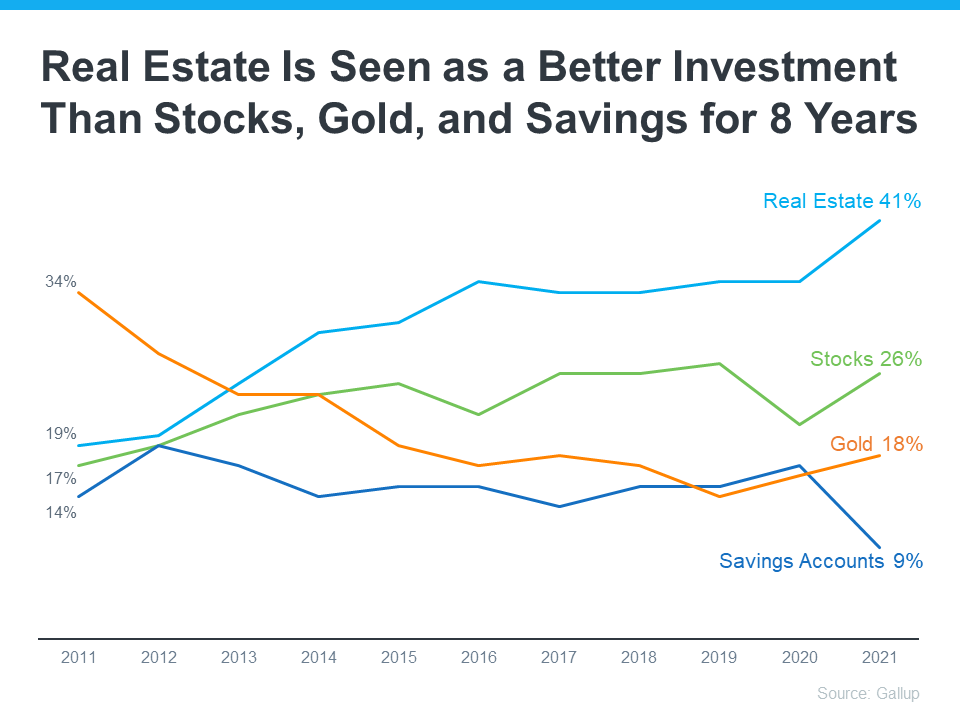
In an annual Gallup poll, Americans chose real estate as the best long-term investment. And it’s not the first time it’s topped the list, either. Real estate has been on a winning streak for the past eight years, consistently gaining traction as the best long-term investment (see graph below):

Real Estate Voted the Best Investment Eight Years in a Row | MyKCMIf you’re thinking about purchasing a home this year, this poll should reassure you. Even when inflation is rising like it is today, Americans agree an investment like real estate truly shines.

Why Is Real Estate a Great Investment During Times of High Inflation?

With inflation reaching its highest level in 40 years, it’s more important than ever to understand the financial benefits of homeownership. Rising inflation means prices are increasing across the board. That includes goods, services, housing costs, and more. But when you purchase your home, you lock in your monthly housing payments, effectively shielding yourself from increasing housing payments. James Royal, Senior Wealth Management Reporter at Bankrate, explains it like this:

“A fixed-rate mortgage allows you to maintain the biggest portion of housing expenses at the same payment. Sure, property taxes will rise and other expenses may creep up, but your monthly housing payment remains the same.”

If you’re a renter, you don’t have that same benefit, and you aren’t protected from increases in your housing costs, especially rising rents.

History Shows During Inflationary Periods, Home Prices Rise as Well

As a homeowner, your house is an asset that typically increases in value over time, even during inflation. That‘s because, as prices rise, the value of your home does, too. And that makes buying a home a great hedge during periods of high inflation. Natalie Campisi, Advisor Staff for Forbes, notes:

“Tangible assets like real estate get more valuable over time, which makes buying a home a good way to spend your money during inflationary times.”

Bottom Line

Housing truly is a strong investment, especially when inflation is high. When you lock in a mortgage payment, you’re shielded from housing cost increases, and you own an asset that typically gains value with time. If you want to better understand how buying a home could be a great investment for you, let’s connect today.

December 2021 Market Update

Note: December 2021 data below are the most recent released by the National Association of Realtors.

Total existing-home sales) completed transactions that include single-family homes, townhomes, condominiums and co-ops) dropped 4.6% from November to a seasonally adjusted annual rate of 6.18 million in December. From a year-over-year perspective, sales waned 7.1% (6.65 million in December 2020).

National Association of Realtors December 2021 Data

"December saw sales retreat, but the pull back was more a sign of supply constraints than an indication of a weakened demand for housing," said Lawrence Yun, NAR's chief economist. "Sales for the entire year finished strong, reaching the highest annual level since 2006."
 
Yun, however, does expect existing-home sales to slow slightly in the coming months due to higher mortgage rates, but noted that recent employment gains and stricter underwriting standards ensure home sales are in no danger of crashing. He forecasts rates to remain below 4% by year-end and wages to hold firm due to a tight labor market.
 
"This year, consumers should prepare to endure some increases in mortgage rates," Yun cautioned. "I also expect home prices to grow more moderately by 3% to 5% in 2022, and then similarly in 2023 as more supply reaches the market."

Total housing inventory at the end of December amounted to 910,000 units, down 18.0% from November and down 14.2% from one year ago (1.06 million). Unsold inventory sits at a 1.8-month supply at the present sales pace, down from 2.1 months in November and from 1.9 months in December 2020.

"We saw inventory numbers hit an all-time low in December," Yun said. "Home builders have already made strides in 2022 to increase supply, but reversing gaps like the ones we've seen recently will take years to correct."  

The median existing-home price for all housing types in December was $358,000, up 15.8% from December 2020 ($309,200), as prices rose in each region. The South witnessed the highest pace of appreciation. This marks 118 straight months of year-over-year increases, the longest-running streak on record.

"As mortgage forbearance programs end, and as homebuilders ramp up production – despite the supply-chain material issues – we are likely to see more homes on the market as soon as 2022," said Yun.

Properties typically remained on the market for 19 days in December, one day more than the 18 days seen in November, and down from 21 days in December 2020. Seventy-nine percent of homes sold in December 2021 were on the market for less than a month.

First-time buyers were responsible for 30% of sales in December, up from 26% in November and down from 31% in December 2020. NAR's 2021 Profile of Home Buyers and Sellers  – released in late 2021 – reported that the annual share of first-time buyers was 34%.

"There was a significant surge in first-time buyers at the end of the year," Yun said. "With mortgage rates expected to rise in 2022, it's likely that a portion of December buyers were intent on avoiding the inevitable rate increases."
 
Individual investors or second-home buyers, who account for many cash sales, purchased 17% of homes in December, up from 15% in November and up from 14% in December 2020. All-cash sales accounted for 23% of transactions in December, down from 24% in November, and up from 19% from December 2020.
 
According to Freddie Mac, the average commitment rate for a 30-year, conventional, fixed-rate mortgage was 3.10 in December, up from 3.07 in November. The average commitment rate across all of 2021 was 2.96%.


Why a Move Could Bring You More Happiness This Year

Over the past two years, we’ve lived through one of the most stressful periods in recent history. Because of the health crisis, many of us have spent more time at home and that’s led us to re-evaluate both what we need in a house and how much we appreciate having a safe space. If you’ve found your current home isn’t filling all your needs, you may be wondering if it’s time to find a new one.

There’s reason to believe a change of scenery could boost your happiness. Catherine Hartley, an Assistant Professor at New York University’s Department of Psychology and co-author of a study on how new experiences impact happiness, says:

“Our results suggest that people feel happier when they have more variety in their daily routines—when they go to novel places and have a wider array of experiences.”

A move could be exactly the new experience you’ve been looking for. If that’s something you’re considering to better your lifestyle, here are a few things to keep in mind.

Approach Your Decision Thoughtfully and Explore Your Options

Buying and selling a home is a major life change, and it’s not a decision you should enter lightly. But, if you’re questioning whether or not a move would bring you more happiness, it’s important to explore if it’s the right choice for you.

To find out more and discuss your options, reach out to a local real estate professional. They’ll explain the process – including how to list your existing house and search for a new one – in clear and simple terms.

You should also think about your lifestyle and what you’re hoping to get out of your move. What needs aren’t being met in your current home? What features would bring you more joy and make your life easier? For example, are you now working remotely and need a home office? Do you crave more fresh air and open outdoor space to unwind in? Knowing the answers to these questions can help you get started and position your real estate advisor to work with you so you can find just the right home.

Consider a Location with Weather That Will Boost Your Mood

Home features aren’t the only thing to consider. You should also weigh your options when it comes to location. Is the weather something that’s important to you? Does it have a tendency to impact your mood? If it does, you may want to factor it into your next move. The World Population Review shares:

“What states have the best weather? When evaluating each state for temperature, rain, and sun, some states stand out. . . . Climate and weather preferences are personal and subjective. . . . “

Better weather can mean different things to different people. Some prefer the heat, others cooler temperatures, and some want to experience all four seasons. Think about what makes you feel happiest and prioritize that in your home search. If you’re moving to a whole new location, your agent is a great resource with a strong network to support you along the way.

Bottom Line

Moving could provide you with a fresh beginning and the chance to find happiness in your new home. Let’s connect today to talk about your goals and options in the current market.

Sellers: Don’t Wait Until Spring To Make Your Move

As you plan out your goals for the year, moving up to your dream home may top the list. But, how do you know when to make your move? You want to time it just right so you can get the most out of the sale of your current house. You also want to know you’re making a good investment when you buy your new home. What you may not realize is, that opportunity to get the best of both worlds is already here.

You don’t want to wait until spring to spring into action. The current market conditions make this winter an ideal time to move. Here’s why.

  1. The Number of Homes on the Market Is Still Low                                                                                                                                          Today’s limited supply of houses for sale is putting sellers in the driver’s seat. There are far more buyers in the market than there are homes available, and that means buyers are eagerly waiting for your house. Listing your house now makes it the center of attention. As a seller, that means when it’s priced correctly, you can expect it to sell quickly and get multiple strong offers this season. Just remember, experts project more inventory will come to market as we move through the winter months. The realtor.com 2022 forecast says this:

“After years of declining, the inventory of homes for sale is finally expected to rebound from all-time lows.”

Selling now may help you maximize the return on your investment before your house has to face more competition from other sellers.

  1. Your Equity Is Growing in Record Amounts

Current homeowners are sitting on record amounts of equity thanks to today’s home price appreciation. According to the latest report from CoreLogic, the average homeowner gained $56,700 in equity over the past 12 months.

That much equity can open doors for you to make a move. If you’ve been holding off on selling because you’re worried about how rising prices will impact your own home search, rest assured your equity can help fuel your next move. It may be just what you need to cover a large portion – if not all – of the down payment on your next purchase.

  1. While Rising, Mortgage Rates Are Still Historically Low

In January of last year, mortgage rates hit the lowest point ever recorded. Today, rates are starting to rise, but that doesn’t mean you’ve missed out on locking in a low rate. Current mortgage rates are still far below what they’ve been in recent decades:

  • In the 2000s, the average mortgage rate was 6.27%
  • In the 1990s, the average rate was 8.12%

Even with mortgage rates rising above 3%, they’re still worth taking advantage of. You just want to do so sooner rather than later. Experts are projecting rates will continue to rise throughout this year, and when they do, it’ll cost you more to purchase your next home.

  1. Home Prices Are Going To Keep Rising with Time

According to industry leaders, home prices will also continue appreciating this year. While experts are forecasting more moderate home price growth than last year, it’s important to note prices will still be moving in an upward direction throughout 2022.

What does that mean for you? If you’re selling so you can move into a bigger home or downsize to the home of your dreams, you want to consider moving now before rates and prices rise further. If you’re ready, you have an opportunity to get ahead of the curve by purchasing your next home before rates and prices climb higher.

Bottom Line

If you’re considering selling to move up or downsize, this may be your moment, especially with today’s low mortgage rates and limited inventory. Let’s connect today to get set up for homebuying success this year.


November 2021 Market Update

Note: November 2021 data below are the most recent released by the National Association of Realtors.

Existing-home sales rose in November, denoting three consecutive months of increases, according to the National Association of Realtors®. Three of the four major U.S. regions reported growth in monthly sales, while the fourth region held steady in November. From a year-over-year perspective, only one region experienced a rise in sales as the three others saw home sales decline.

Total existing-home sales (transactions that include single-family homes, townhomes, condominiums and co-ops) grew 1.9% from October to a seasonally adjusted annual rate of 6.46 million in November. Sales fell 2.0% from a year ago (6.59 million in November 2020).

“Determined buyers were able to land housing before mortgage rates rise further in the coming months,” said Lawrence Yun, NAR’s chief economist. “Locking in a constant and firm mortgage payment motivated many consumers who grew weary of escalating rents over the last year.
 
“Mortgage rates are projected to jump in 2022, however, I don’t expect the imminent increase to be overly dramatic.”
 
Yun forecasts the 30-year fixed mortgage rate to average at 3.7% by year-end of 2022.

Total housing inventory at the end of November amounted to 1.11 million units, down 9.8% from October and down 13.3% from one year ago (1.28 million). Unsold inventory sits at a 2.1-month supply at the current sales pace, a decline from both the prior month and from one year ago.

The median existing-home price for all housing types in November was $353,900, up 13.9% from November 2020 ($310,800), as prices increased in each region, with the highest pace of appreciation in the South region. This marks 117 straight months of year-over-year increases, the longest-running streak on record.

“Supply-chain disruptions for building new homes and labor shortages have hindered bringing more inventory to the market,” said Yun. “Therefore, housing prices continue to march higher due to the near record-low supply levels.”
 
Yun noted that inflation and the pace of price appreciation is expected to subside next year. Last week, NAR held its third annual Real Estate Forecast Summit, featuring economists and housing experts whose consensus found inflation would likely ease in 2022 at a 4% rate, while home prices are expected to rise at a moderate pace of 5.7%.

Properties typically remained on the market for 18 days in November, equal to October and down from 21 days in November 2020. Eighty-three percent of homes sold in November 2021 were on the market for less than a month.

In October, first-time buyers were responsible for 26% of sales in November, down from 29% in October and from 32% in November 2020. NAR's 2021 Profile of Home Buyers and Sellers – released earlier this month – reported that the annual share of first-time buyers was 34%.

Individual investors or second-home buyers, who account for many cash sales, purchased 15% of homes in November, down from 17% in October and up from 14% in November 2020. All-cash sales accounted for 24% of transactions in November, equal to October’s percentage, and up from 20% from November 2020.
 
According to Freddie Mac, the average commitment rate for a 30-year, conventional, fixed-rate mortgage was 3.07 in November, equal to October’s rate. The average commitment rate across all of 2020 was 3.11%.


October 2021 Market Update

Update

Note: October 2021 data below are the most recent released by the National Association of Realtors.

Existing-home sales increased in October, marking two straight months of growth, according to the National Association of Realtors®. Two of the four major U.S. regions saw month-over-month sales climb, one region reported a drop and the fourth area held steady in October. On a year-over-year basis, each region witnessed sales decrease.

Total existing-home sales (transactions that include single-family homes, townhomes, condominiums and co-ops) rose 0.8% from September to a seasonally adjusted annual rate of 6.34 million in October. Sales fell 5.8% from a year ago (6.73 million in October 2020).

National Association of Realtors October 2021 Data

"Home sales remain resilient, despite low inventory and increasing affordability challenges," said Lawrence Yun, NAR's chief economist. "Inflationary pressures, such as fast-rising rents and increasing consumer prices, may have some prospective buyers seeking the protection of a fixed, consistent mortgage payment."

Total housing inventory at the end of October amounted to 1.25 million units, down 0.8% from September and down 12.0% from one year ago (1.42 million). Unsold inventory sits at a 2.4-month supply at the current sales pace, equal to September's supply, and down from 2.5 months in October 2020.

The median existing-home price for all housing types in October was $353,900, up 13.1% from October 2020 ($313,000), as prices climbed in each region. This marks 116 straight months of year-over-year increases, the longest-running streak on record.

"Among some of the workforce, there is an ongoing trend of flexibility to work anywhere, and this has contributed to an increase in sales in some parts of the country," said Yun. "Record-high stock markets and all-time high home prices have worked to significantly raise total consumer wealth and, when coupled with extended remote work flexibility, elevated housing demand in vacation regions."

Properties typically remained on the market for 18 days in October, up from 17 days in September and down from 21 days in October 2020. Eighty-two percent of homes sold in October 2021 were on the market for less than a month.

In October, first-time buyers were responsible for 29% of sales, up from 28% in September and down from 32% in October 2020. NAR's 2021 Profile of Home Buyers and Sellers – released earlier this month – reported that the annual share of first-time buyers was 34%.

Individual investors or second-home buyers, who account for many cash sales, purchased 17% of homes in October, up from both 13% in September and from 14% in October 2020. All-cash sales accounted for 24% of transactions in October, up from both 23% in September and from 19% in October 2020.
 
According to Freddie Mac, the average commitment rate for a 30-year, conventional, fixed-rate mortgage was 3.07 in October, up from 2.90% in September. The average commitment rate across all of 2020 was 3.11%.


September 2021 Market Update

Note: September 2021 data below are the most recent released by the National Association of Realtors.

Existing-home sales rebounded in September after seeing sales wane the previous month, according to the National Association of Realtors®. Each of the four major U.S. regions witnessed increases on a month-over-month basis. From a year-over-year timeframe, one region held steady while the three others each reported a decline in sales.

Total existing-home sales (transactions that include single-family homes, townhomes, condominiums and co-ops) rose 7.0% from August to a seasonally adjusted annual rate of 6.29 million in September. However, sales decreased 2.3% from a year ago (6.44 million in September 2020).

National Association of Realtors September 2021 Data

"Some improvement in supply during prior months helped nudge up sales in September," said Lawrence Yun, NAR's chief economist. "Housing demand remains strong as buyers likely want to secure a home before mortgage rates increase even further next year."

Total housing inventory at the end of September amounted to 1.27 million units, down 0.8% from August and down 13.0% from one year ago (1.46 million). Unsold inventory sits at a 2.4-month supply at the present sales pace, down 7.7% from August and down from 2.7 months in September 2020.

The median existing-home price for all housing types in September was $352,800, up 13.3% from September 2020 ($311,500), as prices rose in each region. This marks 115 straight months of year-over-year increases.

"As mortgage forbearance programs end, and as homebuilders ramp up production – despite the supply-chain material issues – we are likely to see more homes on the market as soon as 2022," said Yun.

Properties typically remained on the market for 17 days in September, unchanged from August and down from 21 days in September 2020. Eighty-six percent of homes sold in September 2021 were on the market for less than a month.

First-time buyers were responsible for 28% of sales in September, down from 29% in August and 31% in September 2020. NAR's 2020 Profile of Home Buyers and Sellers revealed that the annual share of first-time buyers was 31%.

"First-time buyers are hit particularly hard by the historically high home prices as they largely do not have the savings required to buy a home or equity to offset such a purchase," said Yun.
 
Individual investors or second-home buyers, who account for many cash sales, purchased 13% of homes in September, down from 15% in August but up from 12% in September 2020. All-cash sales accounted for 23% of transactions in September, up from both 22% in August and from 18% in September 2020.
 
According to Freddie Mac, the average commitment rate for a 30-year, conventional, fixed-rate mortgage was 2.90 in September, up from 2.84% in August. The average commitment rate across all of 2020 was 3.11%.


What Do Past Years Tell Us About Today’s Real Estate Market?

As you follow the news, you’re likely seeing headlines discussing what’s going on in today’s housing market. Chances are high that some of the more recent storylines you’ve come across mention terms like cooling or slowing when talking about where the market is headed.

But what do these terms mean? The housing market today is anything but normal, and it’s still an incredibly strong sellers’ market, especially when compared to the few years leading up to the pandemic. With that in mind, what can previous years tell us about today’s real estate market and if it’s truly slowing?

We’re Still Seeing an Above Average Number of Sales

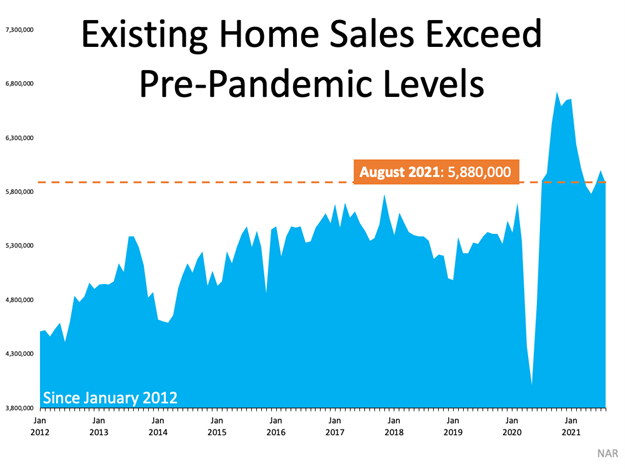
You may see headlines about a drop in home sales. But are those headlines telling the full story? The most recent Existing Home Sales Report from the National Association of Realtors (NAR) does show a drop of about 2% from July to August. But the month-over-month decline doesn’t provide the full picture (see graph below):As the graph shows, historical context is key. Today’s home sales are well ahead of some of the more normal years that led up to the health crisis. That means buyers are still in the market, which is great news if you’re planning to list your home.

What Do Past Years Tell Us About Today’s Real Estate Market? | North Scottsdale Real Estate & Luxury Homes | Team Picarello

Houses Are Selling Faster Than Usual

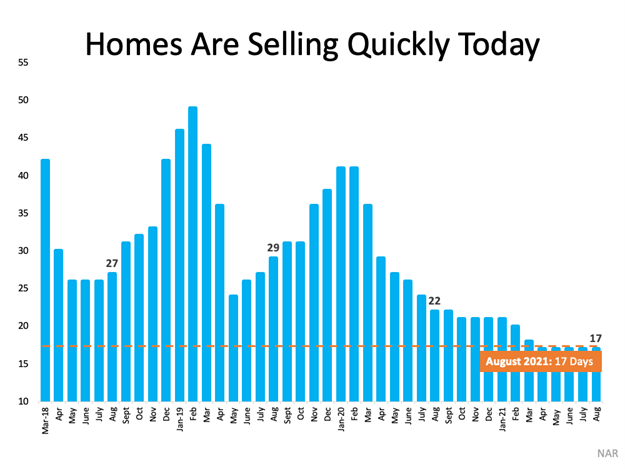
When headlines mention the market is slowing, sellers may naturally wonder if their house will sell as quickly as they’d like. According to the most recent Realtors Confidence Index from NAR, homes are still selling at record speed (see graph below):Again, if we look back at data from previous years, we can see the average time on market – 17 days –  means homes are selling faster than a normal pace.

What Do Past Years Tell Us About Today’s Real Estate Market? | North Scottsdale Real Estate & Luxury Homes | Team Picarello

Bidding Wars Are Still the Norm

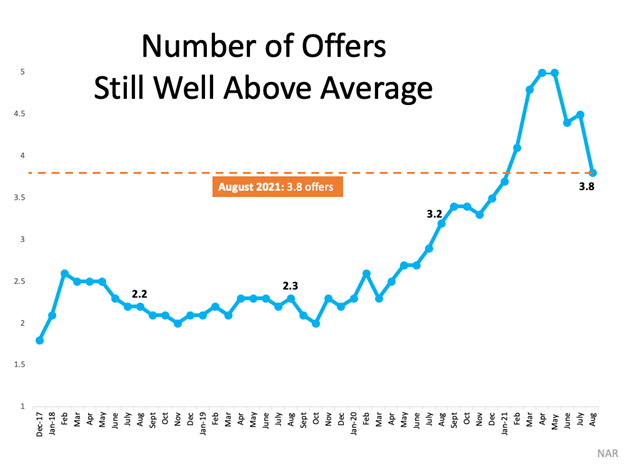
The Realtors Confidence Index from NAR also shows a drop in the average number of offers homes are receiving in August, and many headlines may simply focus there without providing the important context (see graph below):Again, it’s important to compare today’s market to trends from recent years. Currently, the average number of offers per listing is higher than 39 of the previous 45 months. That means the likelihood of a bidding war on your home is still high. And the number of offers your house receives can have a major influence on the final sale price.

What Do Past Years Tell Us About Today’s Real Estate Market? | North Scottsdale Real Estate & Luxury Homes | Team Picarello

So, Is the Market Slowing Down?

While there are slight declines in various month-to-month data, it’s important to keep historical context in mind when determining what’s happening in today’s market. Odeta Kushi, Deputy Chief Economist at First American, put it best recently, saying:

“It’s not the white-hot market from earlier in the year & it’s not the 2020 market benefiting from a wave of pent-up demand but make no mistake this is still a hot housing market.”

Bottom Line

Don’t let headlines make you rethink listing your home this fall. Selling today means you can still take advantage of high buyer demand, multiple offers, and a quick sale. If you’re thinking of selling your house, let’s connect and discuss why this fall is the perfect time to do so.