Why So Many People Are Thankful They Bought a Home This Year

Homebuyers are weighing their options right now, and they certainly have a lot on their minds. With everything going on in the job market, the economy, and more – there’s a lot to think about these days. And maybe that’s making you wonder if it really makes sense to buy a home right now.

But here’s what many recent buyers would tell you: even with all that, making a move is worth it.

And this is why they’re thankful they went ahead and took the plunge already. Life doesn’t wait for better market conditions. So, your decision shouldn’t be about trying to time the market perfectly. It should be about moving when the time is right for you and what you need – and it’s different for everyone.

The Real Reasons People Bought a Home

According to the latest report from the National Association of Realtors (NAR), what’s really driving today’s moves is the desire for something better or something different. It’s a personal motivator or a change in what they need out of the home that pushed buyers to act this year (see chart below):
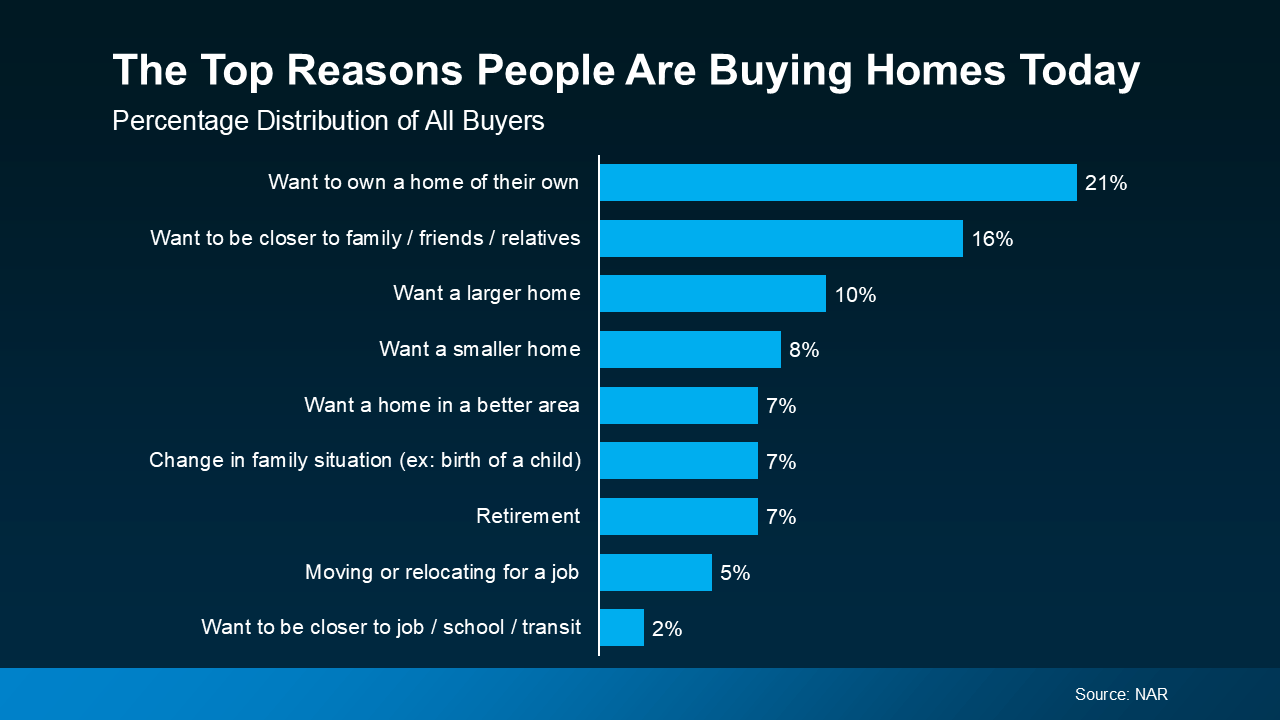
a graph of a number of peopleFor some, that meant trading an apartment for their very first house – a home they can finally make their own, where they can paint the walls, plant the garden, and build a future.

For others, it meant getting closer to the people who matter most. Living near family or friends isn’t just convenient, it changes your everyday life. Sunday dinners, quick visits, extra help when you need it – that kind of connection is priceless.

And for many buyers, it’s the peace of finding a home that finally fits. It’s finally having space to grow: a bigger kitchen for family dinners, or bedrooms where kids can decorate their own walls and carve out their own corners of the world.

Or, it’s about simplifying. Downsizing to something smaller, easier to maintain, and closer to what matters most can make everyday life feel lighter and less stressful.

What You Miss Out on If You Try To Time the Market

No matter the reason, these buyers all share something in common: they stopped waiting for perfect timing and focused on creating the life they wanted now. And if you asked them, odds are they’d say that decision is paying off every day.

That’s what makes a move meaningful. Not the market conditions, but the freedom and happiness that come from living in a home that truly fits. So, while headlines may keep everyone guessing, the people who’ve already made their move are sleeping better, living fuller, and enjoying homes that finally feel right.

Because once your home finally matches your life, everything else starts to fall into place. And that’s exactly how you deserve to feel.

Bottom Line

The people who bought a home this year didn’t wait for perfect market conditions to line up. They acted on what they needed in their life. And they’re thankful they did.

If you’re feeling the pull toward something better, let’s talk through your goals. Your next home could bring you more space, more connection, and more happiness than you think.

The Housing Market Is Turning a Corner Going into 2026

After several years of high mortgage rates and hesitation from buyers, momentum is quietly building beneath the surface of the housing market. Sellers are reappearing. Buyers are re-engaging. And for the first time in what feels like forever, there’s movement happening again.

No, it’s not a surge. But it is a shift – and it’s one that could set the stage for a stronger year in 2026.

So, what’s driving the comeback? Here are three big trends that are slowly breathing life back into the housing market right now.

1. Mortgage Rates Have Been Coming Down

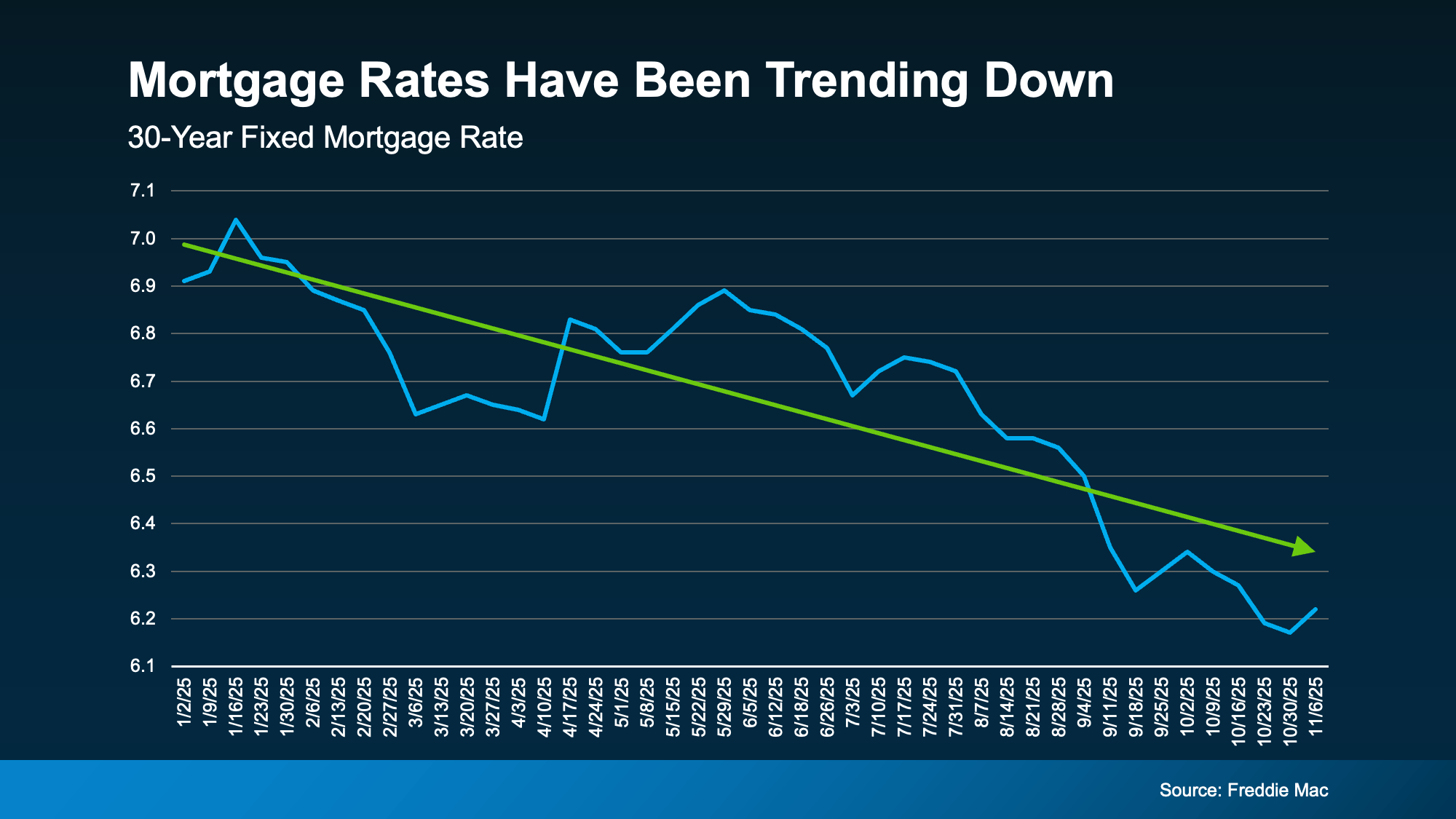
Mortgage rates are always going to have their ups and downs – that’s just how rates work. Especially with the general economic uncertainty right now, some volatility is to be expected. But, if you zoom out, it’s the larger trend that really matters most.

And overall, rates have been trending down for most of this year (see graph below):

a graph with a line and a green lineAnd in just the last few months, we’ve seen the best rates of 2025. According to Sam Khater, Chief Economist at Freddie Mac:

“On a median-priced home, this could allow a homebuyer to save thousands annually compared to earlier this year, showing that affordability is slowly improving.”

Here’s why that matters for you. This shift changes what you can actually afford. It means lower borrowing costs and more buying power. Take this as an example.

Data from Redfin shows a buyer with a $3,000 monthly budget can now afford roughly $25,000 more home than they could one year ago. That’s a big deal. And it’s just one of the reasons why activity is picking up.

2. More Homeowners Are Ready To Sell

For a while, many homeowners stayed put because they didn’t want to give up their low mortgage rate. That “lock-in effect” kept inventory tight. And while plenty of homeowners are still staying where they are today, the number of rate-locked homeowners is starting to ease as rates come down. Life changes are becoming a bigger part of what’s driving more people to move, and that’s opening up more inventory.

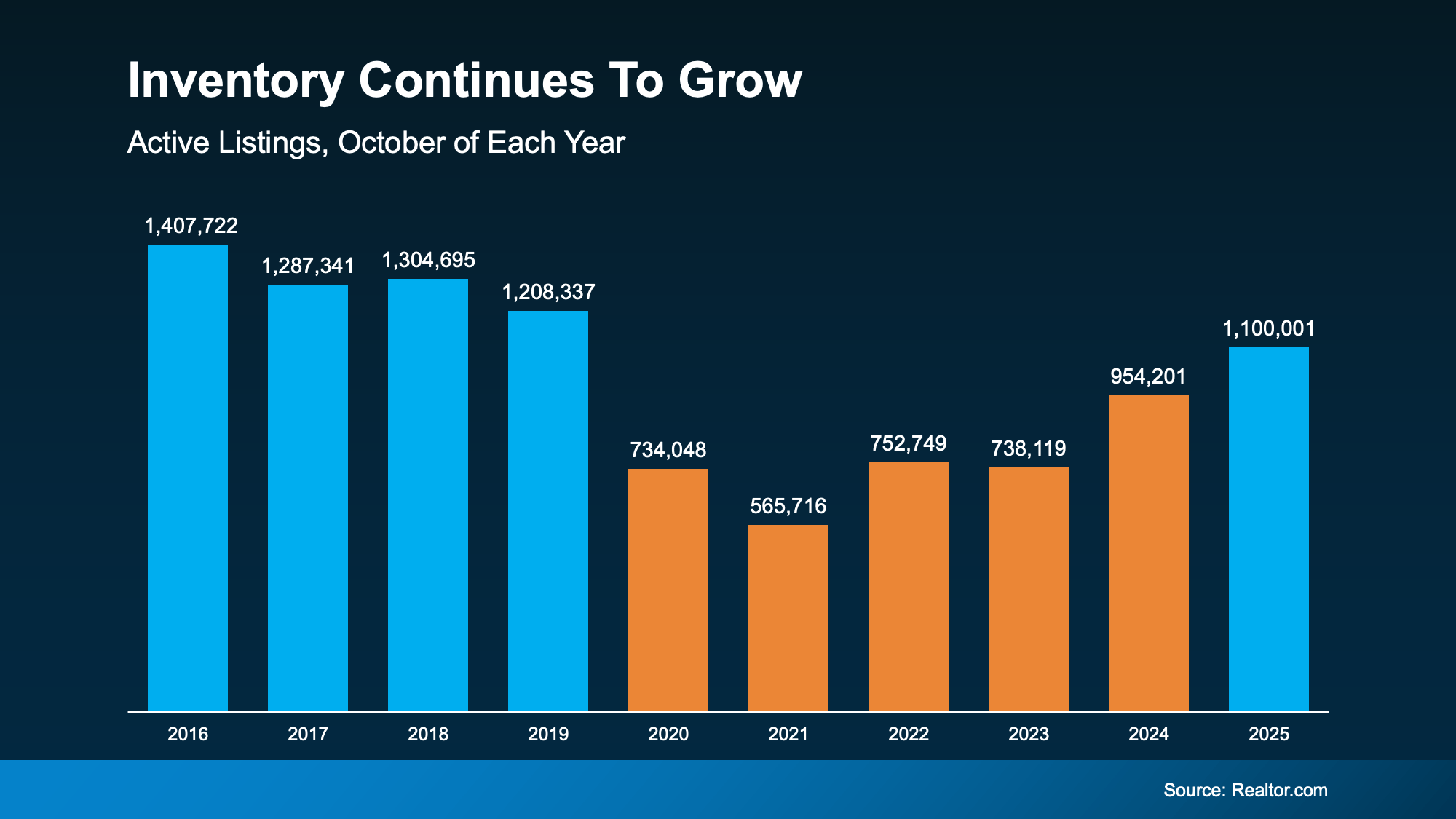
Data from Realtor.com shows just how much the number of homes for sale has grown. And the really interesting part is that the market is approaching levels that haven’t been seen for the past six years (see the blue on the graph below):

a graph of growth in the yearThat return to more normal inventory levels is a really good thing. It gives buyers more options than they’ve had in years. And it’s helping to bring the market closer to balance.

3. More Buyers Are Re-Entering the Market

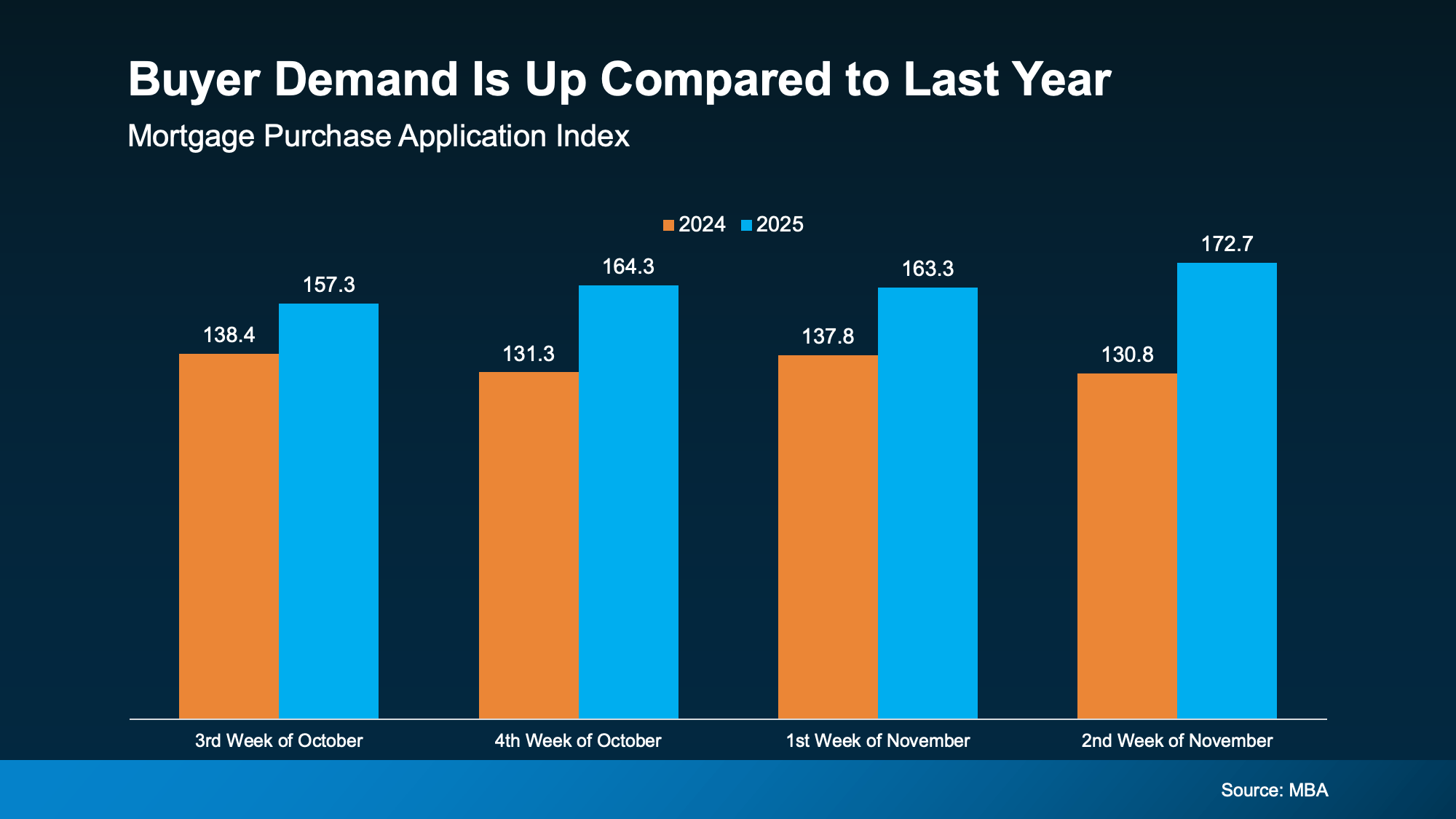
And it’s not just sellers making moves. With more options and slightly better affordability, buyers are getting back in the game, too. The Mortgage Bankers Association (MBA) reports purchase applications are up compared to last year, a clear signal that demand is building again (see graph below):

a graph of blue and orange barsAnd experts think this momentum will continue. Economists from Fannie Mae, the Mortgage Bankers Association (MBA), and the National Association of Realtors (NAR) all forecast moderate sales growth going into 2026.

Now, this recovery won’t happen overnight. It’s not a flood of activity. But it is the start of steady improvement going into 2026. And that’s something a lot of people have been waiting for.

Bottom Line

After several slower-than-normal years, the market is finally starting to turn a corner. Declining mortgage rates, more listings, and growing buyer activity all point to a market gaining real traction.

Let’s connect to talk about what’s happening in our local market and how you can make the most of it in 2026.

What a Government Shutdown Really Means for the Housing Market

There’s been a lot of talk lately about how a government shutdown impacts the housing market. You might be wondering: Is it causing everything to grind to a halt?

The short answer? No.

The housing market doesn’t stop. It keeps moving. Homes are still being bought and sold, contracts are still being signed, and closings are still happening. The difference is that a few parts of the process may slow down a little, but overall, the market continues to function.

Here’s What Typically Happens

Whenever the government shuts down, some federal agencies temporarily close or scale back their operations. That can cause a few hiccups in real estate, especially when it comes to processing certain types of government loans and insurance requirements:

  • “Applicants for FHA, VA, or USDA loans—which account for about one-quarter of all mortgage applications—may encounter significant processing delays due to agency furloughs.” – Selma Hepp, Chief Economist at Cotality
  • “By recent estimates, more than 2,500 mortgage originations per working day are at risk of delays during a shutdown . . .”  – Zillow
  • Flood insurance approvals may also be paused. The National Flood Insurance Program can be temporarily affected, which delays closings in flood zones.

Even with those challenges and delays, most transactions still go through. Buyers keep buying, sellers keep selling, and agents keep helping people move forward.

The Housing Market Usually Bounces Back Fast

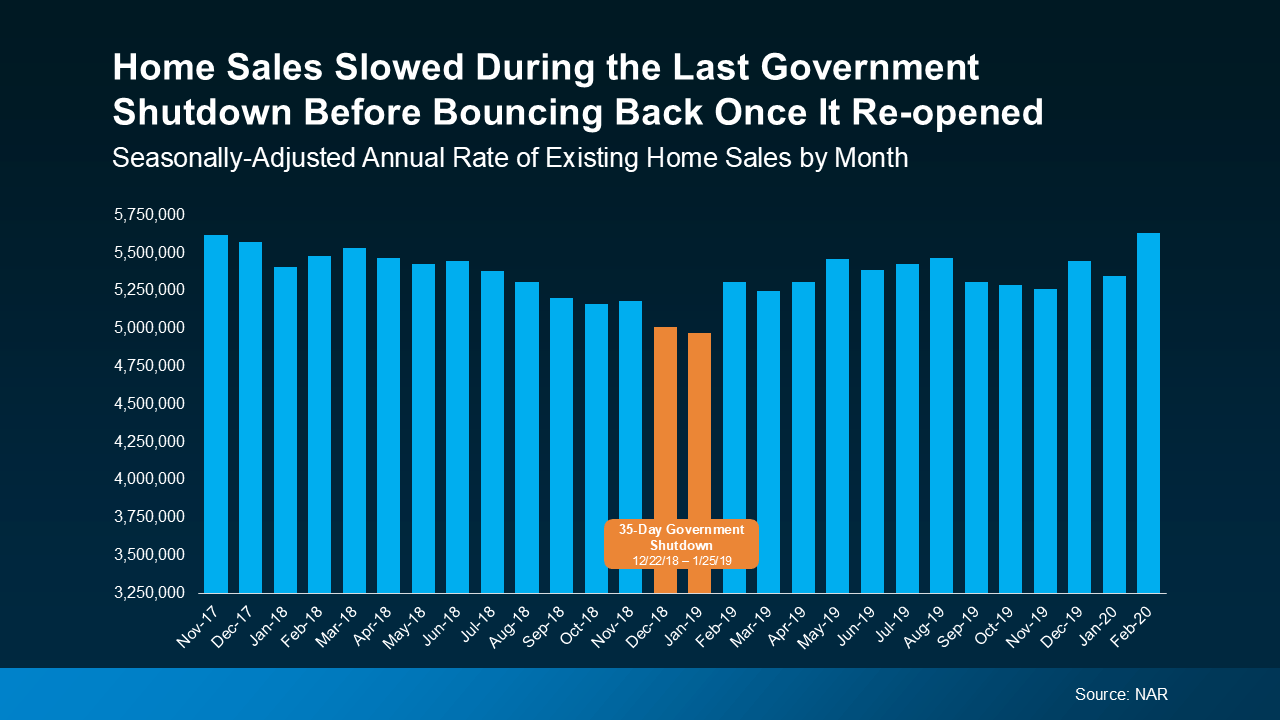
And you can see that play out in this data. If you look back at the most recent government shutdown that began at the end of 2018 and lasted for 35 days, sales activity dipped very slightly during the closure but picked right back up once the government reopened.

Data from the National Association of Realtors (NAR) shows existing home sales slowed for about two months, and then rebounded quickly as delayed closings worked their way through the system when the government reopened (see graph below):

a graph of blue and orange linesWhat’s important to note is that the slowdown you see in the orange bars on this graph wasn’t simply due to seasonality in a typical housing market cycle. The sharper, shorter drop in this case lines up exactly with the 35-day government shutdown, and then sales bounced back as soon as it ended.

What This Means for You

If you’re in the middle of buying or selling a home, don’t panic. Most deals will still move forward, even if it takes a few extra days. Jeff Ostrowski, Housing Market Analyst at Bankrate, explains:

“If you’re expecting to close in a week or a month, there could be some slight delay, but I think for most people, it’s probably going to be a blip more than a real deal killer.”

And if you’re just starting to think about buying or selling, this could actually work in your favor. Some buyers and sellers may become cautious and pause their plans during times of uncertainty, like this, and that can open a short window of opportunity.

When fewer people are active in the market, well-prepared buyers may find less competition for homes, and motivated sellers may be more willing to negotiate. These brief slowdowns often create a moment where you can make a move that would be harder once activity ramps back up.

Bottom Line

A government shutdown can cause short-term delays for some buyers, but it doesn’t derail the housing market. The last time this happened, sales picked back up as soon as the government re-opened.

If you’re unsure how this might affect your plans, or just want to make sense of what’s happening, let’s connect.