Ways To Overcome Affordability Challenges in Today’s Housing Market [INFOGRAPHIC]

Ways To Overcome Affordability Challenges in Today’s Housing Market [INFOGRAPHIC] | North Scottsdale Real Estate & Luxury Homes | Team Picarello

Ways To Overcome Affordability Challenges in Today’s Housing Market [INFOGRAPHIC] | North Scottsdale Real Estate & Luxury Homes | Team Picarello

Some Highlights

  • With so few homes on the market right now, widening the scope of your search to include nearby areas could help you find more options in your budget.
  • You can also work with a trusted lender to consider alternative financing options and search for down payment assistance.
  • If you’ve been searching for a home but are concerned about rising costs, make sure you have a team of trusted real estate professionals for expert advice.

The Power of Pre-Approval

If you’re buying a home this spring, today’s housing market can feel like a challenge. With so few homes on the market right now, plus higher mortgage rates, it’s essential to have a firm grasp on your homebuying budget. You’ll also need a sense of determination to find the right house and act quickly when you go to put in an offer. One thing you can do to help you prepare is to get pre-approved.

To understand why it’s such an important step, you need to know what pre-approval is. As part of the process, a lender looks at your finances to determine what they’d be willing to loan you. From there, your lender will give you a pre-approval letter to help you understand how much money you can borrow.

Freddie Mac explains it like this:

“A pre-approval is an indication from your lender that they are willing to lend you a certain amount of money to buy your future home. . . . Keep in mind that the loan amount in the pre-approval letter is the lender’s maximum offer. Ultimately, you should only borrow an amount you are comfortable repaying.”

Basically, pre-approval gives you critical information about the homebuying process that’ll help you understand how much you may be able to borrow so you have a stronger grasp of your options. And with higher mortgage rates impacting affordability for many buyers today, a solid understanding of your numbers is even more important.

Pre-Approval Helps Show You’re a Serious Buyer

That’s not the only thing pre-approval can do. Another added benefit is it can help a seller feel more confident in your offer because it shows you’re serious about buying their house. And, with sellers seeing a slight increase in the number of offers again this spring, making a strong offer when you find the perfect house is key.

As a recent article from the Wall Street Journal (WSJ) says:

“If you plan to use a mortgage for your home purchase, preapproval should be among the first steps in your search process. Not only can getting preapproved help you zero in on the right price range, but it can give you a leg up on other buyers, too.”

Bottom Line

Getting pre-approved is an important first step when you’re buying a home. It lets you know what you can borrow for your loan and shows sellers you’re serious. Connect with a local real estate professional and a trusted lender so you have the tools you need to purchase a home in today’s market.

Why Aren’t Home Prices Crashing?

There have been a lot of shifts in the housing market recently. Mortgage rates rose dramatically last year, impacting many people’s ability to buy a home. And after several years of rapid price appreciation, home prices finally peaked last summer. These changes led to a rise in headlines saying prices would end up crashing.

Even though we’re no longer seeing the buyer frenzy that drove home values up during the pandemic, prices have been relatively flat at the national level. Lawrence Yun, Chief Economist at the National Association of Realtors (NAR), doesn’t expect that to change:

“[H]ome prices will be steady in most parts of the country with a minor change in the national median home price.”

You might think sellers would have to lower prices to attract buyers in today’s market, and that’s part of why some may have been waiting for prices to come crashing down. But there’s another factor at play – low inventory. And according to Yun, that’s limiting just how low prices will go:

“We simply don’t have enough inventory. Will some markets see a price decline? Yes. [But] with the supply not being there, the repeat of a 30 percent price decline is highly, highly unlikely.”

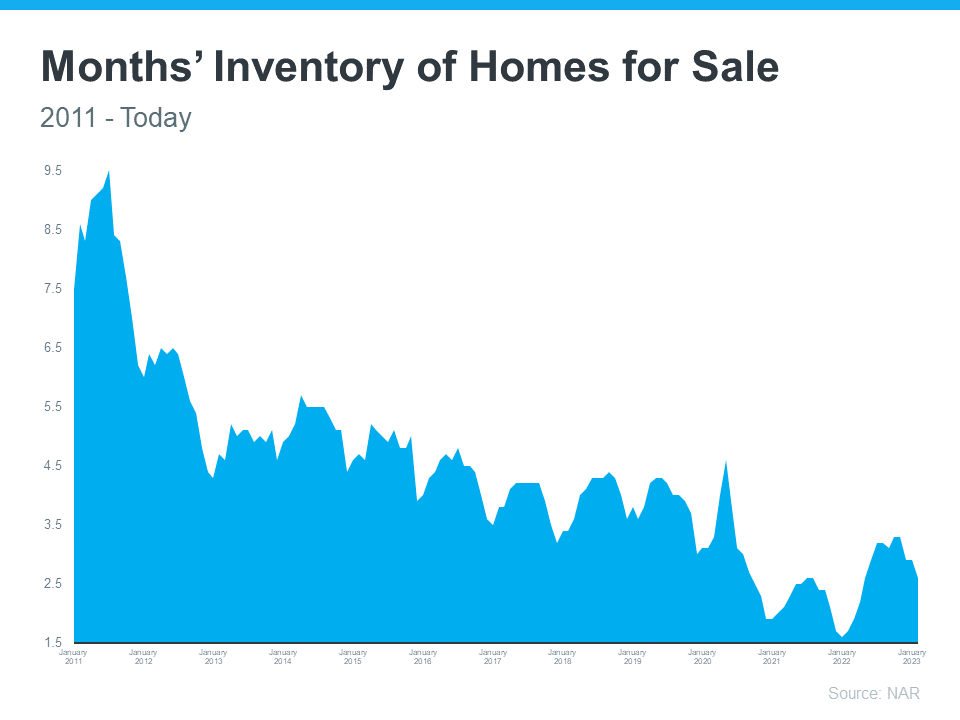
As you can see in the graph below, we’ve been at or near record-low inventory levels for a few years now.

Why Aren’t Home Prices Crashing? | North Scottsdale Real Estate & Luxury Homes | Team Picarello

That lack of available homes on the market is putting upward pressure on prices. Bankrate puts it like this:

“This ongoing lack of inventory explains why many buyers still have little choice but to bid up prices. And it also indicates that the supply-and-demand equation simply won’t allow a price crash in the near future.”

If more homes don’t come to the market, a lack of supply will keep prices from crashing, and, according to industry expert Rick Sharga, inventory isn’t likely to rise significantly this year:

“I believe that we’re likely to see low inventory continue to vex the housing market throughout 2023.”

Sellers are under no pressure to move since they have plenty of equity right now. That equity acts as a cushion for homeowners, lowering the chances of distressed sales like foreclosures and short sales. And with many homeowners locked into low mortgage rates, that equity cushion isn’t going anywhere soon.

With so few homes available for sale today, it’s important to work with a trusted real estate agent who understands your local area and can navigate the current market volatility.

Bottom Line

A lot of people expected prices would crash this year thanks to low buyer demand, but that isn’t happening. Why? There aren’t enough homes for sale. If you’re thinking about moving this spring, let’s connect.

February 2023 Market Update

Note: Data below from February, 2023 is the most recent from the National Association of Realtors.

Existing-home sales reversed a 12-month slide in February, registering the largest monthly percentage increase since July 2020, according to the National Association of REALTORS®. Month-over-month sales rose in all four major U.S. regions. All regions posted year-over-year declines.

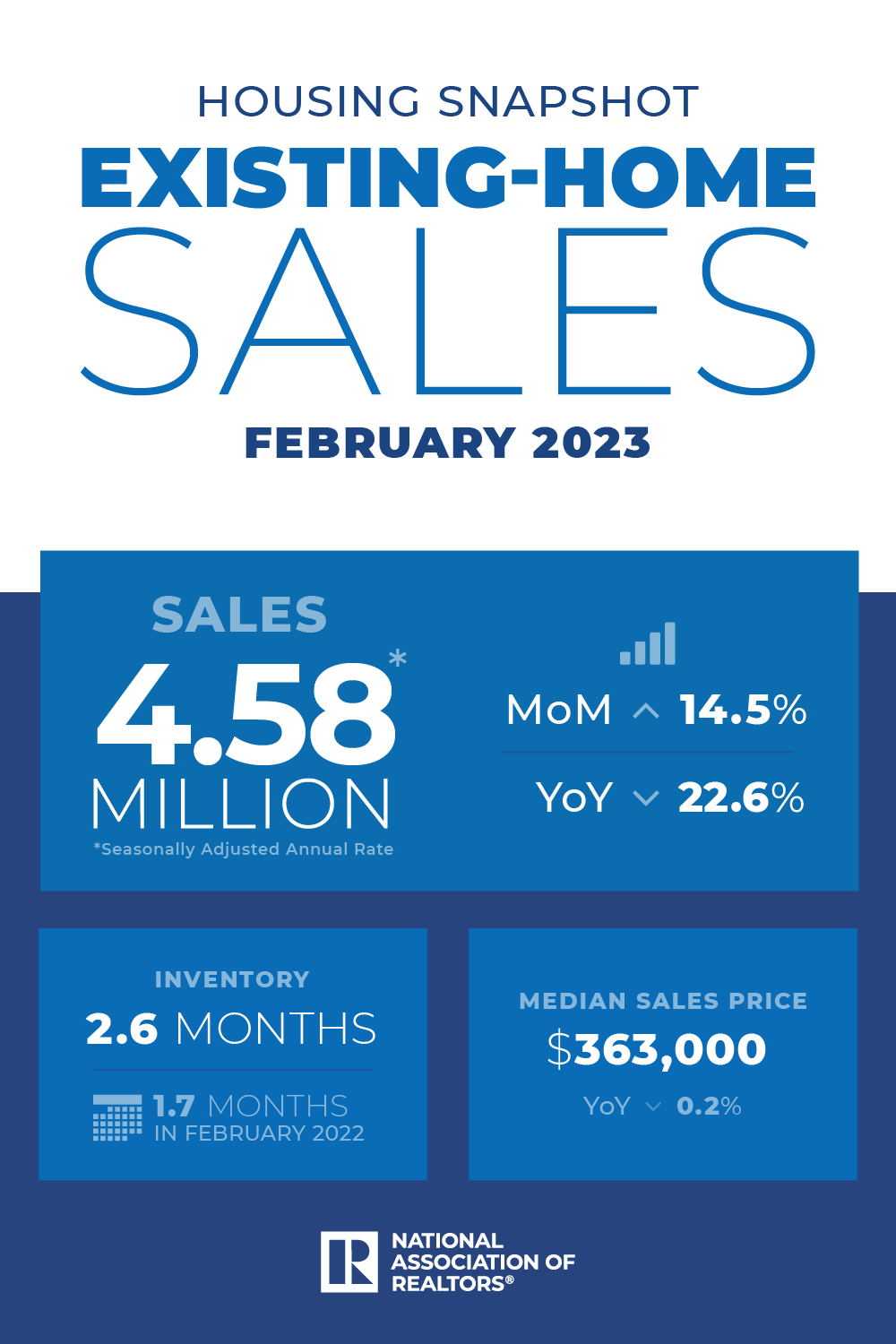
Total existing home sales – completed transactions that include single-family homes, townhomes, condominiums and co-ops – vaulted 14.5% from January to a seasonally adjusted annual rate of 4.58 million in February. Year-over-year, sales fell 22.6% (down from 5.92 million in February 2022).
NAR February 2023 Existing Home Sales Report Infographic"Conscious of changing mortgage rates, home buyers are taking advantage of any rate declines," said NAR Chief Economist Lawrence Yun. "Moreover, we're seeing stronger sales gains in areas where home prices are decreasing and the local economies are adding jobs."

Total housing inventory registered at the end of February was 980,000 units, identical to January and up 15.3% from one year ago (850,000). Unsold inventory sits at a 2.6-month supply at the current sales pace, down 10.3% from January but up from 1.7 months in February 2022.
 
"Inventory levels are still at historic lows," Yun added. "Consequently, multiple offers are returning on a good number of properties."
 
The median existing-home price for all housing types in February was $363,000, a decline of 0.2% from February 2022 ($363,700), as prices climbed in the Midwest and South yet waned in the Northeast and West. This ends a streak of 131 consecutive months of year-over-year increases, the longest on record.
 
Properties typically remained on the market for 34 days in February, up from 33 days in January and 18 days in February 2022. Fifty-seven percent of homes sold in February were on the market for less than a month.
 
First-time buyers were responsible for 27% of sales in February, down from 31% in January and 29% in February 2022. NAR’s 2022 Profile of Home Buyers and Sellers – released in November 2022 – found that the annual share of first-time buyers was 26%, the lowest since NAR began tracking the data.
 
All-cash sales accounted for 28% of transactions in February, down from 29% in January but up from 25% in February 2022.
 
Individual investors or second-home buyers, who make up many cash sales, purchased 18% of homes in February, up from 16% in January but down from 19% in February 2022.
 
According to Freddie Mac, the 30-year fixed-rate mortgage(link is external) averaged 6.60% as of March 16. That's down from 6.73% from the previous week but up from 4.16% one year ago.
 
"Owning a home provides a path to long-term financial security and is a vehicle by which to transfer wealth to future generations," said NAR President Kenny Parcell, a REALTOR® from Spanish Fork, Utah, and broker-owner of Equity Real Estate Utah. "REALTORS® deliver expert guidance, objectivity and professionalism to consumers during the complex process of purchasing a home."
 
Regional Breakdown
Existing-home sales in the Northeast improved 4.0% from January to an annual rate of 520,000 in February, down 25.7% from February 2022. The median price in the Northeast was $366,100, down 4.5% from the previous year.
 
In the Midwest, existing-home sales grew 13.5% from the previous month to an annual rate of 1.09 million in February, declining 18.7% from one year ago. The median price in the Midwest was $261,200, up 5.0% from February 2022.
 
Existing-home sales in the South rebounded 15.9% in February from January to an annual rate of 2.11 million, a 21.3% decrease from the prior year. The median price in the South was $342,000, an increase of 2.7% from one year ago.
 
In the West, existing-home sales rocketed 19.4% in February from the prior month to an annual rate of 860,000, down 28.3% from the previous year. The median price in the West was $541,100, down 5.6% from February 2022.


 

4 Key Tips for Selling Your House This Spring

Spring has arrived, and that means more and more people are getting their homes ready to sell. But with recent shifts in real estate, this year’s spring housing market will be different from the frenzy of the past several years. To sell your house quickly, without hassles, and for the most money, be sure to follow these four simple tips:

1. Make Sure You Give Buyers Access

One of the biggest mistakes you can make as a seller is limiting the days and times when buyers have access to view your home. In any market, if you want to maximize the sale of your house, you can’t limit potential buyers’ access to view it. If it’s not accessible, it could cost you by sitting on the market longer and ultimately selling for a lower price.

2. Make Your Home Look as Good as Possible on the Inside

For anything to sell, especially your home, it must look inviting. Your real estate agent can give you expert advice on ideal staging for your home. Even updating a room with fresh paint, steam cleaning carpets, or removing clutter from the garage can make a big impact.

3. First Impressions Matter

The old saying “you never get a second chance to make a first impression” matters when selling your house. Often, the first impression a buyer gets is what they see as they walk up to the front door. Putting in the work in on the exterior of your home is just as important as what you stage inside. Freshen up your landscaping to improve your home’s curb appeal so you can make an impact with potential buyers.

4. Price It Right

This is probably the most important aspect of selling your home in today’s real estate market. If a house is priced competitively, it’s going to sell. Period. To do this, you have to know what’s happening with home prices in your area and understand the factors that are affecting the market right now. That’s why it’s best to work with a trusted real estate professional who can ensure you list your house at the right price.

Bottom Line

Everyone selling their home wants three things: to sell it for the most money they can, to do it in a certain amount of time, and to do all of that with the fewest hassles. To accomplish these goals, let’s connect so you can understand the steps you need to take to sell your home this spring.