The Two Big Issues the Housing Market’s Facing Right Now

The biggest challenge the housing market’s facing is how few homes there are for sale. Mark Fleming, Chief Economist at First American, explains the root causes of today’s low supply:

“Two dynamics are keeping existing-home inventory historically low – rate-locked existing homeowners and the fear of not finding something to buy.”

Let’s break down these two big issues in today’s housing market.

Rate-Locked Homeowners

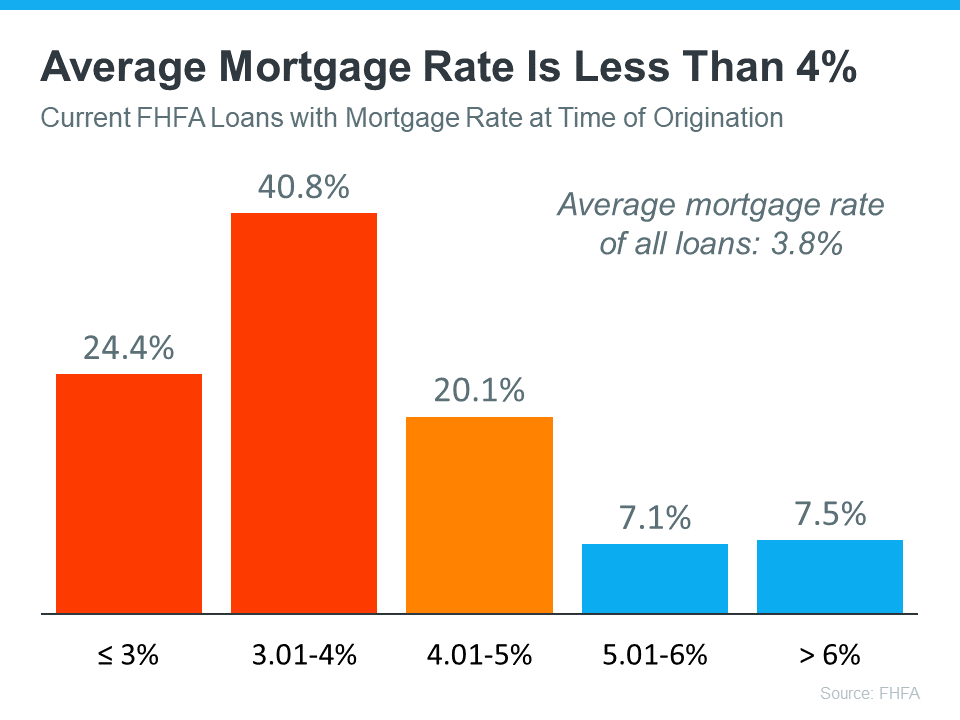
According to the Federal Housing Finance Agency (FHFA), the average interest rate for current homeowners with mortgages is less than 4% (see graph below):
The Two Big Issues the Housing Market’s Facing Right Now | North Scottsdale Real Estate & Luxury Homes | Team Picarello

But today, the typical mortgage rate offered to buyers is over 6%. As a result, many homeowners are opting to stay put instead of moving to another home with a higher borrowing cost. This is a situation known as being rate locked.

When so many homeowners are rate locked and reluctant to sell, it’s a challenge for a housing market that needs more inventory. However, experts project mortgage rates will gradually fall this year, and that could mean more people will be willing to move as that happens.

The Fear of Not Finding Something To Buy

The other factor holding back potential sellers is the fear of not finding another home to buy if they move. Worrying about where they’ll go has left many on the sidelines as they wait for more homes to come to the market. That’s why, if you’re on the fence about selling, it’s important to consider all your options. That includes newly built homes, especially right now when builders are offering concessions like mortgage rate buydowns.

What Does This Mean for You?

These two issues are keeping the supply of homes for sale lower than pre-pandemic levels. But if you want to sell your house, today’s market is a sweet spot that can work to your advantage.

Be sure to work with a local real estate professional to explore the options you have right now, which could include leveraging your current home equity. According to ATTOM:

“. . . 48 percent of mortgaged residential properties in the United States were considered equity-rich in the fourth quarter, meaning that the combined estimated amount of loan balances secured by those properties was no more than 50 percent of their estimated market values.”

This could make a major difference when you move. Work with a local real estate expert to learn how putting your equity to work can keep the cost of your next home down.

Bottom Line

Rate-locked homeowners and the fear of not finding something to buy are keeping housing inventory low across the country. But as mortgage rates start to come down this year and homeowners explore all their options, we should expect more homes to come to the market.

Why It’s Easy To Fall in Love with Homeownership

No matter how the housing market changes, there are some things about owning a home that never change—like the personal benefits it can provide. When you own your home, you likely feel a sense of attachment because of the comfort it gives and also because it’s a space that’s truly yours.

Over the last few years, we’ve fully embraced the meaning of our homes as we spent more time than ever in them. As a result, the emotional benefits our homes provide have become even more important to us.

As the most recent State of the American Homeowner from Unison puts it:

“. . . one thing has stayed the same: the home continues to be of the utmost importance and a place of security and comfort.”

The same study from Unison notes:

  • 91% of homeowners say they feel secure, stable, or successful owning a home
  • 64% of American homeowners say living through a pandemic has made their home more important to them than ever

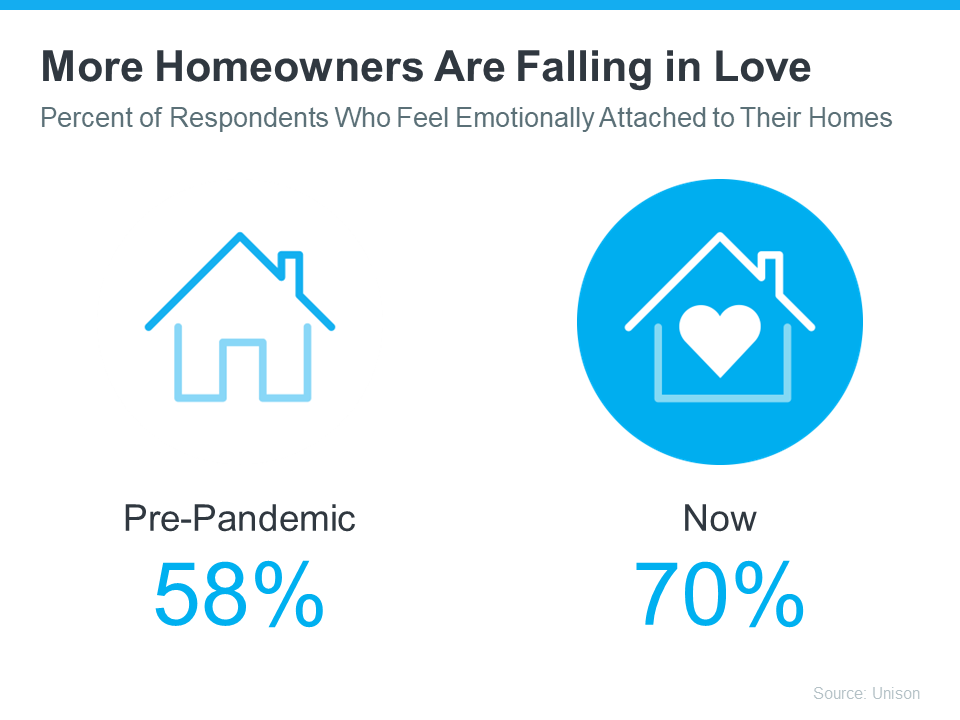
It’s no surprise this study also reveals that homeowners now love their homes even more as our attachments to them have grown:

Why It’s Easy To Fall in Love with Homeownership | North Scottsdale Real Estate & Luxury Homes | Team Picarello

The National Association of Realtors (NAR) also explains:

“In addition to tangible financial benefits, homeownership brings substantial social benefits for [households], communities, and the country as a whole.”

In other words, not only does owning a home build your net worth over time, but it also gives you and your loved ones a place to thrive. And by living near people with shared experiences, homeownership helps you connect with your community and contribute meaningfully.

Bottom Line

Whether you’re thinking of buying your first home, moving up to your dream home, or downsizing to something that better fits your changing lifestyle, let me be the key to unlocking a home you can truly fall in love with.

December 2022 Market Update

Note: Data below from December, 2022 is the most recent from the National Association of Realtors.

Existing-home sales retreated for the eleventh consecutive month in December, according to the National Association of Realtors®. Three of the four major U.S. regions recorded month-over-month drops, while sales in the West were unchanged. All regions experienced year-over-year declines.

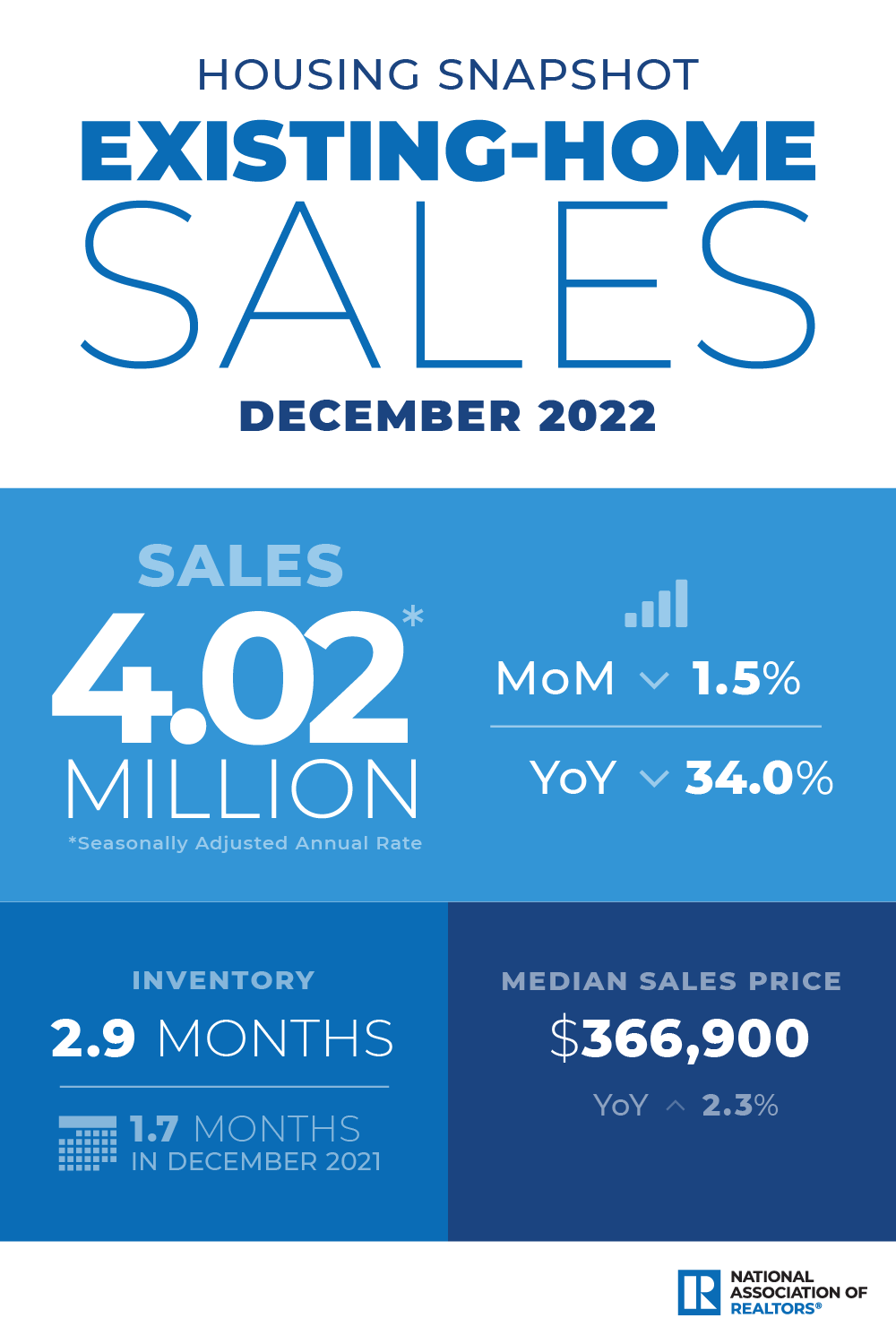
Total existing home sales – completed transactions that include single-family homes, townhomes, condominiums and co-ops – decreased 1.5% from November to a seasonally adjusted annual rate of 4.02 million in December. Year-over-year, sales sagged 34.0% (down from 6.09 million in December 2021).

NAR December 2022 Existing Home Sales Report Infographic“December was another difficult month for buyers, who continue to face limited inventory and high mortgage rates,” said NAR Chief Economist Lawrence Yun. “However, expect sales to pick up again soon since mortgage rates have markedly declined after peaking late last year.”

Nationwide, March's median existing-home price (all housing types) was $250,400, up 5.8% from March 2017 ($236,600). This price increase represents 73 consecutive months of gains.

Total U.S. housing inventory at the end of December was 970,000 units, which was down 13.4% from November but up 10.2% from one year ago (880,000). Unsold inventory sits at a 2.9-month supply at the current sales pace, down from 3.3 months in November but up from 1.7 months in December 2021.
 

The median existing-home price3 for all housing types in December was $366,900, an increase of 2.3% from December 2021 ($358,800), as prices rose in all regions. This marks 130 consecutive months of year-over-year increases, the longest-running streak on record.
 
“Home prices nationwide are still positive, though mildly,” Yun added. “Markets in roughly half of the country are likely to offer potential buyers discounted prices compared to last year.”
 
Properties typically remained on the market for 26 days in December, up from 24 days in November and 19 days in December 2021. Fifty-seven percent of homes sold in December 2022 were on the market for less than a month.
 
First-time buyers were responsible for 31% of sales in December, up from 28% in November and 30% in December 2021. NAR’s 2022 Profile of Home Buyers and Sellers – released in November 2022 – found that the annual share of first-time buyers was 26%, the lowest since NAR began tracking the data.
 
All-cash sales accounted for 28% of transactions in December, up from 26% in November and 23% in December 2021.
 
“Cash buyers are unaffected by fluctuations in mortgage rates and were able to take advantage of lower prices in some areas,” Yun said.
 
Individual investors or second-home buyers, who make up many cash sales, purchased 16% of homes in December, up from 14% in November but down from 17% in December 2021.
 
According to Freddie Mac, the 30-year fixed-rate mortgage(link is external) averaged 6.15% as of January 19. That’s down from 6.33% last week, but up from 3.56% one year ago.
 
“Realtors® helped millions of Americans achieve the dream of homeownership in the midst of a housing market that experienced some tough headwinds last year,” said NAR President Kenny Parcell, a Realtor® from Spanish Fork, Utah, and broker-owner of Equity Real Estate Utah. “In 2023, we’ll continue to work with legislators and real estate leaders at all levels to address inventory shortages and increase access to homeownership.”
 
Regional Breakdown
Existing-home sales in the Northeast slid 1.9% from November to an annual rate of 520,000 in December, down 28.8% from December 2021. The median price in the Northeast was $391,400, an increase of 1.6% from the prior year.
 
Existing-home sales in the Midwest fell 1.0% from the previous month to an annual rate of 1.01 million in December, falling 30.3% from one year ago. The median price in the Midwest was $262,000, up 2.9% from December 2021.
 
In the South, existing-home sales slipped 2.2% in December from November to an annual rate of 1.80 million, a 33.1% decrease from the previous year. The median price in the South was $337,900, an increase of 3.5% from this time last year.
 
At an annual rate of 690,000, existing-home sales in the West were unchanged from November but down 43.4% from one year ago. The median price in the West was $557,900, an increase of $200, or less than a tenth of a percent from December 2021.


November 2022 Market Update

Note: November 2022 data below are the most recent released by the National Association of Realtors.

Total existing-home sales (completed transactions that include single-family homes, townhomes, condominiums and co-ops) waned 7.7% from October to a seasonally adjusted annual rate of 4.09 million in November. Year-over-year, sales dwindled by 35.4% (down from 6.33 million in November 2021).

National Association of Realtors November 2022 Data

"In essence, the residential real estate market was frozen in November, resembling the sales activity seen during the COVID-19 economic lockdowns in 2020," said NAR Chief Economist Lawrence Yun. "The principal factor was the rapid increase in mortgage rates, which hurt housing affordability and reduced incentives for homeowners to list their homes. Plus, available housing inventory remains near historic lows."

Total housing inventory at the end of November was 1.14 million units, which was down 6.6% from October, but up 2.7% from one year ago (1.11 million). Unsold inventory sits at a 3.3-month supply at the current sales pace, which was identical to October, but up from 2.1 months in November 2021.

 
The median existing-home price for all housing types in November was $370,700, an increase of 3.5% from November 2021 ($358,200), as prices rose in all regions. This marks 129 consecutive months of year-over-year increases, the longest-running streak on record.
 
Properties typically remained on the market for 24 days in November, up from 21 days in October and 18 days in November 2021. Sixty-one percent of homes sold in November 2022 were on the market for less than a month.

First-time buyers were responsible for 28% of sales in November, which was unchanged from October, but up from 26% in November 2021. NAR's 2022 Profile of Home Buyers and Sellers – released last month – found that the annual share of first-time buyers was 26%, the lowest since NAR began tracking the data.

All-cash sales accounted for 26% of transactions in November – identical to October and up from 24% in November 2021.

Individual investors or second-home buyers, who make up many cash sales, purchased 14% of homes in November, down from 16% in October and 15% in November 2021.

 
According to Freddie Mac, the 30-year fixed-rate mortgage averaged 6.31% as of December 15. That's down from 6.33% last week, but up from 3.12% one year ago.
 
"The market may be thawing since mortgage rates have fallen for five straight weeks," Yun added. "The average monthly mortgage payment is now almost $200 less than it was several weeks ago when interest rates reached their peak for this year."
 
Regional Breakdown
 
Existing-home sales in the Northeast decreased 7.0% from October to an annual rate of 530,000 in November, down 28.4% from November 2021. The median price in the Northeast was $394,700, an increase of 3.5% from the prior year.
 
Existing-home sales in the Midwest retreated 5.6% from the previous month to an annual rate of 1.02 million in November, falling 30.6% from one year ago. The median price in the Midwest was $268,600, up 3.9% from November 2021.
 
In the South, existing-home sales dwindled 7.1% in November from October to an annual rate of 1.84 million, a 35.0% decrease from the previous year. The median price in the South was $340,100, an increase of 4.4% from this time last year.
 
Existing-home sales in the West fell 12.5% from October to an annual rate of 700,000 in November, down 45.7% from one year ago. The median price in the West was $569,800, a 2.0% increase from November 2021.
 
"The West region experienced the largest decline in home sales and the smallest increase in home prices compared to the other regions of the country," Yun said.