These 7 Kitchen Trends Are Here to Stay

As reported by Architectural Digest 

Unusual materials, double islands and more—here are the 2021 trends designers love

Cara Gibbs  FEBRUARY 18, 2021 10:21 AM


Comfort and connection in the kitchen have never been more essential. Four design firms weigh in on the future of all things luxury in the next wave of kitchen features. What’s to come? Seven key trends that designers would do well to buy into today.


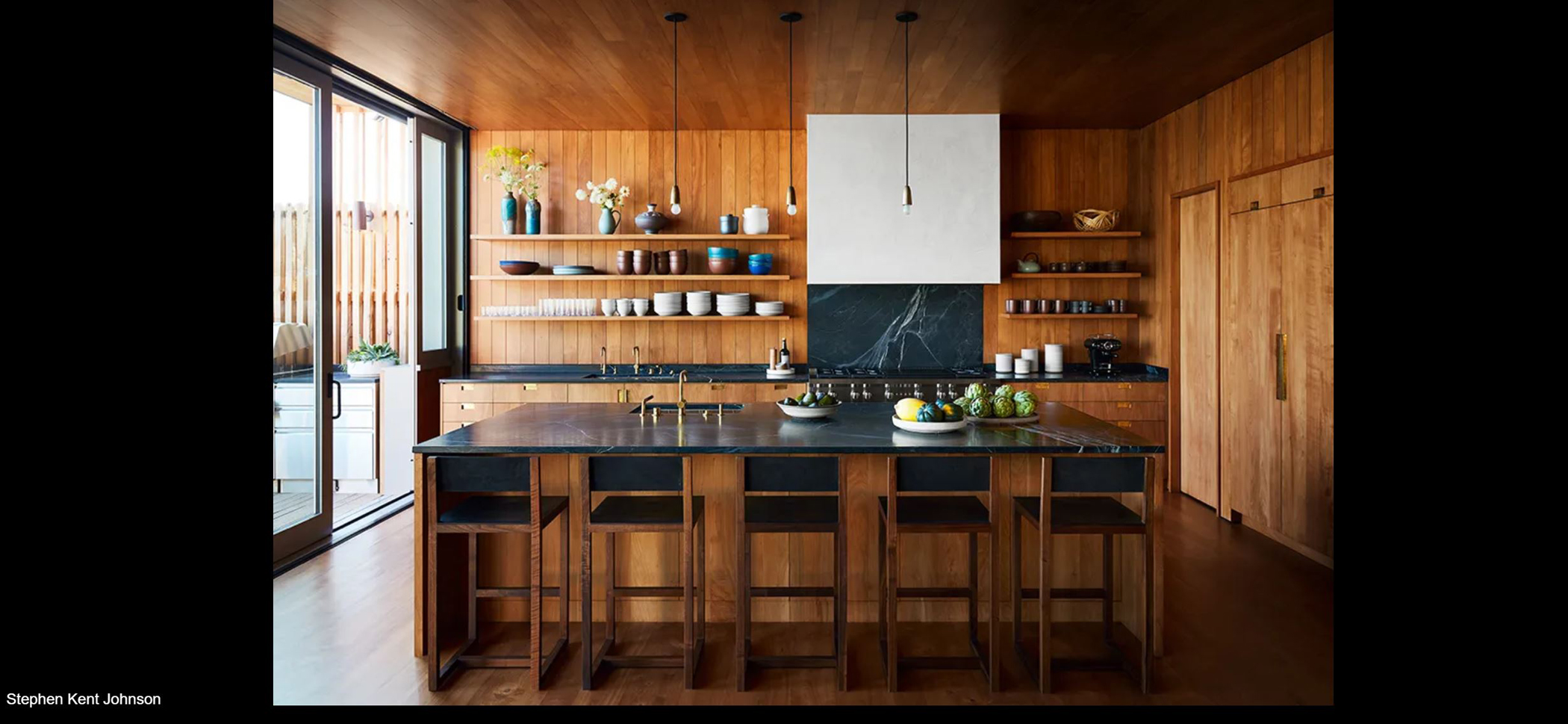
The Return of Wood 

“My clients are showing a lot more interest in wood cabinets and finishes,” shares Los Angeles–based designer Peti Lau, “specifically, really beautiful natural ash wood, which renders a rustic contemporary vibe.” Down-to-earth by nature but used in a more modern way, wood offers layers of luxury to the kitchen. “People are yearning for a sense of calm and for soothing palettes,” says Lau. Echoing that stance is Los Angeles design duo Cayley Lambur and Lucia Bartholomew of Electric Bowery: “Lots of texture and warmth is important in the kitchen. We are seeing less white and more richness in the overall palette. Whether that comes from a deeper, richer color to the wood, steering away from purely neutral palettes allows for a more personal approach to the kitchen.”

Little Details

“Kitchens are becoming as detailed as possible,” Los Angeles–based AD100 designer Brigette Romanek of Romanek Design Studio declares. “And that’s a good thing. Clients are making their kitchens personal, not necessarily in keeping with the famous triangle [layout between stove, sink, and refrigerator] but rather what works best for them.” The art of details often opens up the conversation to custom work. Lau adds, “I find that there are more customizable options for designers and clients to select different finishes for the appliances. There are more customizable façades and covers to choose from, and that’s what clients request most—functionality and customization for their daily routines. Details like coffee and juice bars are common.”

Double Islands

Houston-based designer Nina Magon of Contour Interior Design sheds light on the double island craze. “This trend adds storage to your kitchen, and it provides more space to prepare food and entertain guests,” she says. With sleek sight lines and abundant counter space, double islands are the ultimate indulgence. “Double islands make a huge difference in kitchens and are the perfect gathering points,” adds Lau. “Having space for them—that’s the true luxury item.”

The End of Upper Cabinets

Thanks to the emergence of double islands, it appears that upper cabinetry may fall into the category of ornamental rather than necessary. “By increasing the functionality and usability, it eliminates the need for upper cabinets, creating an open-concept kitchen,” says Magon. The Electric Bowery team confirms: “Kitchens are designed to be an extension of the living space, so it’s important that the design feel less purely utilitarian.” Their approach? “Incorporate open shelves as areas of display to house beautiful dishes and glassware, but be conscious not to overcrowd them.”

Smarter Kitchens

“Appliances are getting smarter,” notes Romanek. Tech advances are no longer confined to media rooms and sound systems but are proving to make some serious breakthroughs in the kitchen. “The integrated smart-technology systems and options catering to the lifestyle of end users have been game-changing, and seemingly grow more advanced by the day,” muses Lau. “Now you can have technology integrated into most functions and appliances, from smart faucets to ovens being controlled by your smartphone to simple touch-closing cabinets. Smart kitchens are really where the luxury kitchen design ethos is heading,” says Magon. Pointing out that the majority of clients are spending increased time in their homes, Magon notes that they “want their kitchens to ease their day-to-day tasks.… Subsequently, technology is leading to more eco-friendly kitchen environments complete with air purifiers for clean air.”

Concealment

“Most people have rediscovered the joys of cooking on a more regular basis, and kitchen appliances that were once left to collect dust in drawers and deep cabinets are being utilized [more],” point out Lambur and Bartholomew. “Accommodating for a more permanent home for these appliances and gadgets that does not clutter your kitchen is highly desirable.” The solution? Concealed design. Magon touts the benefits of disguised storage: “There are so many options now that remove the cluttered look from counters, such as pop-up plugs, rotating panels that contain storage behind them, and push-to-open cabinets with invisible hardware allowing your materials to take center stage.”

Rethinking Materials 

“I’m seeing a big return of old materials used in new ways,” reflects Romanek. “Brass hoods, copper panels, wood cabinets, onyx instead of marble, unique lighting, sinks in different finishes—so much good stuff!” Paralleling Romanek’s sentiments, Magon shares, “Material selections are the most important part of designing a luxury kitchen. The future is more mixed materials such as concrete mixed with glossy natural stone, creating the ultimate impact.”

Thoughts about 2021

In a year that brought decimation to nearly every other part of the economy, who could have guessed the housing market would see an unprecedented boom in 2020? Despite global shutdowns and mass unemployment, prospective homebuyers found themselves in heated bidding wars, as market demand increased as much as 40% at one point.
Will this year bring more of the same or will the housing boom peter out? While there is still much uncertainty about the post-pandemic future, here are some trends experts say you can likely expect to see in 2021.

Mortgage rates will remain low.
The historically low mortgage rates we’ve were treated to in 2020 are likely to continue into 2021, and perhaps even longer. Vaccines are starting to roll out in the US, but it will be some time before they are made widely available, and experts say the economic recovery will be slow at first. 30-year interest rates will hover closer to their current average of 2.67% at the beginning of 2021.
But as the vaccine is more widely distributed by the second half of the year, rates may start to creep up slightly to the 3% range, as increased economic activity typically leads to increased borrowing costs. This would still put mortgage rates at opportunistic lows, so don’t expect homebuyers to be deterred.
There will be a boom in new home construction.
With demand expected to stay strong into the coming year and an existed home supply that can’t keep up, experts predict we will see unprecedented levels of new constructions in 2021. Low interest rates also benefit builders wanting to borrow for new construction projects, and since commercial projects have mostly been put on hold in 2020, there is a readily available supply of labor and materials for those who wish to build their dream home.

New homes will cater to different demands.
Homeowner preferences are changing with the new culture the pandemic has created. With millions having been confined to their homes for long periods throughout 2020, there is an emerging trend that people are craving more space. Expect increased demand for larger and more energy-efficient (and money-saving) homes. But forget about those previously popular open floor plans. Privacy is the new norm in 2021. Quality air filtration systems will also be a frequently requested feature.

2020 was a great year for housing, and 2021 is looking no different. The housing market is predicted to stay strong, bolstered by new trends, low interest rates, and a slowly recovering economy.

February Monthly Market Update

Note: December 2020 data below are the most recent released by the National Association of Realtors.

Existing-home sales rose in December, with home sales in 2020 reaching their highest level since 2006, according to the National Association of Realtors®. Activity in the major regions was mixed on a month-over-month basis, but each of the four areas recorded double-digit year-over-year growth in December.

Total existing-home sales (transactions that include single-family homes, townhomes, condominiums and co-ops) increased 0.7% from November to a seasonally-adjusted annual rate of 6.76 million in December. Sales in total rose year-over-year, up 22.2% from a year ago (5.53 million in December 2019).


National Association of Realtors December 2020 Data

"Home sales rose in December, and for 2020 as a whole, we saw sales perform at their highest levels since 2006, despite the pandemic," said Lawrence Yun, NAR's chief economist. "What's even better is that this momentum is likely to carry into the new year, with more buyers expected to enter the market."
 
"Although mortgage rates are projected to increase, they will continue to hover near record lows at around 3%," Yun said. "Moreover, expect economic conditions to improve with additional stimulus forthcoming and vaccine distribution already underway."

The median existing-home price for all housing types in December was $309,800, up 12.9% from December 2019 ($274,500), as prices increased in every region. December's national price increase marks 106 straight months of year-over-year gains.

Total housing inventory at the end of December totaled 1.07 million units, down 16.4% from November and down 23% from one year ago (1.39 million). Unsold inventory sits at an all-time low 1.9-month supply at the current sales pace, down from 2.3 months in November and down from the 3.0-month figure recorded in December 2019. NAR first began tracking the single-family home supply in 1982.

Properties typically remained on the market for 21 days in December, seasonally even with November and down from 41 days in December 2019. Seventy percent of the homes sold in December 2020 were on the market for less than a month.

"To their credit, homebuilders and construction companies have increased efforts to build, with housing starts hitting an annual rate of near 1.7 million in December, with more focus on single-family homes," Yun said. "However, it will take vigorous new home construction in 2021 and in 2022 to adequately furnish the market to properly meet the demand."

First-time buyers were responsible for 31% of sales in December, unchanged from the same time in 2019, but down from 32% in November 2020. NAR's 2020 Profile of Home Buyers and Sellers revealed that the annual share of first-time buyers was 31%.

Individual investors or second-home buyers, who account for many cash sales, purchased 14% of homes in December, identical to the share recorded in November 2020 and a small decline from 17% in December 2019. All-cash sales accounted for 19% of transactions in December, down from 20% in both November and December 2019.

"NAR will work with the incoming Biden administration in pursuit of policies promoting housing affordability and accessibility," said NAR President Charlie Oppler, a Realtor® from Franklin Lakes, N.J., and the CEO of Prominent Properties Sotheby's International Realty. "We were pleased with the homebuyer tax credit President Biden proposed as a candidate and we look forward to continuing our work with Congress and the White House. We will aim to find common ground, especially related to ways of boosting home supply and working toward solutions that will protect and support homeownership and America's broader real estate industry."
 
According to Freddie Mac, the average commitment rate for a 30-year, conventional, fixed-rate mortgage decreased to 2.68% in December, down from 2.77% in November. The average commitment rate across all of 2020 was 3.11%.